A vacuum packaging machine can run throughout a shift and still leave the packing team behind schedule. Prepared portions accumulate beside the operator, finished packs wait for inspection, and overtime becomes the usual way to complete orders.
The obvious response is to buy a larger machine. But first, check whether the delay comes from the vacuum cycle, pouch preparation or the time spent unloading and reloading.
A well-organised single chamber station can outperform a poorly supplied double chamber machine. Additional capacity helps only when the surrounding process can use it.
What Actually Changes Between Single and Double Chamber Machines?
Both formats use the same basic principle. Filled pouches are placed inside a chamber with their open ends positioned across sealing bars. The machine evacuates air, seals the pouches under vacuum and restores atmospheric pressure before opening.
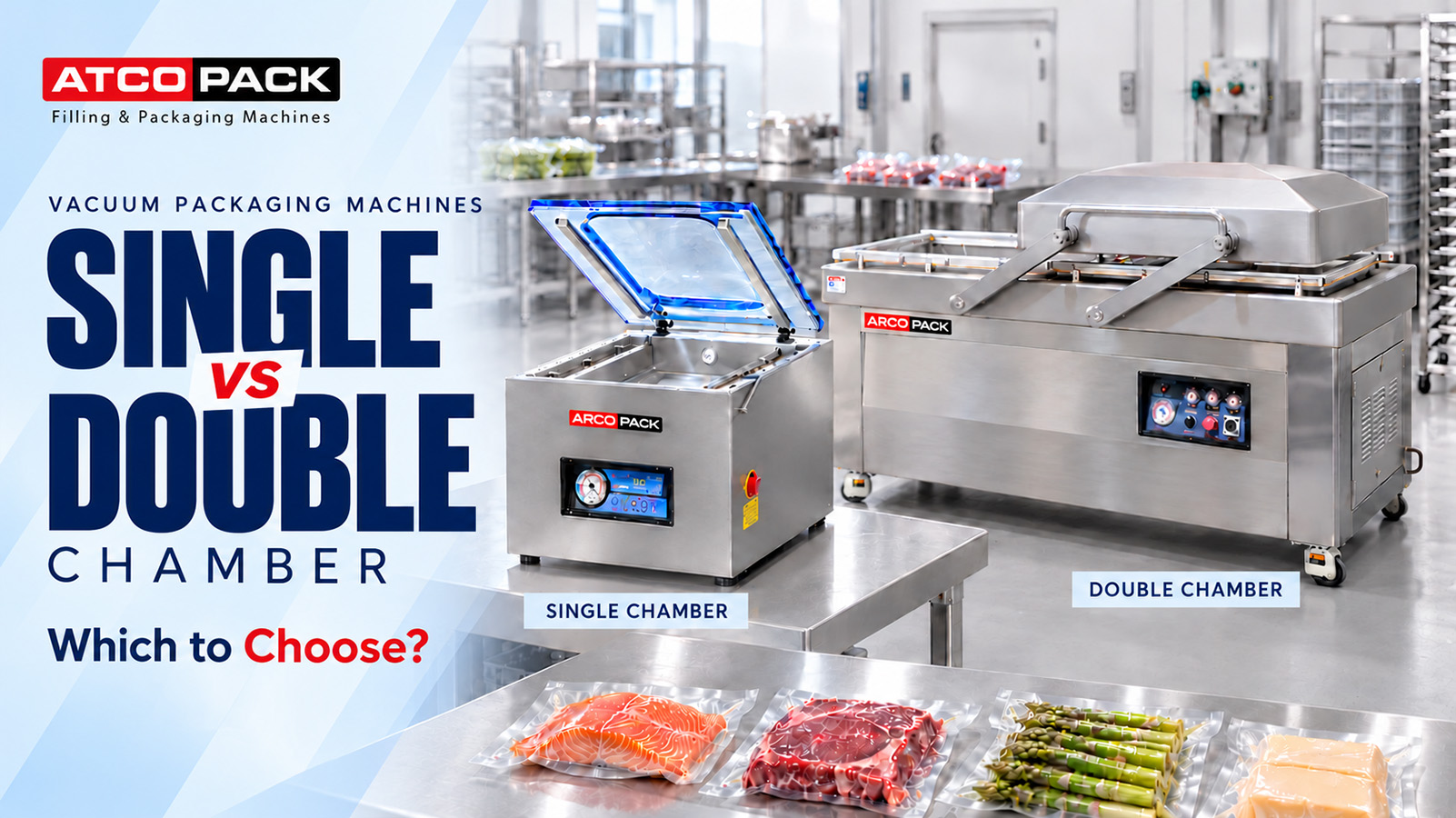
With a single chamber machine, the operator loads, runs the cycle, unloads and starts again. Chamber handling and vacuum processing happen one after the other. Single chamber models range from compact tabletop units to larger floor-standing machines, so “single chamber” does not necessarily mean small capacity.
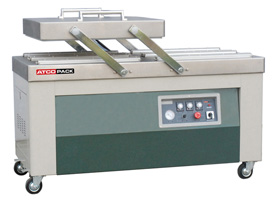
A conventional double chamber machine has two chambers served by a movable lid. While one chamber processes a batch, the operator unloads and prepares the other. The lid then moves across for the next cycle. Its productivity advantage comes from overlapping these activities; both chambers do not normally evacuate simultaneously.
Neither design automatically creates a stronger seal or longer shelf life. Pack quality depends on suitable equipment, compatible pouches, correct settings, product condition and consistent handling.
| Decision factor | Single chamber | Double chamber |
|---|---|---|
| Working sequence | Load, process, unload, repeat | Prepare one side while the other processes |
| Typical production fit | Intermittent packing and manageable batches | Sustained packing with a steady product supply |
| Space and access | Often a smaller footprint; model dependent | Needs room for two working areas and lid movement |
| Main capacity constraint | Combined processing and handling time | The slower of processing or opposite-side preparation, plus transfer time |
| Pack quality | Depends on product, pouch compatibility, settings, handling and maintenance | |
The practical question is how much loading time your operation can overlap with processing.
Compare Accepted Packs per Hour, Not Cycle Time Alone
A quoted cycle time does not tell you how many saleable packs will leave the station. Chamber capacity, handling time, interruptions and rejects all affect the result.
For context, selected manufacturers publish double chamber machine cycles of approximately 13–40 seconds across different models. These specifications are not guaranteed operating times for your product, pouch arrangement or required vacuum level.
Consider an illustrative chilled-food operation packing four pouches per batch. The validated processing cycle takes 30 seconds, and unloading plus reloading takes 20 seconds.
On a single chamber machine, the complete batch takes 50 seconds. The theoretical output is therefore 288 packs per hour: four pouches multiplied by 3,600 seconds, divided by 50.
On a double chamber machine with equivalent batch capacity and processing time, those 20 seconds of handling could occur while the opposite chamber runs. Before allowing for lid transfer and interruptions, the theoretical ceiling becomes 480 packs per hour.
Single chamber: 4 × 3,600 ÷ (30 + 20) = 288 packs/hour
Double chamber: 4 × 3,600 ÷ 30 = 480 packs/hour before transfer time and losses
Equal batch capacity assumed. These figures explain the calculation and are not guaranteed production rates.
That is an illustrative 67% increase, rather than an automatic doubling of output. It assumes filled pouches remain available and the operator maintains the loading rhythm.
Now suppose handling takes 45 seconds. The vacuum cycle finishes before the opposite chamber is ready. Handling becomes the constraint, and shortening the machine cycle further provides little benefit.
During a trial, record accepted packs over a representative period. Include pouch replenishment, labelling delays, product changes and cleaning. Keep this sustained working rate separate from the machine’s theoretical maximum.
Check Product Fit and Seal Reliability Before Buying Capacity
A common procurement mistake is comparing chamber dimensions and pump capacity without testing how the actual pouches fit across the sealing bars.
Usable sealing length matters. A chamber may hold several products physically but lack enough space to position every pouch opening correctly. Overlapping openings, folds and crowded layouts can undermine seal consistency.
Test the largest product, the widest pouch and the most awkward loading arrangement. Include headspace and product height, rather than checking only whether an empty bag fits.
Product characteristics also affect processing. Warm, moisture-rich food can boil under reduced pressure. Liquids or marinades may move towards the pouch opening, while sharp bones or hard edges can damage unsuitable packaging material. These issues require appropriate product preparation, pouch selection and validated settings.
For example, a meat processor may lose time wiping marinade from bag openings before every cycle. A second chamber does not remove that task. Improving filling technique and keeping the seal area clean may recover useful capacity before equipment replacement becomes necessary.
Do not shorten vacuum or sealing settings simply to clear a backlog. Establish acceptable settings through product trials and quality checks, then calculate capacity around them.
Include Labour, Cleaning and Downtime in the Cost Comparison
The purchase price is only one part of packaging cost. Compare labour time, pouch waste, rejected packs, maintenance, cleaning and the consequences of missed production.
A double chamber machine can increase output per operator-hour when loading fits within the processing cycle. It does not automatically reduce headcount. Someone must still portion food, fill pouches, inspect seals, apply labels and move finished packs.
Layout determines whether that work flows smoothly. Position prepared pouches and finished-pack containers within comfortable reach. Leave sufficient access for lid movement, cleaning and maintenance. A larger machine can create extra walking and handling if installed in a cramped station.
Maintenance teams should assess access to gaskets, sealing components and the vacuum pump, together with the manufacturer’s servicing requirements. Confirm consumable availability and realistic service response times before committing.
Two chambers also do not provide two independent machines. A failure in a shared pump or control system may stop the entire unit. Where dispatch depends on one packing station, evaluate the practical backup arrangement.
For factories in the UAE, Saudi Arabia and Oman, check the actual installation conditions. A cooled packing room differs considerably from a hot production area. Verify permitted ambient temperature, ventilation clearances, electrical supply and cleaning compatibility.
Make the Decision Through a Representative Production Trial
A single chamber machine is a sensible choice when packing is intermittent, current demand fits comfortably within proven capacity, or product preparation already controls the production rate. Frequent small batches may also make flexibility more valuable than maximum sustained output.
A double chamber machine deserves closer evaluation when demand is continuous, prepared pouches are consistently available, and loading delays repeatedly leave the existing chamber idle. Its value is strongest when overlapping handling removes a measured bottleneck.
When discussing a trial with ATCOPACK or another equipment supplier, provide actual products and pouches, expected product temperatures, the daily product mix and required accepted output. Include difficult packs and changeovers.
Ask the production operator and maintenance technician to assess the trial alongside procurement. Measure output, inspect pack quality and observe the workload over repeated cycles. Calculate cost per accepted pack using a sustainable production rate.
Before approving the machine, establish one point: can the proposed format meet your busiest realistic production period while preserving validated settings, manageable handling and adequate cleaning time?