The first hundred bottles look acceptable. Then the problems begin: fragrance drips onto the glass, a spray pump sits unevenly, and bottles collect between filling and closing. Operators slow the line to keep production moving. By the end of the shift, the output report includes bottles that still need cleaning, inspection or rework.
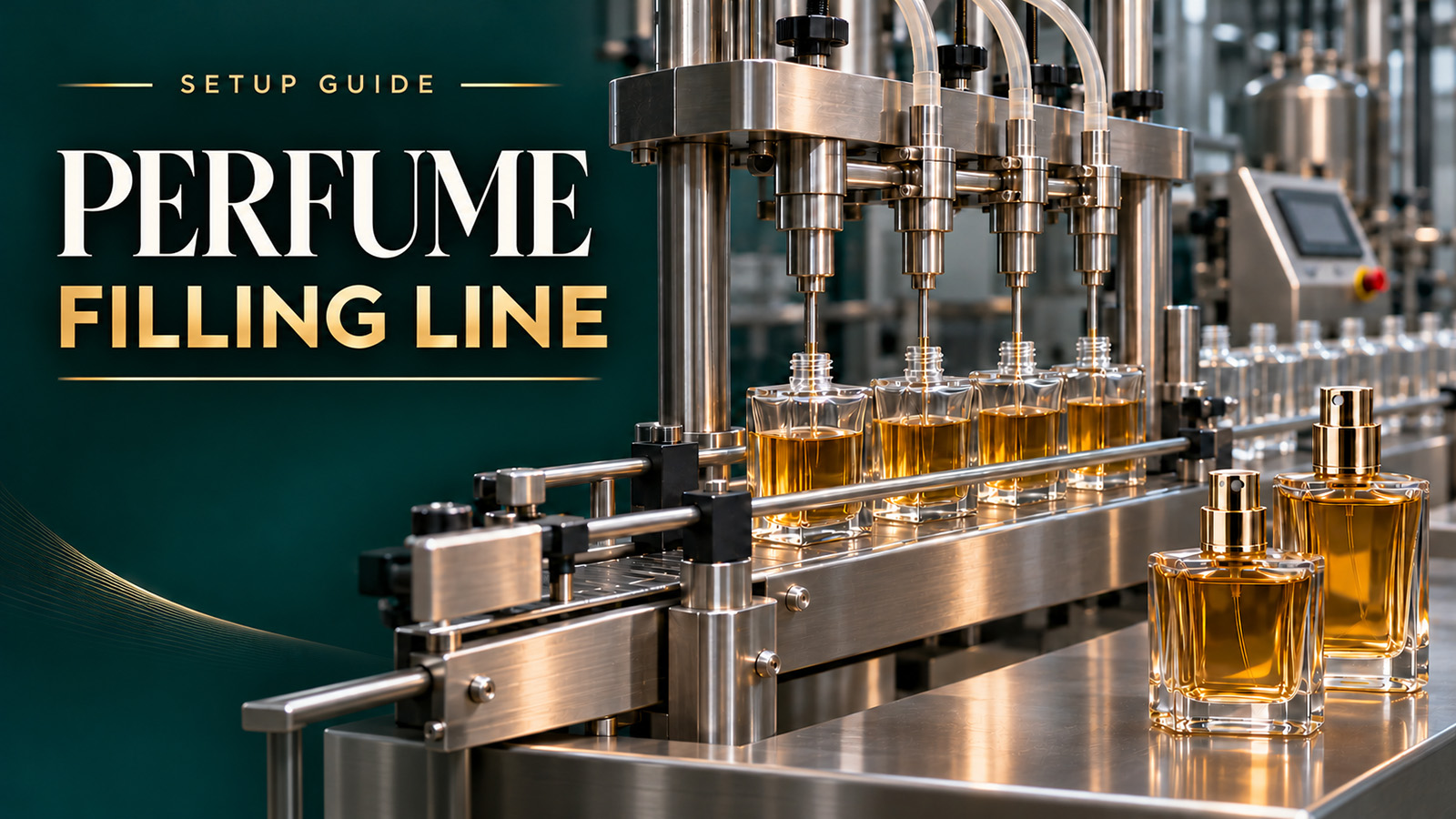
A perfume filling line is a coordinated process for transferring prepared fragrance into bottles, fitting and securing closures, checking quality and preparing packs for dispatch. Its performance depends on how these operations work together, not simply how quickly the filler dispenses liquid.
Start with the Fragrance and Packaging Specification
Before comparing machines, define what the line will handle. Alcohol-based spray perfumes, concentrated oud oils and oil-based fragrance blends can require different dosing, nozzle and cleaning arrangements. Solid oud chips and bakhoor involve different packing processes; this guide focuses on liquid fragrances.
Filling also follows product preparation. Formulation, any required maturation, filtration and batch approval should be completed before fragrance reaches the filling station. Packaging equipment cannot correct an unstable formulation or unwanted particles in the product.
Prepare an application specification covering fill volumes, product viscosity at operating temperature, batch sizes, bottle dimensions, neck finishes and closure types. Include representative samples of the actual liquid and packaging.
Distinguish between filling to a measured quantity and filling to a visible level. Decorative glass bottles can vary internally. Two bottles containing the same volume may show slightly different liquid heights. A consistent appearance does not, by itself, confirm consistent contents.
Metered systems dispense a controlled quantity; level-based systems target a filling height. Select the approach against quantity requirements, presentation expectations and bottle variation. Test performance rather than assuming one filling principle suits every fragrance. Equipment manufacturers offer different filling systems and cleaning arrangements for different applications.
Product-contact materials also need checking against the formulation and cleaning agents. Compatibility concerns extend beyond stainless steel to seals, tubing and other wetted components. For expensive oud oils, ask how much product remains inside the system after draining a batch.
Build the Line Around Its Slowest Operation
A spray-perfume line commonly includes bottle inspection, filling, pump insertion, closing, collar fitting, cap placement, labelling, coding and packing. Oil fragrances may use screw caps, droppers or roll-on assemblies instead.
Each packaging format changes the work required. Crimped pumps need suitable closing tooling, while screw closures require controlled application. Pump dip tubes must enter the bottle correctly. Commercial fragrance equipment may incorporate crimping controls and dip-tube presence inspection because these are separate quality risks.
Consider an illustrative factory filling 50 ml bottles. The filler runs at 20 bottles per minute, but operators can place pumps consistently at only 14 bottles per minute. The queue grows until filling must stop. The sustainable output is constrained by pump placement, regardless of the filler’s advertised capacity.
Bottle handling can create similar interruptions. Tall bottles may tip during indexing; irregular shapes may need dedicated holders. A heavy decorative cap can complicate handling after assembly.
Test bottles from normal supply batches, including acceptable dimensional variation. A demonstration using a few ideal samples may miss the alignment problems encountered during a full production run.
Control Overfill, Leakage and Fragrance Carryover
A common procurement mistake is comparing equipment mainly by speed, price and filling-head count. Those figures reveal little about losses during startup, sealing defects or the work needed between fragrances.
Small dosing errors become significant across a batch. An average excess of 0.5 ml over 10,000 bottles consumes five additional litres of fragrance. With valuable formulations, unnoticed overfill can become a recurring material cost.
Establish fill checks at startup, after adjustments and at defined intervals. If weight is used to verify volume, account for product density and temperature. Variation in empty glass weight also means gross bottle weight alone may give a misleading result.
Inspect closing separately from filling. Correct contents do not prevent leakage caused by mismatched components, poor pump seating or incorrect closing settings. Appropriate leakage and spray-function checks should form part of the production control plan.
Changeovers require more than draining the supply tank. Fragrance can remain in hoses, pumps, valves and nozzles. Residue from one formulation may affect the next, particularly when moving between distinctive scents.
Define a cleaning method and an acceptance procedure appropriate to the products. Include cleaning, inspection and startup losses when measuring changeover time. Dedicated product-contact sets may be worth evaluating when frequent fragrance changes make cleaning a major production constraint.
Prepare the Room, Utilities and Maintenance Support
Alcohol-based fragrance filling requires assessment of flammable vapours, ignition sources and static electricity. Ventilation, bonding and earthing, and equipment selection must suit the assessed conditions. A machine’s electrical specification alone does not establish the suitability of the complete installation.
Have qualified specialists establish the installation requirements and confirm applicable local approvals before finalising the layout. Allow space for safe operation, cleaning, maintenance and controlled movement of materials.
In UAE, Saudi Arabian and Omani facilities, evaluate actual room and storage temperatures rather than relying on a catalogue test environment. Temperature variation can affect liquid behaviour and the consistency of operating conditions.
Confirm electricity, compressed-air requirements where applicable, product supply arrangements and extraction needs early. Poor utility provision can interrupt otherwise suitable equipment.
Maintenance planning should identify wear parts, replacement procedures and fault support. Ask whether technicians can access dosing components and closing tooling without extensive dismantling. Accessible parts and clear setup instructions can matter more during a breakdown than additional features.
Approve Performance Against Your Production Schedule
Automation should match batch size and product variety. A semi-automatic arrangement may suit short runs with frequent changes. Longer, repeatable batches may justify integrated feeding, filling and closing. Compare total operator tasks, including replenishment, inspection and packing, before estimating labour requirements.
When reviewing a proposal from ATCOPACK or another supplier, agree on measurable acceptance criteria:
- Accepted output using actual fragrances, bottles and closures.
- Fill consistency, closing quality and appropriate leakage checks.
- Changeover duration, cleaning acceptance and retained product.
- Operator requirements, maintenance access and critical spare parts.
The trial should include startup, sustained running, a representative changeover and restart. Record rejected bottles and operator interventions alongside speed. Before approving the investment, establish whether the line can deliver the required quantity of saleable bottles across a normal shift, with the product mix, staffing and changeovers your factory actually expects.