What’s Next for Warehouse Automation? 6 Developments to Watch
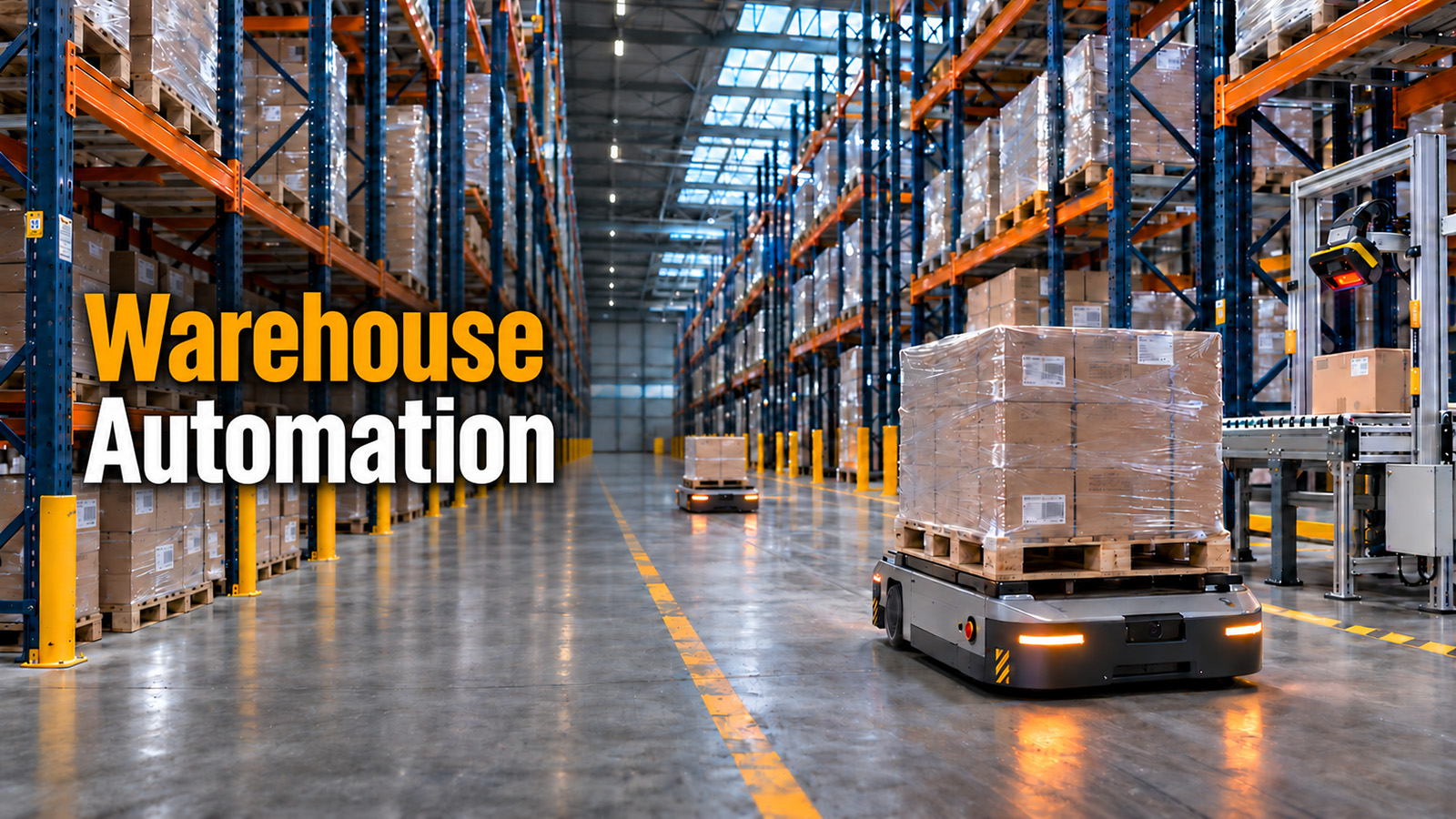
The last truck of the afternoon is at the dock. Its final pallet is still in reserve storage, and the only available forklift is clearing inbound stock. The warehouse has enough equipment to handle a normal hour. The delay starts when receiving, replenishment and dispatch all need the same resources at once.
For warehouse managers, what’s next in automation is a shift towards coordinating those jobs. A robot fleet can take over predictable moves. Automated storage can bring pallets to a transfer point. Better shipment data and task planning can reveal what is holding up an order. Each investment pays off when it addresses a delay that affects the rest of the shift.
1. AMR fleets that fit the warehouse traffic plan
An autonomous mobile robot (AMR) works well on repeatable routes with clear pickup and drop-off points. Consider the run from a pallet wrapper to dispatch staging. Giving that run to robots can free a forklift operator to load trailers. Fleet software assigns moves and manages charging, so several robots can share the work.
Fleet sizing gets harder when the staging lane fills, a crossing gets busy or several robots need charging during the same window. Before adding units, run the pilot through a full dispatch peak. Count completed deliveries, log why robots waited and check how a blocked drop-off is handled. Include the people who manage pedestrian routes and equipment recovery in the trial. Extra robots make sense when the route and destination can absorb more moves.
2. Pallet shuttle storage sized for retrieval demand
A four-way pallet shuttle moves loads along rails inside the racking. In a multilevel automated storage and retrieval system (AS/RS), lifts can move pallets between levels and transfer points. The arrangement is worth assessing when a site needs more pallet positions or spends too much forklift time travelling between reserve stock and the pick area.
Storage capacity and retrieval capacity answer different questions. A design can fit every pallet on the inventory plan and still leave a truck waiting when inbound putaway and outbound retrieval share a lift. Give the supplier a busy hour from your own operation, with both types of move in the order they actually occur. Check whether the proposed system can deliver the required loads in sequence. Ask which stock stays accessible during lift maintenance and what happens when an incoming pallet fails the entry check.
Shipment verification and task planning
3. Dimensioning, weighing and scanning at dispatch. A dimensioning, weighing and scanning (DWS) station captures a load’s dimensions, weight and barcode and passes those details to a shipping or warehouse system. It is especially useful where staff re-enter measurements or spend time matching several cartons to one shipment. Place the station after final packing, where it can measure the load as it will actually ship.
A fast reading has little value if it is attached to the wrong carton. Test multipiece shipments, reprinted labels and the largest and smallest packages the site handles. Give unreadable labels and out-of-range loads a separate place for review. Measure the share of shipments verified on the first pass and how long exceptions take to clear.
4. AI-assisted decisions in the warehouse management system. An AI feature in a warehouse management system (WMS) can help a supervisor see why an order is likely to miss its carrier cutoff. The issue may be one reserve pallet needed for several urgent orders. A supervisor who sees that dependency early can bring the replenishment move forward before pickers reach the empty location.
Start with one decision the team makes every day. For example, run suggested replenishment priorities alongside the current process and let supervisors review them before release. Check whether picker waiting time and late orders fall. If results vary between shifts, inspect scan timing, inventory locations and cutoff settings before expanding the pilot.
5. Electric narrow-aisle trucks alongside automation
An electric reach truck or very narrow aisle (VNA) turret truck can serve dense racking where operators still need direct access to individual pallets. A turret truck can work either side of the aisle without turning the whole vehicle. It can feed a transfer point used by an AMR or by a separate forklift serving the dock.
Choose the truck and layout together. Confirm operating clearance with the largest loaded pallet, verify residual capacity at the top beam and check the floor tolerances and any guidance requirements. Then watch the aisle-end handover during replenishment. If there is space for only one pallet and collection is slow, the operator will spend part of the shift waiting for that position to clear. Include handover space, charging and floor preparation in the investment comparison.
6. Cold storage automation designed around recovery
A freezer-rated shuttle can take over repetitive storage and retrieval inside the cold zone, with loads exchanged through a designated transfer point. For a frozen-food distributor, that transfer point deserves as much attention as the shuttle. Door cycling, temperature transitions and condensation can affect how reliably the equipment operates.
Check the equipment ratings for the temperatures it will encounter and assess maintenance access from the start. Include a stopped load and a blocked door in the acceptance plan. Confirm who responds, where the following loads can wait and how the team will protect product temperature during recovery.
Before approving a project, agree on three things
- The delay the project must reduce, measured during a representative peak shift.
- The number of loads that must reach the next process on time, including when routine exceptions occur.
- Who will restore flow after a fault and what the fallback process will cost to maintain.


GET A QUOTE
Tell us about your business requirement, one of our technical expert will be in touch with you soon..!
PROCEED
NEW PRODUCTS ALERTS