Warehouse Safety Accessories and Forklift Attachments
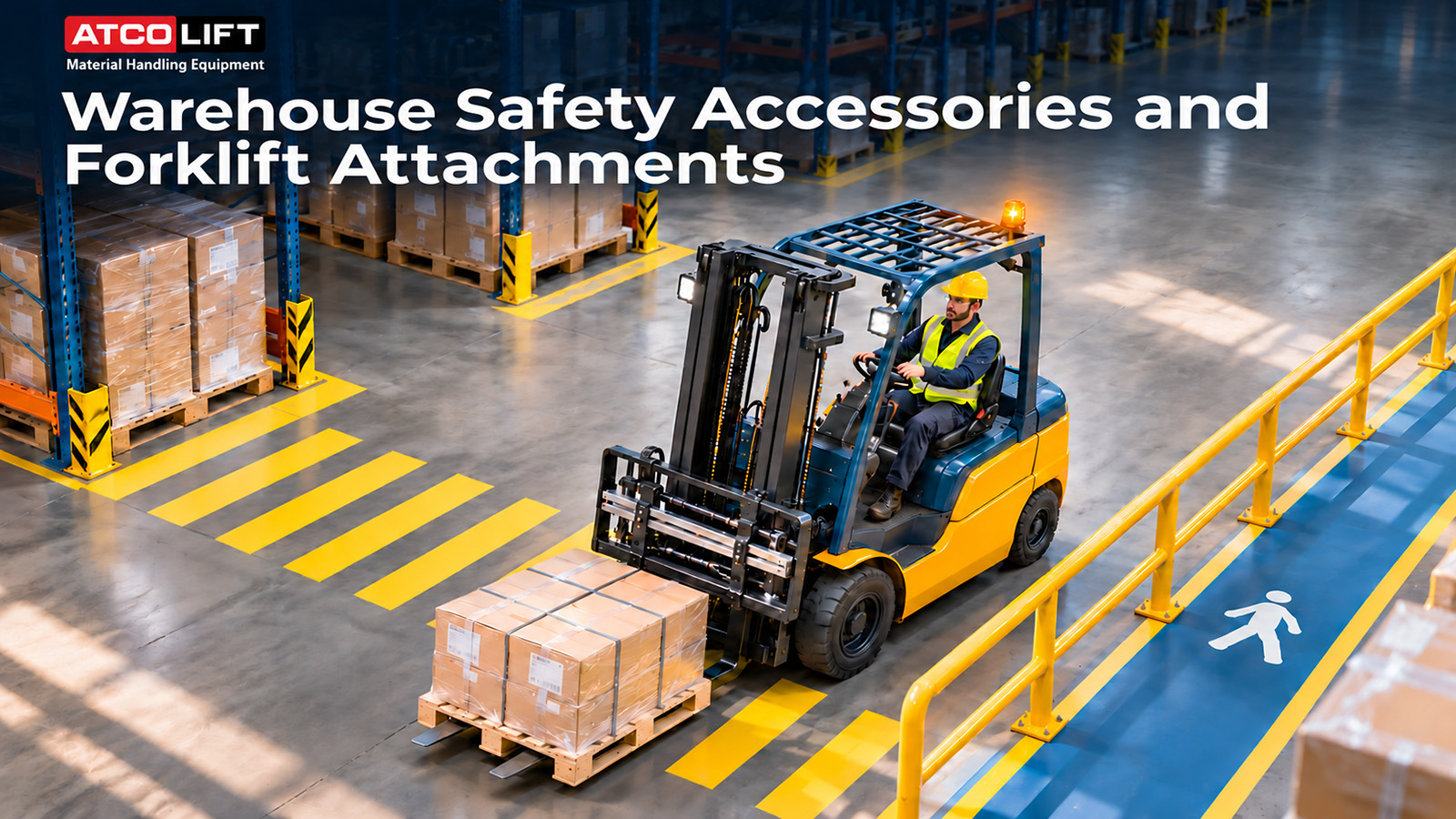
A forklift is trying to place a loaded pallet in a tight dispatch lane. The pallet is slightly out of line, so the operator backs out and approaches again. A picker waiting to cross the aisle steps around the staging area to see whether the truck has stopped. The next pallet arrives before the first one is in place.
The operator needs a better way to position the load, and the picker needs a route that stays clear of forklift traffic. A side shifter may help with the first problem. A protected walkway and a designated crossing can address the second.
Warehouse safety accessories and forklift attachments serve different purposes. Barriers, bollards, and warning devices help manage risks around the truck. Attachments such as side shifters, fork positioners, and clamps change how the truck handles a load. Start by identifying where the risk or delay occurs during the shift.
Start with the movement that causes the problem
Watch the task during the busiest part of the shift. Follow the load from pickup to final placement. Note where the operator stops, reverses, adjusts the forks, or waits for someone to clear the area. Check whether the delay happens with every load or only with a particular pallet size, product, or delivery vehicle.
In dispatch, repeated approaches may come from uneven staging, poor pallet alignment, or a lack of turning space. If pallets spill into the travel lane every afternoon, review the staging layout and release sequence before specifying an attachment. Where the lane stays clear but operators consistently need small sideways corrections, a side shifter may be a better fit for the task.
Match the safety accessory to the traffic risk
Start with the places where people and trucks come closest. Typical points include pedestrian doors opening onto forklift routes, blind corners near racking, and crossings between packing and dispatch. Where practical, separate pedestrian and vehicle routes physically. Select barriers for the expected impact risk and position them so pedestrians can reach designated crossings without stepping into a turning area.
Floor markings help people recognise routes and exclusion zones. Mirrors can improve visibility at some blind corners, and warning lights can make an approaching truck easier to notice. These are supplementary measures. A warning light has limited value if staged pallets hide it or pedestrians regularly have to enter the forklift route to reach their workstation.
Check sightlines with a loaded truck during normal operations. The view across an empty aisle can change as soon as outbound pallets fill the staging lanes. Include barriers, floor markings, mirrors, and warning devices in routine site checks so damage or poor visibility gets addressed before the layout becomes harder to use safely.
Choose the forklift attachment for the load
A side shifter moves the forks and load a short distance sideways within its permitted travel. It can help an operator line up a pallet with a rack opening or a marked staging position. A fork positioner adjusts the distance between the forks, which can save repeated manual adjustments where compatible pallet widths vary throughout the shift.
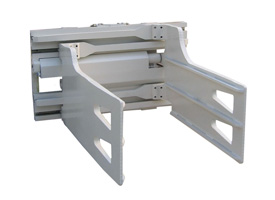
Clamps are more load-specific. A carton clamp grips a suitable load from the sides. Selection depends on the packaging, the load dimensions and weight, the contact surfaces, and the permitted clamping force. A clamp that fits the truck can still be a poor fit for the product. Excessive pressure can crush cartons, while insufficient grip can allow the load to slip.
A common buying mistake is to specify an attachment for the average load. Check the heaviest and deepest loads, the most vulnerable packaging, and the highest lift position used in the operation. Include irregular loads that arrive occasionally. Those exceptions often determine whether the same truck can cover the job or whether the site needs a separate handling method.
Check forklift capacity, clearance, and upkeep
An attachment can add weight and move the load farther forward, reducing the forklift's available lifting capacity. A deeper load can also move its centre of gravity farther from the fork face. Confirm the manufacturer-approved truck and attachment combination. Use its updated capacity plate to verify the permitted load at the required load centre and lift height.
Check clearances along the full working route. An attachment can add depth or width, restrict the operator's view, or change how the truck approaches racking and vehicle openings. Once the configuration and capacity have been verified, assess a representative load in a controlled trial. Include the tightest aisle, the intended rack position, and the staging lane. Verify hydraulic requirements and mounting compatibility before ordering.
Allow for the cost of hoses, wear parts, inspections, and downtime. A specialist attachment that improves one task can create a bottleneck if it is fitted to the only truck available for that work. Follow the manufacturer's inspection and service instructions. Include attachment security, visible damage, hydraulic leaks, and proper operation in pre-use checks. Take defective equipment out of service and train operators on the approved configuration before putting it into use.
What to verify before approving the purchase
- Record the load weight, dimensions, centre of gravity, packaging condition, and required lift height for the jobs the truck must cover.
- Confirm manufacturer approval, mounting and hydraulic compatibility, and the capacity shown on the updated plate for the combined configuration.
- Check operator visibility and clearance at pickup, during travel and turning, and at final placement.
- Walk the pedestrian routes during peak activity and confirm that staging, crossings, and barriers work with the proposed truck movements.
- Identify who will inspect and service the attachment, and how the shift will handle the same loads if the equipped truck is unavailable.
Before signing off, compare a representative handling cycle with the current method. Count the extra approaches, record where the operator loses sight of the load or travel path, and watch where people wait to cross. If most of the delay occurs before the forklift can reach the pallet, would changing the staging layout solve more of the problem than fitting an attachment?

GET A QUOTE
Tell us about your business requirement, one of our technical expert will be in touch with you soon..!
PROCEED
NEW PRODUCTS ALERTS