Fruit and Vegetable Net Packaging Machines: Features, Benefits and Applications
A central catering kitchen is preparing orders for several locations when the morning vegetable delivery arrives. Onion bags vary in weight, one closure has opened during unloading, and damaged potatoes need separating. Staff who should be issuing ingredients to the preparation team spend time checking and reorganizing the delivery.
The problem may originate at the supplier’s packing station, where workers manually weigh produce, fill bags, secure closures, and assemble dispatch orders. Under pressure, this sequence can produce uneven packs and repeated handling.
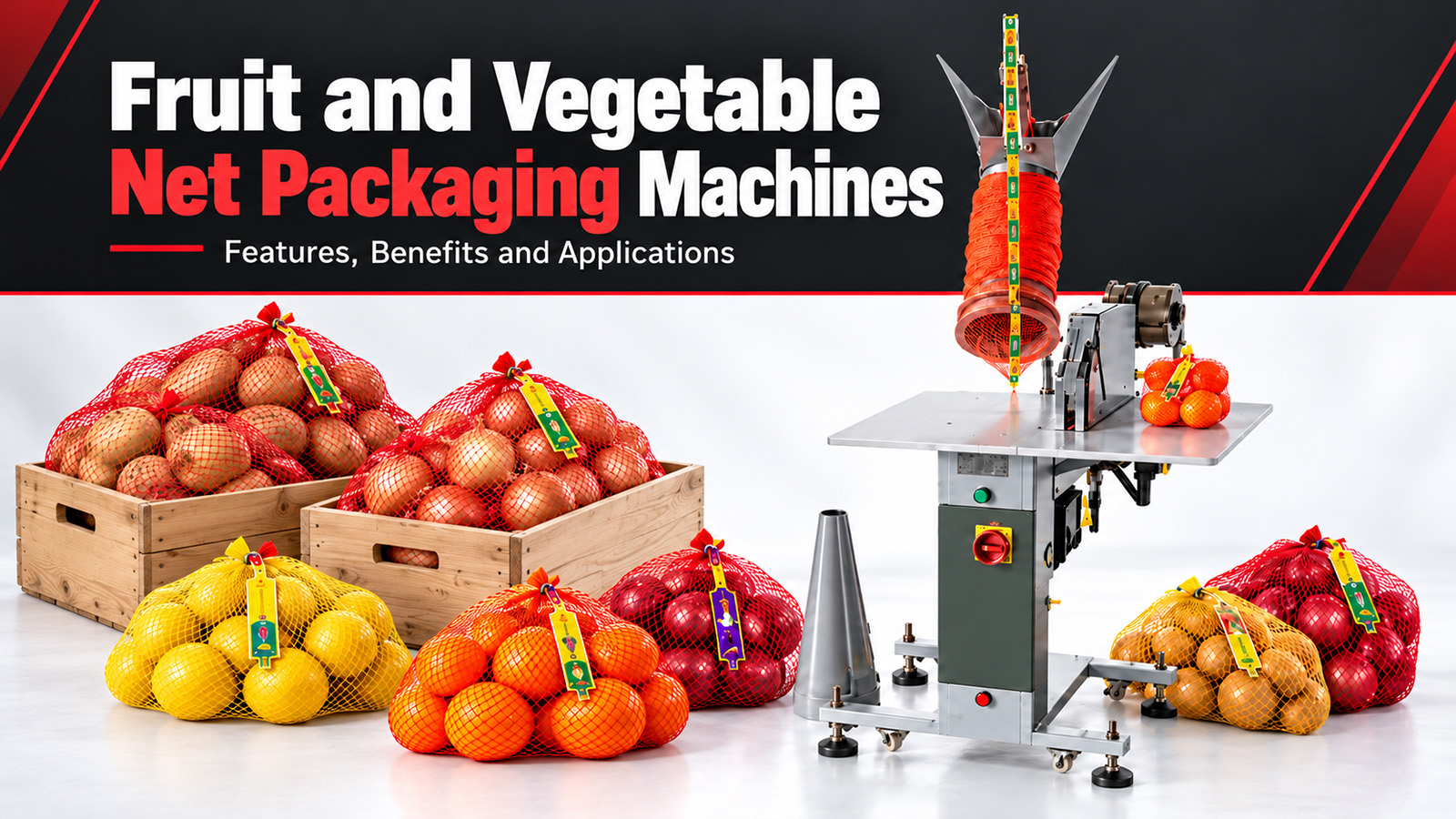
Fruit and vegetable net packaging machines place whole produce into mesh bags and secure the openings. Depending on the equipment configuration, weighing, counting, and labelling may be performed manually, by separate machines, or within an integrated line.
These machines mainly serve produce packers, distributors, and supermarket packing operations. Hospitality buyers benefit from understanding what makes a suitable incoming pack, while central kitchens can assess whether their own repacking requirements justify the equipment.
How Net Packaging Machines Work
Packing starts with inspected produce. Workers remove damaged items, loose debris, and products unsuitable for the intended pack. Mixing poor-quality produce into a securely closed bag simply transfers the problem to the customer.
The next stage establishes the quantity. A weighing system prepares a target-weight portion, while counting equipment prepares a specified number of items. The portion enters the net, the opening is closed, and the finished pack moves to collection or further checking.
Common closure formats include clipped net bags and thermal-welded net-and-film bags. Clipping mechanically secures the gathered net. Thermal-welded formats use compatible packaging materials and may incorporate printed film. The machine and consumables must match the chosen format.
With semi-automatic equipment, operators typically retain more responsibility for weighing, loading, or presenting the bag for closure. This can suit moderate volumes, varied orders, and operations where flexibility matters more than continuous output.
An automatic arrangement can coordinate feeding, portioning, bag formation, closing, and discharge. However, inspection, replenishing materials, checking packs, and loading crates may still require staff. Buyers should establish which activities are included rather than relying on the word “automatic.”
A net bagger also does not necessarily include a weigher. This distinction matters when the objective is consistent pack weight: improving closure speed alone will not correct inaccurate portions.
Features That Influence Packing Performance
Product handling is the first feature to evaluate. Onions, potatoes, and citrus fruit vary in size, shape, surface condition, and sensitivity to impact. Feed channels and transfer points should move the intended produce without frequent blockage or unnecessary drops.
Damage can occur before the bag is closed. A high drop into a hopper or rough transfer may bruise susceptible fruit even when the finished packaging looks correct. Equipment trials should therefore examine product condition as well as machine output.
Where weight-based packing is required, assess how the weigher manages natural item variation. Several large potatoes may exceed a target weight, while smaller ones allow different combinations. Check actual finished-pack results across representative batches.
Net dimensions, mesh opening, and strength also affect suitability. Small items should remain contained, and the filled bag must withstand normal lifting and transport. A closure that holds at the machine should also remain secure during crate loading and unloading.
Adjustable settings help accommodate different pack sizes, but useful flexibility depends on straightforward changeovers. Operators need clear setup procedures for changing products, loading materials, and restoring approved settings.
Labelling may be integrated or optional. If product names, batch references, or other information must appear on each pack, confirm how it is printed, attached, and checked. Incorrect identification can disrupt receiving and stock rotation even when the produce itself is acceptable.
Benefits and Suitable Applications
Net packaging provides visibility, allowing buyers and receiving staff to examine much of the produce without opening the bag. Mesh openings also permit air movement. These characteristics can suit appropriate whole produce, but they do not establish a guaranteed shelf-life improvement.
Consistent packs simplify order preparation and allocation. A supplier can assemble agreed quantities for individual customers, while a catering operation can distribute suitable packs to different kitchens with less reweighing.
Mechanical closing can reduce repetitive fastening work and make closure quality more repeatable. The total labour benefit depends on the remaining process. Staff may still spend considerable time sorting produce, preparing portions, checking bags, and moving crates.
Typical applications include whole potatoes, onions, garlic, and citrus fruit. Each product still requires a suitability assessment covering condition, size variation, pack weight, and handling method. A machine proven on onions should not automatically be assumed suitable for delicate fruit.
Netting is generally unsuitable where the product needs a sealed moisture barrier, liquid containment, or substantial protection from crushing. Cut fruit, washed prepared vegetables, and fragile items require a separate assessment of packaging and storage needs.
For an individual hotel or restaurant, specifying better supplier packs may solve the operational issue more economically than installing machinery. In-house packing becomes more relevant when recurring volume, multi-location dispatch, and available space support it.
Hygiene, Layout and Overlooked Costs
Mesh packaging remains open to its surroundings. It does not protect produce from all contamination or replace suitable storage. Receiving checks, clean handling surfaces, and product-specific holding conditions remain necessary.
In UAE, Saudi Arabia, and Oman operations, exposed loading areas can create avoidable holding delays during hot weather. Coordinate packing with dispatch and appropriate storage rather than allowing finished orders to accumulate wherever space is available.
Within a central kitchen, soil-bearing produce and incoming crates should follow the facility’s hygiene controls and remain separated from ready-to-eat preparation. Positioning the machine must support that separation.
Allow space for inspection, material replenishment, finished-pack collection, and cleaning. A compact machine can still require substantial working clearance once operators, crates, and packaging supplies are included.
Soil, onion skins, and plant fragments can accumulate around feeding components. Check access beneath the machine, removable contact parts, and permitted cleaning methods. Stainless steel construction alone does not mean electrical assemblies or the entire machine tolerate washdown.
What to Check Before Selecting Equipment
A common mistake is selecting by advertised bags per minute alone. Useful output depends on the product, target quantity, staffing, replenishment stops, and how quickly finished packs leave the machine.
Request a trial using your produce and intended packaging. Include normal size variation and routine changeovers rather than testing only an ideal batch.
Before approving a purchase, locate the existing bottleneck. If staff spend most of their time sorting or weighing, faster closure may leave dispatch unchanged. Choose the configuration that improves the limiting task and produces correctly portioned, securely closed packs at the rate the complete operation can handle.
The problem may originate at the supplier’s packing station, where workers manually weigh produce, fill bags, secure closures, and assemble dispatch orders. Under pressure, this sequence can produce uneven packs and repeated handling.
Fruit and vegetable net packaging machines place whole produce into mesh bags and secure the openings. Depending on the equipment configuration, weighing, counting, and labelling may be performed manually, by separate machines, or within an integrated line.
These machines mainly serve produce packers, distributors, and supermarket packing operations. Hospitality buyers benefit from understanding what makes a suitable incoming pack, while central kitchens can assess whether their own repacking requirements justify the equipment.
How Net Packaging Machines Work
Packing starts with inspected produce. Workers remove damaged items, loose debris, and products unsuitable for the intended pack. Mixing poor-quality produce into a securely closed bag simply transfers the problem to the customer.
The next stage establishes the quantity. A weighing system prepares a target-weight portion, while counting equipment prepares a specified number of items. The portion enters the net, the opening is closed, and the finished pack moves to collection or further checking.
Common closure formats include clipped net bags and thermal-welded net-and-film bags. Clipping mechanically secures the gathered net. Thermal-welded formats use compatible packaging materials and may incorporate printed film. The machine and consumables must match the chosen format.
With semi-automatic equipment, operators typically retain more responsibility for weighing, loading, or presenting the bag for closure. This can suit moderate volumes, varied orders, and operations where flexibility matters more than continuous output.
An automatic arrangement can coordinate feeding, portioning, bag formation, closing, and discharge. However, inspection, replenishing materials, checking packs, and loading crates may still require staff. Buyers should establish which activities are included rather than relying on the word “automatic.”
A net bagger also does not necessarily include a weigher. This distinction matters when the objective is consistent pack weight: improving closure speed alone will not correct inaccurate portions.
Features That Influence Packing Performance
Product handling is the first feature to evaluate. Onions, potatoes, and citrus fruit vary in size, shape, surface condition, and sensitivity to impact. Feed channels and transfer points should move the intended produce without frequent blockage or unnecessary drops.
Damage can occur before the bag is closed. A high drop into a hopper or rough transfer may bruise susceptible fruit even when the finished packaging looks correct. Equipment trials should therefore examine product condition as well as machine output.
Where weight-based packing is required, assess how the weigher manages natural item variation. Several large potatoes may exceed a target weight, while smaller ones allow different combinations. Check actual finished-pack results across representative batches.
Net dimensions, mesh opening, and strength also affect suitability. Small items should remain contained, and the filled bag must withstand normal lifting and transport. A closure that holds at the machine should also remain secure during crate loading and unloading.
Adjustable settings help accommodate different pack sizes, but useful flexibility depends on straightforward changeovers. Operators need clear setup procedures for changing products, loading materials, and restoring approved settings.
Labelling may be integrated or optional. If product names, batch references, or other information must appear on each pack, confirm how it is printed, attached, and checked. Incorrect identification can disrupt receiving and stock rotation even when the produce itself is acceptable.
Benefits and Suitable Applications
Net packaging provides visibility, allowing buyers and receiving staff to examine much of the produce without opening the bag. Mesh openings also permit air movement. These characteristics can suit appropriate whole produce, but they do not establish a guaranteed shelf-life improvement.
Consistent packs simplify order preparation and allocation. A supplier can assemble agreed quantities for individual customers, while a catering operation can distribute suitable packs to different kitchens with less reweighing.
Mechanical closing can reduce repetitive fastening work and make closure quality more repeatable. The total labour benefit depends on the remaining process. Staff may still spend considerable time sorting produce, preparing portions, checking bags, and moving crates.
Typical applications include whole potatoes, onions, garlic, and citrus fruit. Each product still requires a suitability assessment covering condition, size variation, pack weight, and handling method. A machine proven on onions should not automatically be assumed suitable for delicate fruit.
Netting is generally unsuitable where the product needs a sealed moisture barrier, liquid containment, or substantial protection from crushing. Cut fruit, washed prepared vegetables, and fragile items require a separate assessment of packaging and storage needs.
For an individual hotel or restaurant, specifying better supplier packs may solve the operational issue more economically than installing machinery. In-house packing becomes more relevant when recurring volume, multi-location dispatch, and available space support it.
Hygiene, Layout and Overlooked Costs
Mesh packaging remains open to its surroundings. It does not protect produce from all contamination or replace suitable storage. Receiving checks, clean handling surfaces, and product-specific holding conditions remain necessary.
In UAE, Saudi Arabia, and Oman operations, exposed loading areas can create avoidable holding delays during hot weather. Coordinate packing with dispatch and appropriate storage rather than allowing finished orders to accumulate wherever space is available.
Within a central kitchen, soil-bearing produce and incoming crates should follow the facility’s hygiene controls and remain separated from ready-to-eat preparation. Positioning the machine must support that separation.
Allow space for inspection, material replenishment, finished-pack collection, and cleaning. A compact machine can still require substantial working clearance once operators, crates, and packaging supplies are included.
Soil, onion skins, and plant fragments can accumulate around feeding components. Check access beneath the machine, removable contact parts, and permitted cleaning methods. Stainless steel construction alone does not mean electrical assemblies or the entire machine tolerate washdown.
Hidden cost: product giveaway.
As an example, an average excess of 20 grams across 1,000 packs uses an additional 20 kilograms of produce. Track this alongside rejected bags and handling damage.
Operating costs also include netting, clips or film, labels, utilities, servicing, and downtime. Where compressed air is required, include compressor operation and maintenance. Confirm reliable consumable supply before committing to a particular packaging format.What to Check Before Selecting Equipment
A common mistake is selecting by advertised bags per minute alone. Useful output depends on the product, target quantity, staffing, replenishment stops, and how quickly finished packs leave the machine.
Request a trial using your produce and intended packaging. Include normal size variation and routine changeovers rather than testing only an ideal batch.
- Product compatibility: Examine feeding reliability, visible damage, mesh suitability, and closure strength.
- Portion control: Confirm whether weighing or counting is included and verify finished-pack consistency.
- Practical capacity: Measure acceptable packs with the planned staffing and downstream handling arrangement.
- Daily usability: Assess cleaning access, changeover time, material loading, and operator training.
- Ownership support: Verify utilities, consumable availability, spare parts, and maintenance response.
Before approving a purchase, locate the existing bottleneck. If staff spend most of their time sorting or weighing, faster closure may leave dispatch unchanged. Choose the configuration that improves the limiting task and produces correctly portioned, securely closed packs at the rate the complete operation can handle.



GET A QUOTE
Tell us about your business requirement, one of our technical expert will be in touch with you soon..!
PROCEED
NEW PRODUCTS ALERTS