Improving Efficiency in Food Processing with Inspection Systems
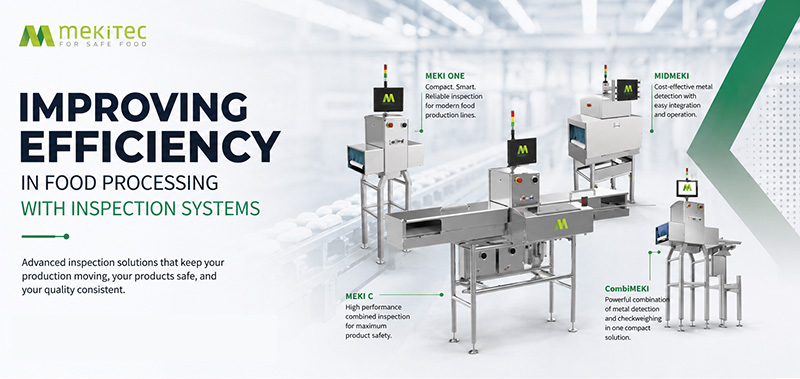
Efficiency has become one of the biggest priorities in today’s food processing industry. Rising operating costs, labour shortages, stricter food safety regulations, and increasing production demand are creating constant pressure on manufacturers across UAE, Saudi Arabia, and Oman.
For many facilities, the challenge is no longer just increasing production speed. The real focus is keeping operations running smoothly, reducing product wastage, maintaining consistent quality, and avoiding unnecessary downtime.
This is where modern food inspection systems are playing a major role.
From contamination detection to automated quality control, inspection systems help food processing facilities improve operational efficiency while reducing manual dependency and production interruptions.
Common challenges include:
In high-volume food processing environments, even short interruptions can affect production targets, dispatch schedules, and customer commitments.
This allows facilities to maintain production speed and consistency without compromising food safety standards.
With properly integrated food inspection systems, manufacturers can:
In GCC production environments where high temperatures and long operating hours are common, maintaining consistent manual inspection standards becomes more difficult.
Automated inspection systems help solve this challenge by providing continuous and reliable inspection performance throughout production hours.
This reduces pressure on operators while improving overall production reliability and workflow stability.
Repeatedly stopping the line for inspection reduces efficiency. At the same time, missing contamination or product defects can lead to wastage, recalls, compliance issues, and customer complaints.
Inline inspection systems help maintain both quality and efficiency together.
Products are inspected automatically while moving through the line. Defective items are removed immediately without interrupting the overall production flow.
This helps facilities maintain consistent product quality while protecting production output.
Inspection systems help facilities maintain compliance more efficiently by ensuring products are checked continuously throughout the production process.
Instead of relying heavily on manual verification, automated inspection creates a more controlled and traceable quality management process.
This improves operational stability while reducing the risk of costly quality-related issues.
Some commonly used systems include:
These benefits include:
Improving efficiency in food processing is not only about increasing production speed. It is about creating a stable production environment where quality, consistency, and operational flow work together effectively.
Modern food inspection systems help achieve this by reducing interruptions, improving quality control, minimizing manual dependency, and supporting smoother production flow.
For food manufacturers across the Middle East, investing in the right inspection approach is becoming an important step toward more efficient, reliable, and scalable operations.
For many facilities, the challenge is no longer just increasing production speed. The real focus is keeping operations running smoothly, reducing product wastage, maintaining consistent quality, and avoiding unnecessary downtime.
This is where modern food inspection systems are playing a major role.
From contamination detection to automated quality control, inspection systems help food processing facilities improve operational efficiency while reducing manual dependency and production interruptions.
Why Efficiency Problems Continue in Food Processing Lines
Many production lines still experience daily inefficiencies that slowly affect output, labour productivity, and operational costs.Common challenges include:
- Frequent production stoppages for manual inspection
- Late detection of contamination or defects
- Inconsistent quality checks between shifts
- Production slowdowns caused by rechecking and sorting
- High labour involvement in repetitive inspection tasks
In high-volume food processing environments, even short interruptions can affect production targets, dispatch schedules, and customer commitments.
How Inspection Systems Improve Production Efficiency
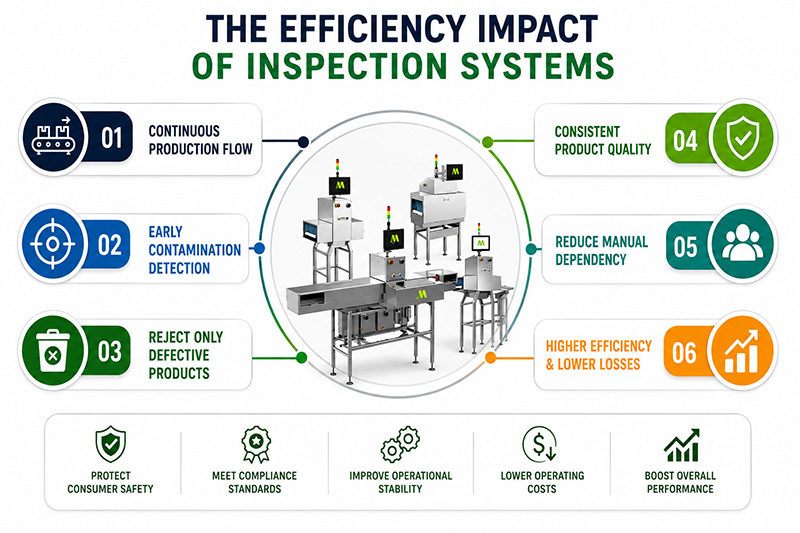
Modern inspection systems are designed to work as part of the production process itself. Instead of stopping the line for quality checks, products are inspected continuously as they move through the system.This allows facilities to maintain production speed and consistency without compromising food safety standards.
With properly integrated food inspection systems, manufacturers can:
- Reduce unnecessary production interruptions
- Detect contamination at an early stage
- Reject only defective products instead of full batches
- Improve consistency in quality control
- Reduce operator dependency during inspection
- Maintain smoother production flow across the line
Reducing Manual Dependency in Food Processing Operations
Manual inspection can slow down production, especially during long shifts and high-volume processing periods. Human inspection also depends heavily on concentration, experience, and working conditions.In GCC production environments where high temperatures and long operating hours are common, maintaining consistent manual inspection standards becomes more difficult.
Automated inspection systems help solve this challenge by providing continuous and reliable inspection performance throughout production hours.
This reduces pressure on operators while improving overall production reliability and workflow stability.
Improving Product Quality Without Slowing Production
One of the biggest operational challenges in food processing is maintaining product quality without affecting production speed.Repeatedly stopping the line for inspection reduces efficiency. At the same time, missing contamination or product defects can lead to wastage, recalls, compliance issues, and customer complaints.
Inline inspection systems help maintain both quality and efficiency together.
Products are inspected automatically while moving through the line. Defective items are removed immediately without interrupting the overall production flow.
This helps facilities maintain consistent product quality while protecting production output.
Supporting Compliance and Stable Operations
Food safety regulations across UAE, Saudi Arabia, and Oman are becoming stricter as manufacturers work to meet both local and international standards.Inspection systems help facilities maintain compliance more efficiently by ensuring products are checked continuously throughout the production process.
Instead of relying heavily on manual verification, automated inspection creates a more controlled and traceable quality management process.
This improves operational stability while reducing the risk of costly quality-related issues.
Common Inspection Systems Used in Food Processing
Different production environments require different inspection solutions depending on product type, packaging, and contamination risk.Some commonly used systems include:
- Metal Detectors – Used for detecting ferrous, non-ferrous, and stainless-steel contaminants
- X-ray Inspection Systems – Suitable for identifying dense foreign particles and internal product defects
- Checkweighers – Help maintain accurate product weight and reduce product giveaway
- Optical Sorting Systems – Used for sorting products based on colour, shape, and visible defects
Long-Term Benefits for Food Processing Facilities
Facilities that integrate inspection systems into their production lines often experience improvements beyond food safety alone.These benefits include:
- Higher production efficiency
- Reduced downtime and interruptions
- Lower product wastage
- Better consistency across production batches
- Reduced labour dependency
- Improved production planning and workflow stability
Improving efficiency in food processing is not only about increasing production speed. It is about creating a stable production environment where quality, consistency, and operational flow work together effectively.
Modern food inspection systems help achieve this by reducing interruptions, improving quality control, minimizing manual dependency, and supporting smoother production flow.
For food manufacturers across the Middle East, investing in the right inspection approach is becoming an important step toward more efficient, reliable, and scalable operations.



GET A QUOTE
Tell us about your business requirement, one of our technical expert will be in touch with you soon..!
PROCEED
NEW PRODUCTS ALERTS