Food Inspection Machines for SFDA, ESMA and Oman Compliance

A central kitchen is preparing hundreds of chilled meals for hotel outlets, corporate catering and delivery orders. Production is running on schedule until a small metal fragment is found during a final product check.
Dispatch stops. Finished meals are isolated, supervisors begin tracing the affected batch, and the team checks mixers, slicers and packing equipment. Ingredients, labour hours, packaging and refrigerated storage capacity have already been used. Without reliable inspection records, managers may have to hold or discard more products than necessary.
This situation often leads operators to ask which food inspection machines are required for SFDA, ESMA and Oman compliance. The practical answer is that there is no single machine list for every hotel, restaurant, bakery, butchery or central kitchen. The correct equipment depends on the food, production process, packaging, identified hazards and applicable local requirements.
What Food Safety Compliance Actually Requires
The Saudi Food and Drug Authority, commonly known as SFDA, regulates food safety in Saudi Arabia. In the UAE, ESMA remains a familiar industry term, but its standardisation and conformity responsibilities now sit under the Ministry of Industry and Advanced Technology. Food control also involves the relevant federal and local authorities. Oman’s Food Safety and Quality Centre oversees food safety and quality functions in the Sultanate.
These authorities expect food businesses to identify hazards, prevent contamination, maintain hygienic operations and keep evidence that their controls are working. Saudi Arabia, the UAE and Oman share several Gulf standards, but each country maintains its own regulatory and enforcement structure.
The equipment decision should therefore begin with a hazard analysis. A bakery slicing bread may identify metal fragments from damaged blades as a significant risk. A chilled-meal facility may place greater importance on seal integrity and temperature records. A hotel kitchen serving food directly may rely more heavily on calibrated thermometers, approved suppliers and controlled preparation practices.
If an inspection stage is identified as a critical control point or another essential control in the food safety plan, the business must define how it will be monitored, tested and recorded. Installing a machine is only one part of that control.
Which Inspection Machines May Be Needed?
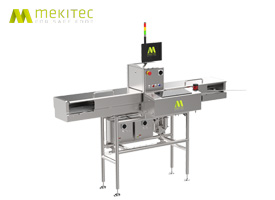
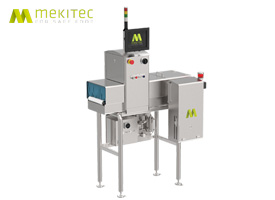
Food metal detectors are commonly used in bakeries, meat-processing sections, central kitchens and packaged-food operations. They can identify ferrous, non-ferrous and stainless-steel contamination from damaged blades, mixer components, grinders, sieves, maintenance work or incoming ingredients.
Product characteristics affect performance. Moist, salty, warm or chilled foods can behave differently inside a detector. Packaging material, pack size, conveyor speed and contaminant position also influence sensitivity. Buyers should test the actual product and packaging rather than rely only on catalogue figures.
X-ray systems may detect metal, glass, dense stone, mineral fragments and certain bones. They are often considered when products are packed in aluminium trays, foil or metallised materials that may make conventional metal detection difficult.
Some systems can also check fill level, product count and missing components. However, X-ray technology cannot detect every material. Performance depends on density, size, orientation, product composition and packaging, so realistic testing remains essential.
An automatic checkweigher confirms whether each package falls within an established weight range. In a central kitchen, it can identify an underfilled meal tray, a missing component or inconsistent portioning before dispatch. It also helps reduce product giveaway and exposes problems with filling equipment.
Vision systems can check labels, date codes, barcodes, packaging position and visible product features. This is useful when one line handles several recipes or allergen profiles. A correct meal inside the wrong sleeve can create a serious food safety and recall risk.
Seal and leak inspection is relevant for vacuum-packed meat, chilled meals, sauces and modified-atmosphere products. A weak seal may not be obvious during a quick visual check, but it can reduce shelf life and allow contamination after processing.
For hotels, restaurants and catering kitchens, temperature monitoring may be the most important everyday inspection control. Useful devices include calibrated probe thermometers, cold-room data loggers, blast-chiller monitoring systems and refrigerator or freezer alarms.
An infrared thermometer is useful for quick surface checks, but it does not confirm the centre temperature of cooked or chilled food. When core temperature matters, staff need a suitable sanitised probe and a clear recording procedure.
Matching Equipment to the Operation
| Food Operation | Main Inspection Priorities | Equipment to Evaluate |
|---|---|---|
| Hotel or restaurant kitchen | Cooking, cooling, storage and surface hygiene | Probe thermometers, data loggers and hygiene-verification tools |
| Central kitchen | Foreign bodies, portion accuracy, seals and temperature | Metal detector, checkweigher, leak detector and data logger |
| Bakery production | Metal contamination, pack weight and labelling | Metal detector, checkweigher and vision system |
| Butchery or meat processing | Metal, bone, packaging integrity and cold-chain control | Metal detector, X-ray, leak detector and temperature monitoring |
| Ready-meal facility | Foreign bodies, weight, seals and chilled dispatch | X-ray, checkweigher, seal inspection and data logging |
| Cold storage operation | Temperature stability and alarm response | Continuous data loggers and remote alarms |
The table is a planning guide, not a universal regulatory schedule. Final selection must follow the hazards, products and legal requirements applicable to the individual facility.
Where Equipment Selection Commonly Goes Wrong
A common procurement mistake is choosing the machine before understanding the hazard. Management may request a metal detector because it appears to be the normal choice, even though the product is packed in foil or the primary risk occurs earlier in the process.
Another mistake is treating detection as the complete control. If a machine finds a contaminated pack but the reject mechanism is unreliable, that product may continue towards dispatch. The system should detect the problem, remove the affected item and confirm that rejection occurred.
Depending on the application, the line may need a lockable reject container, reject confirmation, bin-full warning, air-pressure monitoring or an automatic conveyor stop. The correct arrangement depends on whether it handles wrapped products, meal trays, bakery items, powders or loose ingredients.
Space planning also matters. A machine may fit on the layout drawing but create problems during cleaning or maintenance. Staff need safe access to belts, sensors, control panels and reject areas without blocking another production route.
During peak production, poor positioning can create a bottleneck between cooking, chilling and packing. Products may wait longer than planned while operators feed them through an undersized inspection line. Inspection capacity should match the busiest realistic production period, not only average daily volume.
GCC operating conditions deserve attention as well. Equipment positioned near cooking lines, loading areas or poorly ventilated production spaces may face high temperatures, dust, humidity or condensation. Its construction, electrical protection and operating range should match the real installation environment.
Hygiene, Testing and Maintenance
Inspection machines must not introduce new hygiene risks. Frames, conveyors and product-contact areas should be easy to clean and suitable for the kitchen’s sanitation process. Food residues can collect around rollers, belt edges, guards and poorly positioned cables.
Cleaning requirements differ between a dry bakery and a wet meat-preparation area. High-pressure water can damage equipment that was not designed for washdown. On the other hand, a machine that cannot tolerate the required cleaning method may leave sanitation gaps.
Routine performance checks should reflect the HACCP or food safety plan. Test pieces may need to pass through the system at the start and end of production, during product changes, at defined intervals and after maintenance.
When a test fails, staff must know what to do with every product processed since the previous successful check. Without a documented isolation and reinspection procedure, the kitchen may be unable to demonstrate control during an audit.
Making the Final Compliance Decision
A hotel kitchen, bakery, butchery section and central catering facility should not use the same inspection plan simply because they operate in the same country. Their hazards, production volumes, packaging formats and customer requirements are different.
Hotel and restaurant kitchens may need strong receiving controls, cooking-temperature checks, cold-room monitoring and allergen procedures. High-volume bakeries may require metal detection, checkweighing and label verification. Central kitchens producing sealed chilled meals may need controls across cooking, chilling, portioning, sealing and dispatch.
Documentation is as important as equipment capability. Auditors may examine the hazard assessment, machine test records, calibration evidence, rejected-product reports, cleaning schedules, maintenance history and corrective actions. Missing records can make a functioning machine difficult to defend as an effective control.
Before approving food inspection equipment for SFDA, UAE or Oman compliance, the procurement team should bring together the chef or production manager, food safety officer, engineering team and equipment specialist. Each person sees a different part of the operational risk.
Final decision point
Can the proposed inspection system reliably control the identified hazard during the busiest production period while remaining cleanable, testable, maintainable and properly documented?



GET A QUOTE
Tell us about your business requirement, one of our technical expert will be in touch with you soon..!
NEW PRODUCTS ALERTS