Controlling Wastage and Labour Costs in Meat Processing Operations
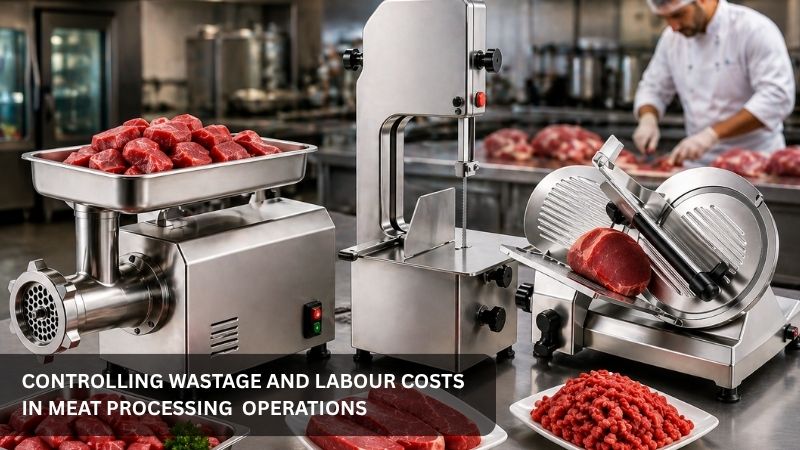
Rising operating expenses are forcing food businesses to closely examine how meat processing activities are managed inside commercial kitchens, butcheries, supermarkets, catering facilities, and food production units. Across many operations, the biggest losses are not always coming from raw material prices alone. Daily wastage, inefficient labour usage, inconsistent processing, and workflow delays are quietly increasing operational costs.
In meat processing environments, even small handling mistakes can create long-term financial impact. Uneven slicing, excessive trimming, poor portion control, inconsistent grinding texture, and repeated manual handling often reduce usable product yield. At the same time, labour-heavy workflows increase fatigue, slow production speed, and make it difficult to maintain stable output during busy periods.
Modern meat processing equipment is helping businesses improve consistency, reduce waste, and manage labour pressure more effectively while maintaining hygiene and operational control.
Why Wastage Is a Bigger Problem Than Many Businesses Realize
In many meat preparation facilities, wastage happens gradually throughout the day. A small amount lost during trimming may appear minor. Slight over-portioning may not seem serious during one shift. However, when these losses repeat daily across large production volumes, the overall financial impact becomes significant.
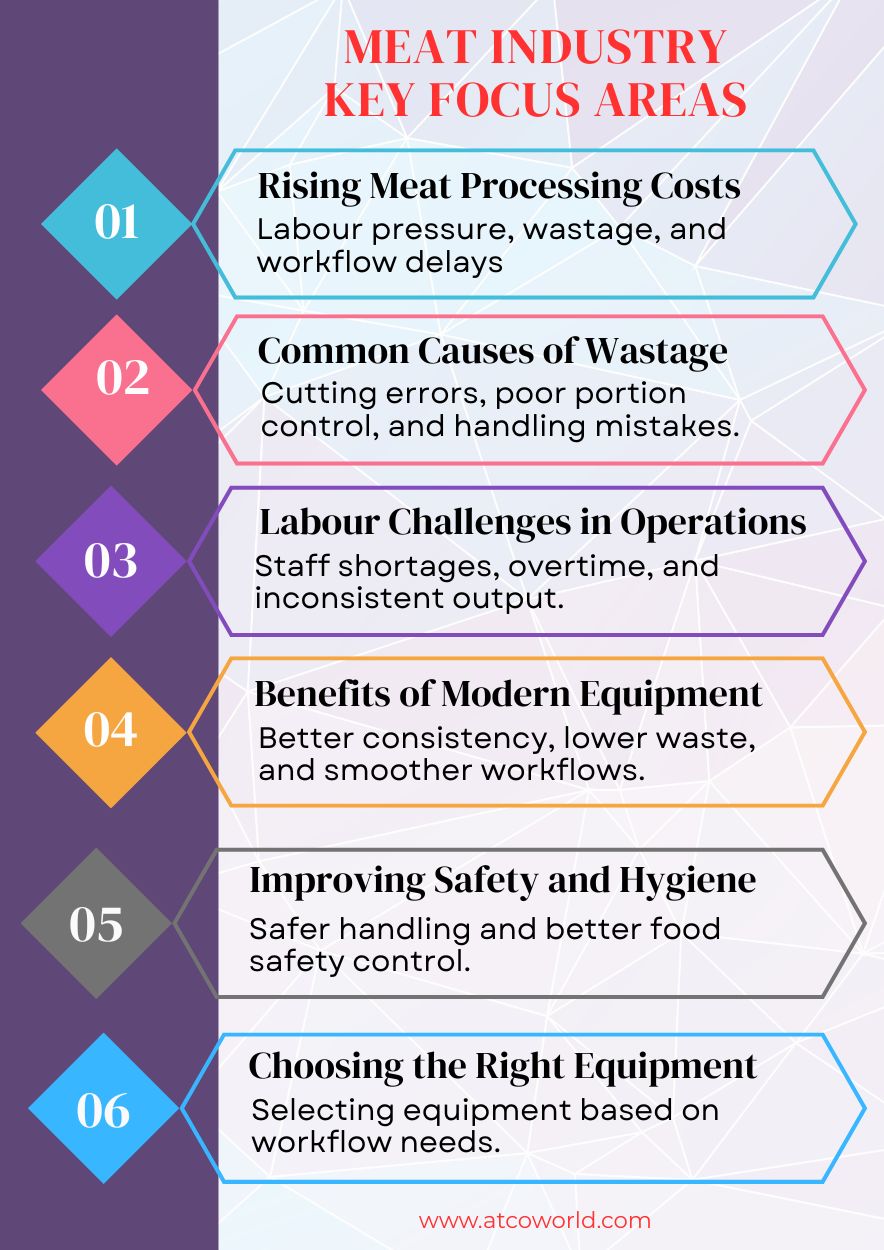
Common causes of wastage in manual meat processing include:
For businesses handling high-value meat products, even small reductions in yield directly affect profitability.
 Labour Dependency Is Increasing Operational Pressure
Manual meat processing requires skilled labour for cutting, slicing, deboning, mixing, portioning, and preparation. Many food businesses are now facing difficulties maintaining experienced labour teams due to staff shortages, rising salary expectations, and physically demanding work conditions.
During busy production periods, manual operations become harder to manage efficiently. Workers become fatigued after repetitive tasks, especially in hot kitchen environments or high-volume preparation areas. This often affects speed, consistency, and product quality.
Labour-heavy workflows also create operational risks such as:
As businesses expand operations, depending fully on manual processing becomes increasingly difficult to sustain.
How Modern Meat Processing Equipment Improves Cost Control
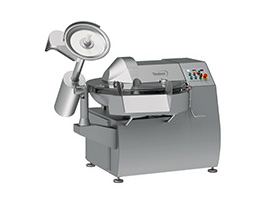
Modern meat processing equipment helps standardize production tasks while reducing unnecessary manual handling. Equipment such as meat grinders, slicers, bone saws, bowl cutters, meat mixers, tenderizers, sausage fillers, and patty forming machines improve consistency across daily operations.
For example, automated slicing systems help maintain accurate portion thickness with minimal product variation. Meat grinders provide more uniform texture while handling larger quantities efficiently. Bowl cutters and mixers improve blending consistency and reduce preparation time.
This level of consistency helps businesses:
The benefit is not only faster processing. The larger advantage is improved operational stability.
Better Portion Control Improves Profit Margins
Portion inconsistency is one of the hidden reasons behind profit loss in meat preparation operations. Over-portioning affects food cost calculations, while under-portioning affects customer satisfaction and product presentation.
Modern meat processing systems improve portion accuracy by maintaining more controlled slicing, grinding, forming, and mixing processes. This becomes especially important for:
Accurate portion control allows businesses to manage inventory more efficiently while improving consistency across locations and shifts.
Reducing Downtime During Peak Production
In many food businesses, operational delays happen because one preparation stage slows down the next process. Slow slicing delays marination. Delayed grinding affects mixing and forming. Inconsistent preparation creates packing delays and workflow interruptions.
Modern meat processing equipment helps improve production flow between different stages of operation. More stable processing speed allows teams to plan production schedules with better accuracy, particularly during:
Reducing operational interruptions helps businesses maintain output consistency without increasing unnecessary labour pressure.
Worker Safety and Hygiene Are Operational Priorities
Manual meat handling involves continuous use of sharp tools, repetitive movement, heavy lifting, and direct product contact. These conditions increase the chances of injuries, fatigue, and contamination risks.
Modern meat processing equipment supports safer operations through:
Many modern machines are also designed for easier cleaning and sanitation, helping businesses maintain hygiene standards more effectively. This is particularly important for food businesses supplying hotels, restaurants, airlines, catering contracts, and retail supermarket chains.
Choosing Equipment Based on Real Workflow Needs
Not every operation requires a fully automated processing line. The right equipment depends on actual production requirements and workflow challenges.
Before investing, businesses should evaluate:
For some businesses, a reliable grinder and slicer may remove major bottlenecks. Larger facilities may require integrated systems supporting preparation, forming, packing, and cold storage handling.
The most effective investment is usually the one that solves a real operational problem rather than simply adding machine capacity.
In meat processing environments, even small handling mistakes can create long-term financial impact. Uneven slicing, excessive trimming, poor portion control, inconsistent grinding texture, and repeated manual handling often reduce usable product yield. At the same time, labour-heavy workflows increase fatigue, slow production speed, and make it difficult to maintain stable output during busy periods.
Modern meat processing equipment is helping businesses improve consistency, reduce waste, and manage labour pressure more effectively while maintaining hygiene and operational control.
Why Wastage Is a Bigger Problem Than Many Businesses Realize
In many meat preparation facilities, wastage happens gradually throughout the day. A small amount lost during trimming may appear minor. Slight over-portioning may not seem serious during one shift. However, when these losses repeat daily across large production volumes, the overall financial impact becomes significant.
Common causes of wastage in manual meat processing include:
- Uneven cutting and trimming
- Incorrect portion sizing
- Inconsistent grinding quality
- Excessive handling during preparation
- Product contamination risks
- Delayed processing during peak hours
- Temperature exposure during slow preparation
- Operator fatigue and handling mistakes
For businesses handling high-value meat products, even small reductions in yield directly affect profitability.
Manual meat processing requires skilled labour for cutting, slicing, deboning, mixing, portioning, and preparation. Many food businesses are now facing difficulties maintaining experienced labour teams due to staff shortages, rising salary expectations, and physically demanding work conditions.
During busy production periods, manual operations become harder to manage efficiently. Workers become fatigued after repetitive tasks, especially in hot kitchen environments or high-volume preparation areas. This often affects speed, consistency, and product quality.
Labour-heavy workflows also create operational risks such as:
- Production slowdowns during staff shortages
- Inconsistent output between shifts
- Longer training periods for new workers
- Increased overtime expenses
- Higher risk of workplace injuries
- Difficulty scaling production during seasonal demand
As businesses expand operations, depending fully on manual processing becomes increasingly difficult to sustain.
How Modern Meat Processing Equipment Improves Cost Control
Modern meat processing equipment helps standardize production tasks while reducing unnecessary manual handling. Equipment such as meat grinders, slicers, bone saws, bowl cutters, meat mixers, tenderizers, sausage fillers, and patty forming machines improve consistency across daily operations.
For example, automated slicing systems help maintain accurate portion thickness with minimal product variation. Meat grinders provide more uniform texture while handling larger quantities efficiently. Bowl cutters and mixers improve blending consistency and reduce preparation time.
This level of consistency helps businesses:
- Reduce product wastage
- Improve yield control
- Minimize rework
- Lower labour dependency
- Reduce preparation delays
- Improve workflow planning
- Maintain consistent product quality
The benefit is not only faster processing. The larger advantage is improved operational stability.
Better Portion Control Improves Profit Margins
Portion inconsistency is one of the hidden reasons behind profit loss in meat preparation operations. Over-portioning affects food cost calculations, while under-portioning affects customer satisfaction and product presentation.
Modern meat processing systems improve portion accuracy by maintaining more controlled slicing, grinding, forming, and mixing processes. This becomes especially important for:
- Restaurants
- Hotel kitchens
- Catering companies
- Supermarket meat sections
- Ready-to-cook food suppliers
- Burger and kebab production
Accurate portion control allows businesses to manage inventory more efficiently while improving consistency across locations and shifts.
Reducing Downtime During Peak Production
In many food businesses, operational delays happen because one preparation stage slows down the next process. Slow slicing delays marination. Delayed grinding affects mixing and forming. Inconsistent preparation creates packing delays and workflow interruptions.
Modern meat processing equipment helps improve production flow between different stages of operation. More stable processing speed allows teams to plan production schedules with better accuracy, particularly during:
- Weekend rush periods
- Festival demand
- Bulk catering orders
- Hotel banquet preparation
- High-volume supermarket sales
Reducing operational interruptions helps businesses maintain output consistency without increasing unnecessary labour pressure.
Worker Safety and Hygiene Are Operational Priorities
Manual meat handling involves continuous use of sharp tools, repetitive movement, heavy lifting, and direct product contact. These conditions increase the chances of injuries, fatigue, and contamination risks.
Modern meat processing equipment supports safer operations through:
- Safety guards and protective covers
- Emergency stop systems
- Controlled feeding mechanisms
- Reduced manual cutting exposure
- Stable machine structures
- Hygienic stainless-steel construction
Many modern machines are also designed for easier cleaning and sanitation, helping businesses maintain hygiene standards more effectively. This is particularly important for food businesses supplying hotels, restaurants, airlines, catering contracts, and retail supermarket chains.
Choosing Equipment Based on Real Workflow Needs
Not every operation requires a fully automated processing line. The right equipment depends on actual production requirements and workflow challenges.
Before investing, businesses should evaluate:
- Daily processing volume
- Product type and preparation method
- Available labour strength
- Cleaning and hygiene requirements
- Future production expansion plans
- Peak production timing
- Floor space availability
- Maintenance support and spare parts access
For some businesses, a reliable grinder and slicer may remove major bottlenecks. Larger facilities may require integrated systems supporting preparation, forming, packing, and cold storage handling.
The most effective investment is usually the one that solves a real operational problem rather than simply adding machine capacity.


GET A QUOTE
Tell us about your business requirement, one of our technical expert will be in touch with you soon..!
PROCEED
NEW PRODUCTS ALERTS