Choosing Confectionery Equipment for Chocolate, Cookie & Cake Production
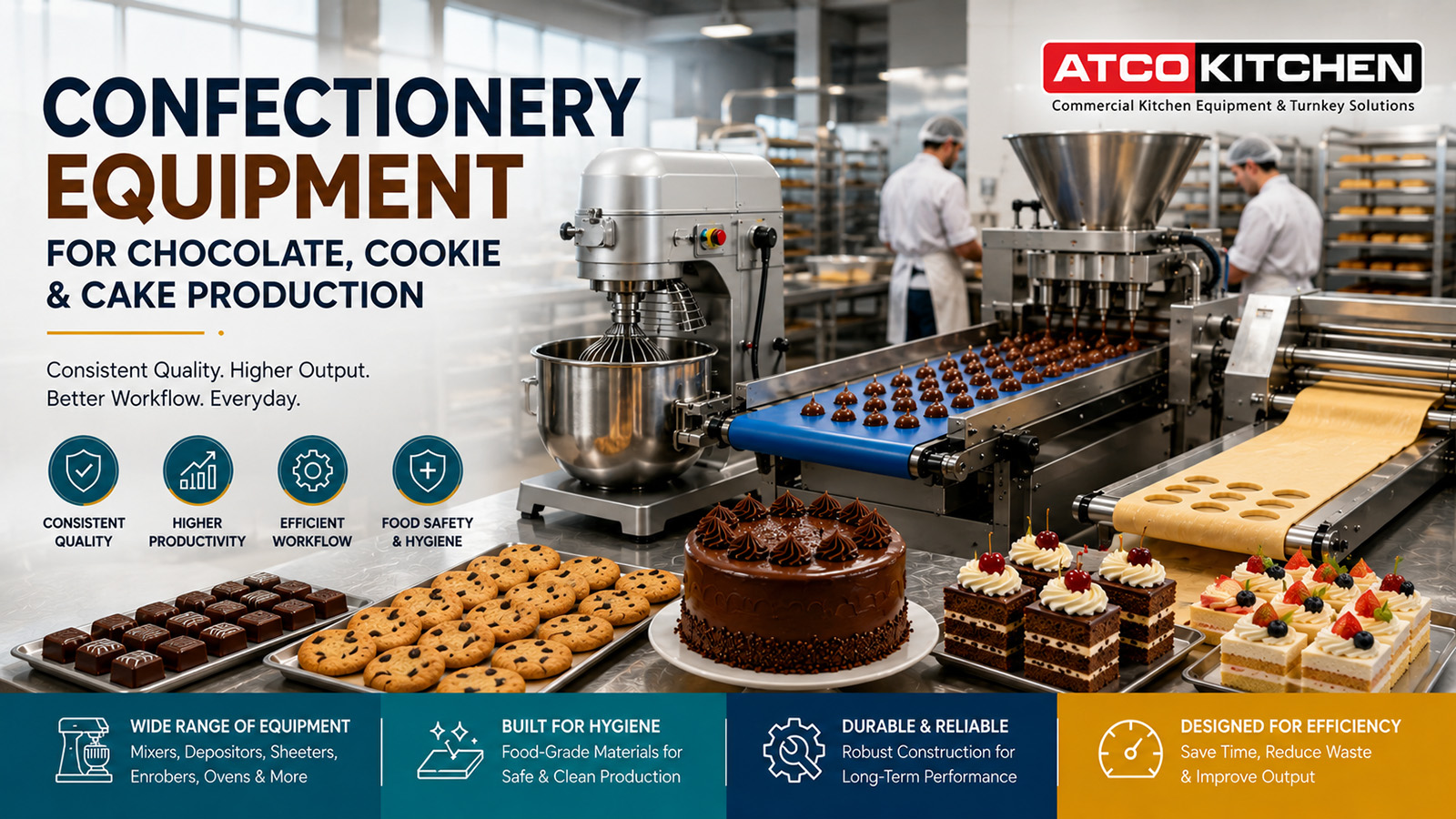
In a busy bakery or hotel pastry kitchen, production rarely falls behind because of one major failure. More often, several small problems build up during the shift. A mixer takes too long to prepare the next batch. Cookie dough leaves the sheeter at uneven thickness. Cake batter is deposited at different weights. Chocolate loses its shine because its temperature changes during handling.
By the time the products reach baking, cooling, finishing, or packing, the team is already correcting mistakes made earlier in the process. This adds labour, delays dispatch, and makes it difficult to maintain the same result from one batch to the next.
Confectionery equipment should therefore be selected as part of a complete production flow. Mixers, depositors, sheeters, tempering machines, enrobers, cooling equipment, and ovens must suit the actual product, batch size, available space, and cleaning routine. A high-capacity machine offers little benefit if the next stage cannot keep pace.
Where Production Delays Usually Begin
Many confectionery problems start before baking. Ingredient weighing, mixing, portioning, shaping, and temperature control all affect the final product.
Cake batter can lose volume when it is mixed for too long or handled too roughly. Cookie dough may become sticky if it warms up during preparation. Thick fillings can block a depositor designed for smoother mixtures. Chocolate can lose gloss and texture when tempering is not controlled properly.
During a quiet shift, experienced staff may correct these issues manually. During banquet preparation, seasonal demand, or large catering orders, the same approach becomes difficult. Output then depends too much on individual operators, and product quality changes when different staff members handle the process.
The first practical step is to identify the stage that creates the most delay or inconsistency. Replacing equipment without finding the real bottleneck may only move the problem to another section.
What the Main Confectionery Machines Do
Each machine has a specific purpose, but production improves only when the machines work well together.
One common buying mistake is choosing a machine only by its maximum output. A large depositor may fill trays quickly, but production will still slow down if the mixer cannot prepare batter at the same rate or if the oven has limited tray capacity.
Capacity should be checked across the complete line, not machine by machine.
Match the Equipment to the Product
Chocolate, cookies, and cakes do not behave in the same way. Even products within one category can require different handling.
A light sponge batter needs controlled mixing to keep enough air in the mixture. A heavy fruit cake mix needs more torque and stronger tools. Soft cookie dough may be deposited directly, while firmer dough may need sheeting and cutting. Products containing nuts, fruit pieces, or chocolate chips may require wider outlets and stronger feeding systems.
Product texture is one of the most important selection points. A depositor that works well with smooth batter may struggle with thick fillings or mixtures containing solid pieces. A mixer that handles cream easily may not be suitable for dense dough.
Buyers should check the recipe, ingredient temperature, inclusion size, batch weight, and required portion accuracy before comparing machines. Where possible, the actual product should be tested. A short trial can reveal sticking, poor flow, excessive air, difficult discharge, or cleaning problems that may not appear in a specification sheet.
Layout Matters as Much as Machine Choice
A good production area allows ingredients and products to move in one clear direction: storage, weighing, mixing, shaping or depositing, baking or cooling, finishing, and packing.
Poor layout increases lifting, walking, and tray movement. It can also create hygiene problems when raw ingredients, finished products, cleaning tools, and waste routes cross each other.
In a small bakery or hotel pastry kitchen, a larger machine may create more problems than it solves. Space is needed not only for the machine itself, but also for loading, unloading, bowl movement, tray handling, cleaning, and maintenance access.
Heat is another important issue in the UAE, Saudi Arabia, Oman, and other GCC markets. Ovens, motors, and refrigeration systems affect room temperature. Warm conditions can change chocolate behaviour, soften dough, increase staff fatigue, and place extra demand on cooling equipment.
ATCOKITCHEN may be involved in equipment and layout discussions, but the practical decision should always begin with the product flow, available space, and working conditions of the kitchen.
Cleaning and Food Safety
Confectionery production uses ingredients that are sticky, oily, powdery, or allergenic. Chocolate, butter, eggs, dairy products, nuts, and flour can collect around hoppers, seals, tools, guards, belts, and corners.
A machine may look simple from the outside but take a long time to dismantle and clean. This hidden cleaning time reduces production hours and increases labour cost. It can also lead to rushed cleaning at the end of a busy shift.
Before selecting equipment, check the following:
Cleaning should be planned as part of production time. The team needs enough time to empty the machine, remove parts, wash, inspect, reassemble, and test it before the next batch begins.
Maintenance, Downtime, and Hidden Cost
The purchase price is only one part of the total equipment cost. Product waste, cleaning labour, energy use, spare parts, operator training, and downtime can cost more over the life of the machine.
A single critical machine can stop the full line. If the main mixer fails, the depositor and oven may remain idle. If the tempering unit stops, coating and finishing work may be delayed. For a hotel banquet operation or central kitchen, this can affect deliveries to several outlets.
Maintenance access should be checked before installation. Technicians need room to reach motors, belts, sensors, controls, seals, and lubrication points. Spare parts availability and local service support are also important, especially during peak production periods.
Energy use should be considered in relation to useful output. A larger machine may consume more power without improving total production if another stage remains slower.
Questions to Ask Before Selecting Equipment
The most useful question is not only, “How much can this machine produce?” It is, “Can this equipment handle our real recipes, fit our available space, support our cleaning routine, and keep production moving during the busiest part of the day?”
By the time the products reach baking, cooling, finishing, or packing, the team is already correcting mistakes made earlier in the process. This adds labour, delays dispatch, and makes it difficult to maintain the same result from one batch to the next.
Confectionery equipment should therefore be selected as part of a complete production flow. Mixers, depositors, sheeters, tempering machines, enrobers, cooling equipment, and ovens must suit the actual product, batch size, available space, and cleaning routine. A high-capacity machine offers little benefit if the next stage cannot keep pace.
Where Production Delays Usually Begin
Many confectionery problems start before baking. Ingredient weighing, mixing, portioning, shaping, and temperature control all affect the final product.
Cake batter can lose volume when it is mixed for too long or handled too roughly. Cookie dough may become sticky if it warms up during preparation. Thick fillings can block a depositor designed for smoother mixtures. Chocolate can lose gloss and texture when tempering is not controlled properly.
During a quiet shift, experienced staff may correct these issues manually. During banquet preparation, seasonal demand, or large catering orders, the same approach becomes difficult. Output then depends too much on individual operators, and product quality changes when different staff members handle the process.
The first practical step is to identify the stage that creates the most delay or inconsistency. Replacing equipment without finding the real bottleneck may only move the problem to another section.
What the Main Confectionery Machines Do
Each machine has a specific purpose, but production improves only when the machines work well together.
- Mixers: Used for cake batter, cookie dough, creams, fillings, and similar products. Bowl capacity, mixing action, speed control, and motor strength should match the recipe.
- Depositors: Portion batter, cream, filling, or chocolate into trays and moulds. Accurate depositing improves product weight, appearance, and baking consistency.
- Dough sheeters: Produce an even thickness for cookies, pastry sheets, and layered products. They reduce manual rolling and improve repeatability.
- Chocolate tempering machines: Control heating and cooling so chocolate develops the required shine, snap, and stability.
- Enrobers and coating systems: Apply chocolate or other coatings evenly while reducing repeated manual handling.
- Cooling equipment: Stabilises baked, filled, or coated products before packing and storage.
One common buying mistake is choosing a machine only by its maximum output. A large depositor may fill trays quickly, but production will still slow down if the mixer cannot prepare batter at the same rate or if the oven has limited tray capacity.
Capacity should be checked across the complete line, not machine by machine.
Match the Equipment to the Product
Chocolate, cookies, and cakes do not behave in the same way. Even products within one category can require different handling.
A light sponge batter needs controlled mixing to keep enough air in the mixture. A heavy fruit cake mix needs more torque and stronger tools. Soft cookie dough may be deposited directly, while firmer dough may need sheeting and cutting. Products containing nuts, fruit pieces, or chocolate chips may require wider outlets and stronger feeding systems.
Product texture is one of the most important selection points. A depositor that works well with smooth batter may struggle with thick fillings or mixtures containing solid pieces. A mixer that handles cream easily may not be suitable for dense dough.
Buyers should check the recipe, ingredient temperature, inclusion size, batch weight, and required portion accuracy before comparing machines. Where possible, the actual product should be tested. A short trial can reveal sticking, poor flow, excessive air, difficult discharge, or cleaning problems that may not appear in a specification sheet.
Layout Matters as Much as Machine Choice
A good production area allows ingredients and products to move in one clear direction: storage, weighing, mixing, shaping or depositing, baking or cooling, finishing, and packing.
Poor layout increases lifting, walking, and tray movement. It can also create hygiene problems when raw ingredients, finished products, cleaning tools, and waste routes cross each other.
In a small bakery or hotel pastry kitchen, a larger machine may create more problems than it solves. Space is needed not only for the machine itself, but also for loading, unloading, bowl movement, tray handling, cleaning, and maintenance access.
Heat is another important issue in the UAE, Saudi Arabia, Oman, and other GCC markets. Ovens, motors, and refrigeration systems affect room temperature. Warm conditions can change chocolate behaviour, soften dough, increase staff fatigue, and place extra demand on cooling equipment.
ATCOKITCHEN may be involved in equipment and layout discussions, but the practical decision should always begin with the product flow, available space, and working conditions of the kitchen.
Cleaning and Food Safety
Confectionery production uses ingredients that are sticky, oily, powdery, or allergenic. Chocolate, butter, eggs, dairy products, nuts, and flour can collect around hoppers, seals, tools, guards, belts, and corners.
A machine may look simple from the outside but take a long time to dismantle and clean. This hidden cleaning time reduces production hours and increases labour cost. It can also lead to rushed cleaning at the end of a busy shift.
Before selecting equipment, check the following:
- Can food-contact parts be removed without excessive tools?
- Are surfaces smooth and easy to reach?
- How long will a full cleaning and product changeover take?
- Will cleaning chemicals damage seals, belts, or coatings?
- Can allergen changeovers be completed safely within the production schedule?
Cleaning should be planned as part of production time. The team needs enough time to empty the machine, remove parts, wash, inspect, reassemble, and test it before the next batch begins.
Maintenance, Downtime, and Hidden Cost
The purchase price is only one part of the total equipment cost. Product waste, cleaning labour, energy use, spare parts, operator training, and downtime can cost more over the life of the machine.
A single critical machine can stop the full line. If the main mixer fails, the depositor and oven may remain idle. If the tempering unit stops, coating and finishing work may be delayed. For a hotel banquet operation or central kitchen, this can affect deliveries to several outlets.
Maintenance access should be checked before installation. Technicians need room to reach motors, belts, sensors, controls, seals, and lubrication points. Spare parts availability and local service support are also important, especially during peak production periods.
Energy use should be considered in relation to useful output. A larger machine may consume more power without improving total production if another stage remains slower.
Questions to Ask Before Selecting Equipment
- Which products and recipes will the machine handle?
- What are the normal and peak batch sizes?
- Which stage currently causes the most delay?
- Can the mixer, depositor, oven, cooling area, and packing team work at a similar pace?
- How much space is needed for operation, cleaning, and maintenance?
- How long will a recipe changeover take?
- How many trained operators are required?
- Are spare parts and service support available?
The most useful question is not only, “How much can this machine produce?” It is, “Can this equipment handle our real recipes, fit our available space, support our cleaning routine, and keep production moving during the busiest part of the day?”
GET A QUOTE
Tell us about your business requirement, one of our technical expert will be in touch with you soon..!
PROCEED
NEW PRODUCTS ALERTS