Improving Food Safety with Optical Sorting Technology

Food safety is of paramount importance in the food industry, as consumers increasingly demand high-quality products that are free from contaminants. To address this crucial aspect, the integration of optical sorting technology has emerged as a powerful solution. Optical sorters utilize advanced sensors and algorithms to efficiently detect and remove unwanted materials, ensuring the production of safer food products. In this article, we explore how optical sorting technology is revolutionizing food safety by enhancing detection capabilities, minimizing risks, and maintaining stringent quality standards.
1. Enhanced Detection Capabilities:
Optical sorting technology employs a combination of high-resolution cameras, infrared sensors, and advanced imaging algorithms to identify and analyze food products in real-time. These systems excel in detecting various contaminants, including foreign objects, such as glass, metal, stones, and plastic fragments, as well as defects like discoloration, blemishes, and shape irregularities. By rapidly scanning vast quantities of products, optical sorters can accurately identify and remove even the smallest impurities, significantly reducing the risk of contaminated food reaching consumers.
2. Minimizing Risks:
Contaminated food can lead to severe health hazards, costly recalls, and damage to a brand's reputation. Optical sorters act as a vital line of defense, working alongside other quality control measures to minimize risks. By effectively removing potential contaminants, optical sorting technology acts as a proactive measure to prevent contamination incidents. This proactive approach not only safeguards consumer health but also helps food manufacturers and processors adhere to stringent regulatory requirements, ensuring compliance with food safety standards.
Optical sorters not only contribute to food safety but also play a pivotal role in maintaining consistent quality standards. By removing defective or substandard products from the production line, these systems help ensure that only products meeting predetermined quality criteria are packaged and delivered to consumers. This not only enhances consumer satisfaction but also reduces the likelihood of consumer complaints, returns, and potential liability issues.
4. Application in Diverse Food Segments:
Optical sorting technology finds application across various food segments, including fresh produce, grains, nuts, seafood, dairy, and processed foods. In fresh produce sorting, optical sorters can accurately differentiate and remove damaged or diseased fruits and vegetables, enhancing shelf life and visual appeal. In grain sorting, they can detect and eliminate mycotoxin-contaminated grains, safeguarding human and animal health. Similarly, optical sorters ensure the removal of shell fragments in seafood processing and foreign objects in dairy products, reducing the risk of injury and contamination.
The integration of optical sorting technology has revolutionized food safety in the food industry. By employing advanced sensors, high-resolution cameras, and sophisticated algorithms, optical sorters can efficiently and accurately detect contaminants, defects, and impurities. This technology not only enhances the detection capabilities but also minimizes risks, maintaining stringent quality standards, and ensuring the production of safer food products. As food safety continues to be a priority, the adoption of optical sorting technology will undoubtedly play a crucial role in protecting consumers and upholding the integrity of the food supply chain.
1. Enhanced Detection Capabilities:
Optical sorting technology employs a combination of high-resolution cameras, infrared sensors, and advanced imaging algorithms to identify and analyze food products in real-time. These systems excel in detecting various contaminants, including foreign objects, such as glass, metal, stones, and plastic fragments, as well as defects like discoloration, blemishes, and shape irregularities. By rapidly scanning vast quantities of products, optical sorters can accurately identify and remove even the smallest impurities, significantly reducing the risk of contaminated food reaching consumers.
2. Minimizing Risks:
Contaminated food can lead to severe health hazards, costly recalls, and damage to a brand's reputation. Optical sorters act as a vital line of defense, working alongside other quality control measures to minimize risks. By effectively removing potential contaminants, optical sorting technology acts as a proactive measure to prevent contamination incidents. This proactive approach not only safeguards consumer health but also helps food manufacturers and processors adhere to stringent regulatory requirements, ensuring compliance with food safety standards.
Fruits & Vegetable Sorting Machines:
Raynbow Optical Sorting Machines
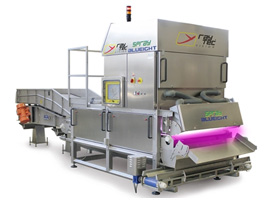
Spray Optical Sorting Machines
Dryce Sorting Machines
3. Maintaining Stringent Quality Standards:Raynbow Optical Sorting Machines
Spray Optical Sorting Machines
Dryce Sorting Machines
Optical sorters not only contribute to food safety but also play a pivotal role in maintaining consistent quality standards. By removing defective or substandard products from the production line, these systems help ensure that only products meeting predetermined quality criteria are packaged and delivered to consumers. This not only enhances consumer satisfaction but also reduces the likelihood of consumer complaints, returns, and potential liability issues.
4. Application in Diverse Food Segments:
Optical sorting technology finds application across various food segments, including fresh produce, grains, nuts, seafood, dairy, and processed foods. In fresh produce sorting, optical sorters can accurately differentiate and remove damaged or diseased fruits and vegetables, enhancing shelf life and visual appeal. In grain sorting, they can detect and eliminate mycotoxin-contaminated grains, safeguarding human and animal health. Similarly, optical sorters ensure the removal of shell fragments in seafood processing and foreign objects in dairy products, reducing the risk of injury and contamination.
The integration of optical sorting technology has revolutionized food safety in the food industry. By employing advanced sensors, high-resolution cameras, and sophisticated algorithms, optical sorters can efficiently and accurately detect contaminants, defects, and impurities. This technology not only enhances the detection capabilities but also minimizes risks, maintaining stringent quality standards, and ensuring the production of safer food products. As food safety continues to be a priority, the adoption of optical sorting technology will undoubtedly play a crucial role in protecting consumers and upholding the integrity of the food supply chain.


GET A QUOTE
Tell us about your business requirement, one of our technical expert will be in touch with you soon..!
PROCEED
NEW PRODUCTS ALERTS