The first pallets are ready for dispatch, but the forklift is waiting at the loading bay. The arriving truck sits lower than the usual trailers, and the transition into its load floor is too steep for the planned movement. While the team checks another bay, more pallets arrive from picking and begin filling the staging area.
A loading delay rarely stays at the dock. It can hold up forklifts, occupy dispatch space and disrupt the next vehicle appointment. When this happens repeatedly, the problem may be the relationship between the vehicles, handling equipment and dock leveller.
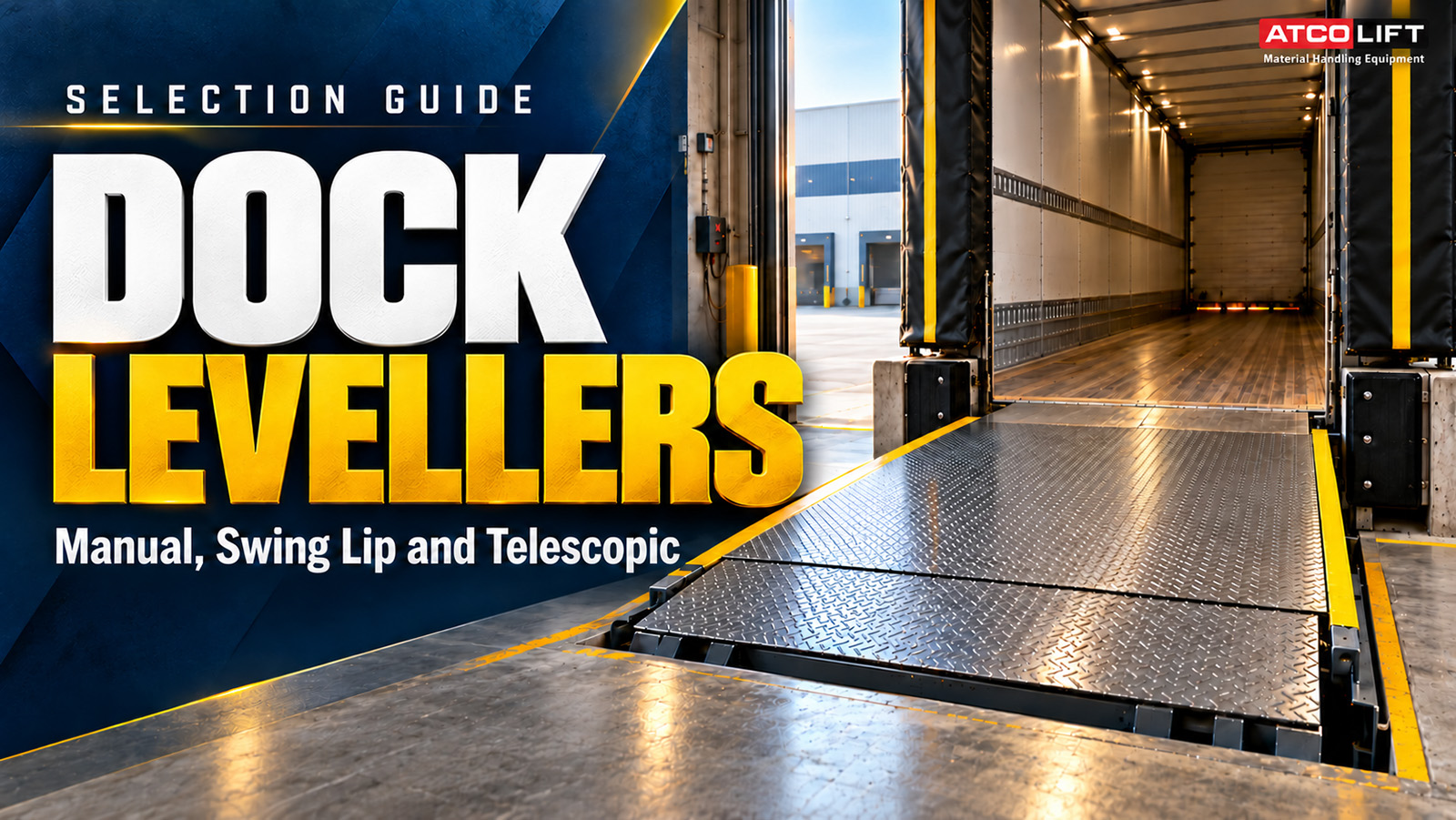
A dock leveller bridges the gap between the warehouse loading bay and a vehicle floor while accommodating differences in height. Choosing the right arrangement means checking how that crossing will work during a busy shift, including when an unfamiliar vehicle arrives or the load changes.
Manual Operation and Lip Design: Two Separate Decisions
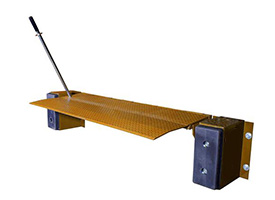
Manual dock levellers require physical input from the operator, sometimes assisted by a mechanical mechanism. They may be appropriate for occasional loading where the deployment effort, working range and vehicle compatibility are suitable.
Assess the complete operating sequence before choosing manual equipment. Where does the operator stand? How much effort does deployment require? How often must the equipment be positioned and stored during the busiest period? A quiet daily average can conceal a demanding morning delivery window.
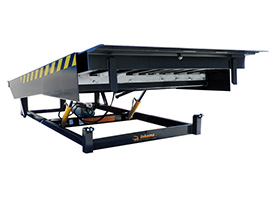
Swing lip dock levellers, also called hinged lip levellers, use a front section that pivots outward to rest on the vehicle floor. They are a practical option to assess where vehicles dock consistently and the lip can achieve the required support throughout the intended working range.
Telescopic dock levellers use a lip that slides outward. Adjustable extension allows more control over its landing position where additional reach or particular vehicle geometry makes this useful.
Telescopic equipment is not automatically the better purchase. Its value depends on whether adjustable reach solves an identified loading problem. Where a hinged lip meets the application requirements, extra extension may add little operational benefit.
Start with the Vehicles That Actually Use the Bay
The regular trailer is only part of the assessment. Include smaller rigid trucks, occasional supplier vehicles and seasonal deliveries. Record floor heights under relevant loaded and unloaded conditions, rear opening dimensions, tail-lift arrangements and the available lip landing surface.
Consider a food distribution warehouse receiving articulated trailers in the morning and smaller delivery trucks later. A leveller selected only for the trailers may create an unsuitable incline or lip position for the afternoon vehicles. Allocating different vehicles to suitable bays may be more practical than expecting every bay to handle everything.
Platform length and lip length solve different problems. Platform length influences the incline between the dock and vehicle. Lip length determines the horizontal distance available for bridging. A longer lip cannot make an excessively steep platform suitable.
Check the installed bumpers and the vehicle stopping position together. They influence the gap the lip must cross. Rear projections or a restricted landing area can affect compatibility even when two vehicles have similar floor heights.
The vehicle also moves as loading progresses. Changes in suspension height and load distribution must remain within the proposed leveller’s operating limits, with the required lip support maintained.
Before accepting a model, ask the supplier to demonstrate its suitability across the intended vehicle range rather than at one convenient parked position.
Match Capacity and Transitions to the Handling Equipment
One common purchasing mistake is choosing dock leveller capacity from pallet weight alone. The leveller must support the handling equipment as well as the goods it carries.
For example, a forklift with an actual service weight of 4,500 kg carrying a 2,000 kg load presents a combined mass of 6,500 kg, before any items excluded from those figures are considered. This is an input for assessment, not a complete capacity specification.
Provide the supplier with the forklift’s actual configuration, attachments and battery details where applicable. Its lifting capacity does not tell you its service weight. Wheel loading, operating frequency and the manufacturer’s rating assumptions also affect selection.
Capacity descriptions require care. Static capacity, rollover capacity in the stored position and capacity during loading operations refer to different conditions. Quotations should clearly identify the applicable rating and operating limits.
The crossing itself needs checking. A forklift and a small-wheel pallet truck may behave differently over the same transition. Ground clearance, wheel size and load overhang can cause contact or difficult movement even when the equipment is within the leveller’s load rating.
Confirm compatibility with both manufacturers’ limits. The vehicle floor must also be suitable for the handling equipment entering it; the leveller’s capacity does not establish the vehicle floor’s strength.
Look Beyond Purchase Price to Safety and Uptime
A correctly selected leveller still depends on a controlled loading process. It does not secure the vehicle against premature departure. The site procedure must address appropriate vehicle restraint or chocking arrangements, driver communication and authorisation to leave.
The lip must rest on a suitable load-bearing surface with the overlap specified for the model. Operators need to recognise incorrect support, unusual movement and visible damage before a forklift crosses.
Check maintenance access before installation. Difficult access can turn a routine inspection into a longer interruption. Confirm the service schedule, available wear parts and arrangements for inspecting the deck, lip, operating mechanism and structural connections.
Environmental conditions deserve specific attention. Exposed bays in the UAE, Saudi Arabia and Oman may face heat, dust and water entry. Cold-store applications require consideration of low temperatures, condensation and coordination with doors and seals. The proposed model and maintenance plan should address the actual exposure.
An overlooked cost is the disruption caused when the bay becomes unavailable. Forklifts wait, staging fills up and vehicles need reassignment. A cheaper installation can become expensive if its limitations repeatedly interrupt dispatch.
Give Procurement a Clear Application Brief
Comparable quotations begin with consistent information. A technical discussion with ATCOLIFT or another equipment supplier is more useful when it includes the loading conditions rather than only a requested tonnage.
-
Vehicle range: Verify floor-height extremes, rear geometry, stopping positions and suitable lip landing surfaces.
-
Handling equipment: Confirm actual service weights, carried loads, wheel arrangements and permitted transitions.
-
Peak workload: Describe vehicle arrivals, crossing frequency, operator involvement and acceptable downtime.
-
Installation conditions: Check pit dimensions, structural suitability, drainage, power and coordination with doors and bumpers.
- Acceptance requirements: Obtain documented capacity assumptions, working limits, lip-support requirements, commissioning checks and maintenance instructions.
Before signing off, review the most demanding intended combination: the vehicle height, loaded handling equipment and landing position that leave the least operating margin. Can the proposed leveller accommodate that combination within its documented limits throughout the loading cycle?