Cloud Kitchen Meat Station: Equipment, Layout and Compliance
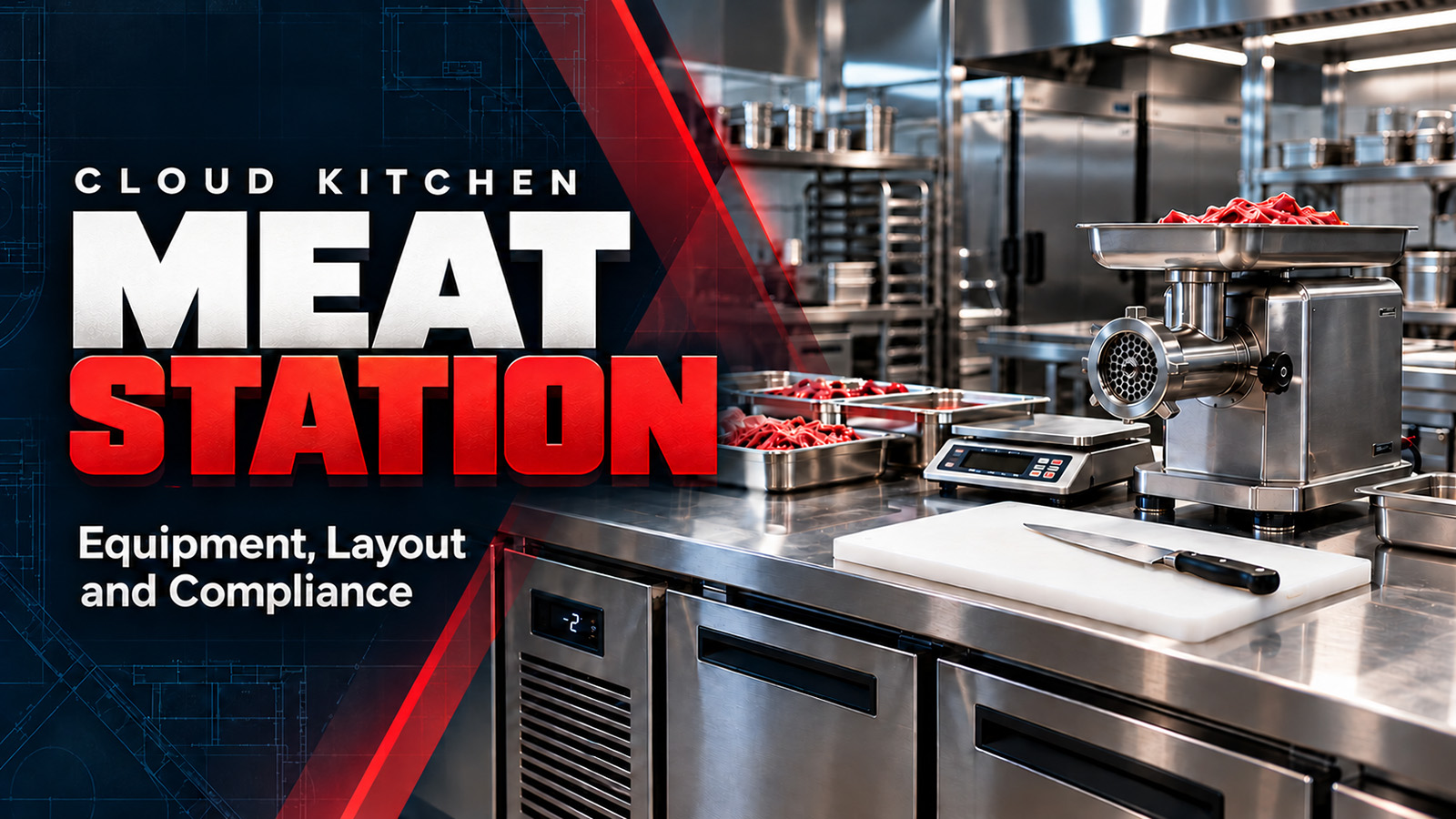
The evening rush is approaching, but the meat preparation area is already behind. Chicken portions are waiting for marinade, beef needs trimming, and the burger team needs another batch of patties. Two employees are sharing one bench while trays compete for space inside the refrigerator.
These delays rarely come from a single missing machine. They usually develop when the menu, equipment capacity, storage and staff movement have been planned separately.
A cloud kitchen meat station is a designated area for preparing raw meat before cooking. Its role may include trimming, deboning, cutting, mincing, weighing and marinating. A well-planned station gives each task enough space while keeping raw handling separate from ready-to-eat food and delivery packing.
1. Let the Menu Define the Station
Before choosing equipment, establish what the kitchen will receive and what staff must do to it. Whole cuts require different preparation from supplier-portioned steaks, boneless chicken or ready-prepared mince.
Follow the preparation sequence for each main menu item. Where is the meat stored? Does it need controlled thawing? Who trims, weighs and seasons it? Where will prepared portions wait before cooking?
These questions reveal the station’s real workload. A kitchen may handle a modest daily quantity but still struggle because most preparation must happen during a short period before service.
Also compare in-house preparation with supplier-prepared products. A higher purchase price may be offset by improved usable yield, less trimming waste and fewer preparation hours. Assess the cost per usable portion rather than the price per kilogram alone.
2. Choose Equipment for the Actual Workload
Start with refrigeration, preparation surfaces and handling tools. Specialist machinery becomes useful only when these basics support an organised process.
- Refrigeration: Allow usable capacity for incoming meat, thawing batches and prepared portions. Check container dimensions, shelf loading, airflow and door access.
- Preparation benches: Choose durable, cleanable surfaces with room for the cutting task, incoming product and finished portions. Avoid arrangements that force staff to stack trays around the cutting board.
- Knives, boards and scales: Match tools to the preparation method. Suitable scales help staff maintain portion weights and recipe consistency.
- Mincers and mixers: Evaluate the intended meat, batch size and required finish. Include loading, unloading and cleaning time when comparing productive capacity.
- Supporting facilities: Provide food-grade containers, batch identification, accessible handwashing and an organised route for used tools and waste.
A common purchasing mistake is selecting a meat mincer by its advertised hourly capacity. Actual performance depends on product temperature, feed size, fat content and the selected plate. Ask for a demonstration using meat and batch sizes similar to those used in your kitchen.
Equipment should also be convenient at smaller volumes. A large machine may leave more product inside its components or require disproportionate cleaning time after a short production run.
When reviewing specifications with an equipment supplier such as ATCOKITCHEN , share the menu, product format, peak batch requirements and available utilities. This creates a more useful discussion than selecting equipment from floor area alone.
3. Plan Movement Beyond the Preparation Bench
The station should connect chilled storage, preparation and cooking without sending raw meat through ready-to-eat assembly or dispatch. Short travel distances help, but separation and clear access matter just as much.
Check the space with refrigerator doors open and employees in working positions. An aisle that looks adequate on a drawing may become blocked by a trolley or a chef collecting ingredients.
Give prepared batches a defined destination. If staff finish cutting but cannot return the product to refrigeration, the bottleneck has simply moved from the bench to storage.
Plan the dirty route as well. Used boards, trays and mincer components need to reach washing without passing over clean equipment or finished food. Waste containers should be convenient without obstructing movement.
Keep handwashing facilities accessible throughout preparation. In compact premises, any shared preparation arrangement needs an authority-acceptable procedure for preventing contamination, including effective cleaning and sanitising between activities.
4. Turn Food Safety Requirements into Daily Actions
Confirm the applicable licensing, layout and operating requirements before fixing equipment positions or installing services. Requirements depend on the location and the activities carried out; another kitchen’s arrangement is not proof of approval.
The food safety plan should explain receiving checks, chilled storage limits, approved thawing methods and preparation controls. Staff also need clear corrective actions when a delivery, temperature reading or handling practice does not meet the required conditions.
Work with manageable batches instead of bringing the full shift’s meat onto the bench. Keep raw meat, its juices and handling tools separate from ready-to-eat food. Colour coding can help staff identify equipment, but it does not replace proper cleaning or supervision.
Pay attention to mincer plates, seals, guards and joints where residue can remain. Cooking, cooling and vacuum packing require their own process controls. Vacuum packaging alone does not establish a safe extended shelf life.
5. Include Cleaning and Downtime in the Cost
Purchase price is only part of the decision. Compare preparation labour, usable yield, cleaning time, energy demand, consumables and maintenance access.
Refrigeration needs particular attention in hot kitchen conditions. Avoid unnecessary cooking heat, maintain ventilation clearances and provide access for condenser cleaning. Frequent door opening, damaged gaskets and restricted airflow can add to its workload.
Check the availability of replacement blades, plates, seals and other critical parts. Decide how production will continue safely if an essential machine or refrigerator becomes unavailable.
- Can the station complete the busiest batch with the planned staff?
- Is chilled storage sufficient for incoming stock, thawing and prepared portions?
- Are raw handling and dirty equipment routes separated from ready-to-eat food?
- Can staff clean, dismantle and service equipment safely?
- Have the layout and proposed activities been checked against local requirements?
Before approving the station, follow one batch from storage to cooking, then follow its used trays and tools to washing. Where does movement stop, and can that point be resolved before equipment positions become permanent?


GET A QUOTE
Tell us about your business requirement, one of our technical expert will be in touch with you soon..!
NEW PRODUCTS ALERTS