Choosing a Floor Scrubber or Sweeper for Food Factories and Warehouses
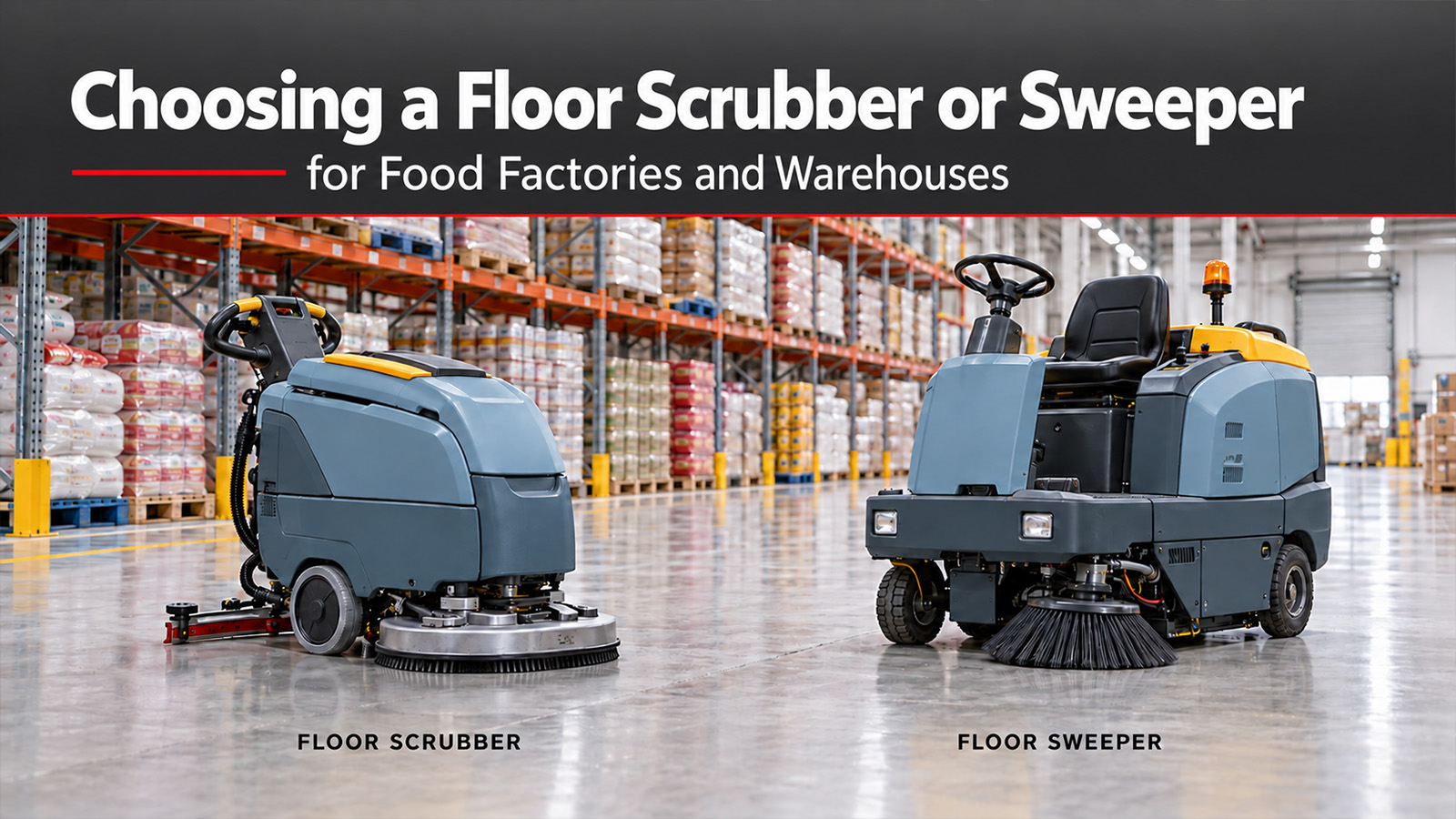
Dispatch is getting busy when a damaged ingredient bag spills powder beside a pallet lane. Near the packing area, a sticky liquid spill needs attention. The cleaning team brings out one machine, but removing the powder and washing the sticky floor are different jobs. Meanwhile, forklifts wait for the route to reopen.
This is where floor-cleaning equipment selection becomes an operational decision. The wrong machine may spread dust, leave residue, or require repeated passes. A machine that cleans well but cannot manoeuvre around working pallets creates another problem: cleaning competes with production and dispatch.
A sweeper uses rotating brushes to move loose material into a collection hopper. A vacuum sweeper adds suction and filtration to help control dust. These machines generally suit dry debris such as tracked-in sand, loose granules, and small packaging fragments within their collection capability.
A scrubber uses brushes or pads with cleaning solution to loosen attached dirt. On a scrubber dryer, a squeegee and vacuum system recover the dirty water. This makes it suitable for washable hard floors affected by sticky spills, greasy deposits, and other residues that require wet cleaning.
Neither machine replaces the other in every situation. A sweeper will not wash away a greasy film. A scrubber dryer should not be expected to collect large quantities of loose debris unless its design specifically supports that task. Strapping, stretch wrap, and oversized pallet fragments should be removed separately.
A common selection mistake is buying a scrubber because the floor looks dirty, without identifying the contamination. In a dry ingredient area, adding water may turn powder into paste or conflict with the site's cleaning procedure.
Walk the facility before comparing models. Check where dirt enters, what production leaves behind, and which deposits are difficult to remove. Some sites need sweeping followed by scrubbing; others need separate equipment for different zones. Combination machines deserve consideration only after their collection capability, size, and maintenance demands have been assessed.
Food-Factory Cleaning Needs More Than a Visibly Clean Floor
A food factory can contain several cleaning environments within one building. Receiving areas collect external dirt. Production may generate powders, oils, or food residues. Finished-goods warehouses have different contamination patterns again. One cleaning method should not automatically be applied throughout.
Where the hygiene programme requires dry cleaning, wet equipment may be unsuitable. Where disinfection is required, scrubbing alone does not establish that the floor has been disinfected. Chemical suitability, concentration, contact time, and any rinsing requirements must follow the approved procedure.
Machine hygiene matters too. Recovery tanks, hoses, brushes, and squeegees can retain residue. Check whether operators can access, clean, inspect, and dry these components properly. A machine that is difficult to clean may introduce extra work at the end of every shift.
Moving equipment between raw-material and higher-hygiene areas can also transfer contamination through wheels and cleaning components. Depending on the site's controls, dedicated machines or a validated cleaning process between zones may be necessary.
Choose a Machine That Fits the Working Warehouse
The building's total floor area does not tell you how much space the cleaner can actually access. Racking, conveyors, packing stations, columns, and temporary pallet staging all change the route.
A ride-on machine can suit long, open routes, while a compact walk-behind machine may be easier to use around production equipment and restricted passages. However, assigning a small machine to extensive routes can increase walking time and operator fatigue.
Consider a food distribution warehouse with a wide central aisle and narrow picking lanes. A large scrubber dryer may perform well in the central route but require pallets to be moved before entering the picking area. Its wider cleaning path offers little benefit wherever access is repeatedly blocked.
Measure usable clearances during normal operations. Include turning space and the full width of side brushes or squeegees, which may extend beyond the machine body. Check doorways, ramps, dock approaches, and access to filling and disposal points.
Before deciding on size and configuration, assess:
Treat advertised area coverage as a comparison figure rather than a guaranteed site result. Turning, overlapping passes, pedestrian traffic, and servicing stops reduce practical output. A demonstration should establish whether the complete route can be finished within the time available.
Cleaning also needs coordination with warehouse traffic. Isolate spills promptly, plan routine cleaning around busy movement periods, and control access until the floor is safe. Even a scrubber dryer can leave wet patches if blades are worn, suction is restricted, or the floor is uneven.
Check Floor Compatibility, Recovery, and Maintenance
Brushes, pads, and detergents must suit the surface. Epoxy coatings, sealed concrete, tiles, and textured floors respond differently to abrasion and chemicals. An aggressive setup may damage a coating; an unsuitable pad may leave dirt embedded in the surface.
Test the proposed setup on representative contamination. Inspect the result across joints, uneven areas, and textured sections. Increasing brush pressure is not always the answer to poor cleaning: the chemical, pad, operating speed, or cleaning method may need adjustment.
Liquid recovery deserves a separate check. Look for water trails when the machine turns and crosses joints. Poor pickup can delay reopening the route and force operators to repeat work manually.
Daily maintenance should be realistic for the team using the machine. Brushes can collect wrapping material, filters can become loaded, and squeegee blades wear. Operators need clear instructions for inspection, cleaning, detergent dosing, and reporting faults.
In UAE, Saudi Arabian, and Omani facilities, dusty loading entrances may place heavy demands on filters and brushes. Hot storage or charging locations must remain within manufacturer limits. Availability of replacement blades, filters, brushes, and technical support should therefore be checked before purchase.
Compare the Cost of Completing the Job
Purchase price is only part of the cleaning cost. Include operator time, consumables, servicing, charging, and the work needed to clean the machine itself. Repeated passes and disrupted pallet movement are often overlooked.
Ask suppliers, including ATCO Clean where relevant, to demonstrate equipment on the actual floor. Include routine dirt and restricted areas, rather than assessing performance only in an empty, lightly soiled aisle.
Use the trial to answer:
This is where floor-cleaning equipment selection becomes an operational decision. The wrong machine may spread dust, leave residue, or require repeated passes. A machine that cleans well but cannot manoeuvre around working pallets creates another problem: cleaning competes with production and dispatch.
The key difference: A floor sweeper collects loose debris, while a floor scrubber washes dirt attached to the surface. A scrubber dryer also recovers the dirty liquid. Choose according to the contamination, floor, hygiene controls, and available cleaning time.
Floor Scrubber or Sweeper: Start with What Is on the Floor
A sweeper uses rotating brushes to move loose material into a collection hopper. A vacuum sweeper adds suction and filtration to help control dust. These machines generally suit dry debris such as tracked-in sand, loose granules, and small packaging fragments within their collection capability.
A scrubber uses brushes or pads with cleaning solution to loosen attached dirt. On a scrubber dryer, a squeegee and vacuum system recover the dirty water. This makes it suitable for washable hard floors affected by sticky spills, greasy deposits, and other residues that require wet cleaning.
Neither machine replaces the other in every situation. A sweeper will not wash away a greasy film. A scrubber dryer should not be expected to collect large quantities of loose debris unless its design specifically supports that task. Strapping, stretch wrap, and oversized pallet fragments should be removed separately.
A common selection mistake is buying a scrubber because the floor looks dirty, without identifying the contamination. In a dry ingredient area, adding water may turn powder into paste or conflict with the site's cleaning procedure.
Walk the facility before comparing models. Check where dirt enters, what production leaves behind, and which deposits are difficult to remove. Some sites need sweeping followed by scrubbing; others need separate equipment for different zones. Combination machines deserve consideration only after their collection capability, size, and maintenance demands have been assessed.
Food-Factory Cleaning Needs More Than a Visibly Clean Floor
A food factory can contain several cleaning environments within one building. Receiving areas collect external dirt. Production may generate powders, oils, or food residues. Finished-goods warehouses have different contamination patterns again. One cleaning method should not automatically be applied throughout.
Where the hygiene programme requires dry cleaning, wet equipment may be unsuitable. Where disinfection is required, scrubbing alone does not establish that the floor has been disinfected. Chemical suitability, concentration, contact time, and any rinsing requirements must follow the approved procedure.
Machine hygiene matters too. Recovery tanks, hoses, brushes, and squeegees can retain residue. Check whether operators can access, clean, inspect, and dry these components properly. A machine that is difficult to clean may introduce extra work at the end of every shift.
Moving equipment between raw-material and higher-hygiene areas can also transfer contamination through wheels and cleaning components. Depending on the site's controls, dedicated machines or a validated cleaning process between zones may be necessary.
Check powder hazards before selecting equipment. Flour, sugar, and some other organic dusts can present combustible-dust hazards under suitable conditions. A standard sweeper is not automatically appropriate because it has filtration. The site's risk assessment must determine the collection method and any required equipment certification.
Cold storage introduces another limit. Water can freeze on sub-zero floors, and batteries, seals, or recovery systems may have temperature restrictions. Confirm the cleaning procedure and machine's operating limits before using ambient-warehouse equipment inside a freezer.
Choose a Machine That Fits the Working Warehouse
The building's total floor area does not tell you how much space the cleaner can actually access. Racking, conveyors, packing stations, columns, and temporary pallet staging all change the route.
A ride-on machine can suit long, open routes, while a compact walk-behind machine may be easier to use around production equipment and restricted passages. However, assigning a small machine to extensive routes can increase walking time and operator fatigue.
Consider a food distribution warehouse with a wide central aisle and narrow picking lanes. A large scrubber dryer may perform well in the central route but require pallets to be moved before entering the picking area. Its wider cleaning path offers little benefit wherever access is repeatedly blocked.
Measure usable clearances during normal operations. Include turning space and the full width of side brushes or squeegees, which may extend beyond the machine body. Check doorways, ramps, dock approaches, and access to filling and disposal points.
Before deciding on size and configuration, assess:
- The narrowest working passage and space needed to turn safely.
- The contamination type, debris volume, and required cleaning frequency.
- The available cleaning window between production or dispatch activities.
- Tank or hopper capacity, including time spent refilling and emptying.
- Battery runtime, charging arrangements, and operator availability across shifts.
Treat advertised area coverage as a comparison figure rather than a guaranteed site result. Turning, overlapping passes, pedestrian traffic, and servicing stops reduce practical output. A demonstration should establish whether the complete route can be finished within the time available.
Cleaning also needs coordination with warehouse traffic. Isolate spills promptly, plan routine cleaning around busy movement periods, and control access until the floor is safe. Even a scrubber dryer can leave wet patches if blades are worn, suction is restricted, or the floor is uneven.
Check Floor Compatibility, Recovery, and Maintenance
Brushes, pads, and detergents must suit the surface. Epoxy coatings, sealed concrete, tiles, and textured floors respond differently to abrasion and chemicals. An aggressive setup may damage a coating; an unsuitable pad may leave dirt embedded in the surface.
Test the proposed setup on representative contamination. Inspect the result across joints, uneven areas, and textured sections. Increasing brush pressure is not always the answer to poor cleaning: the chemical, pad, operating speed, or cleaning method may need adjustment.
Liquid recovery deserves a separate check. Look for water trails when the machine turns and crosses joints. Poor pickup can delay reopening the route and force operators to repeat work manually.
Daily maintenance should be realistic for the team using the machine. Brushes can collect wrapping material, filters can become loaded, and squeegee blades wear. Operators need clear instructions for inspection, cleaning, detergent dosing, and reporting faults.
In UAE, Saudi Arabian, and Omani facilities, dusty loading entrances may place heavy demands on filters and brushes. Hot storage or charging locations must remain within manufacturer limits. Availability of replacement blades, filters, brushes, and technical support should therefore be checked before purchase.
Compare the Cost of Completing the Job
Purchase price is only part of the cleaning cost. Include operator time, consumables, servicing, charging, and the work needed to clean the machine itself. Repeated passes and disrupted pallet movement are often overlooked.
Ask suppliers, including ATCO Clean where relevant, to demonstrate equipment on the actual floor. Include routine dirt and restricted areas, rather than assessing performance only in an empty, lightly soiled aisle.
Use the trial to answer:
- Does the machine remove the actual contamination without unacceptable dust release or floor damage?
- Can it reach the required areas without repeatedly moving stored goods?
- Does recovery leave the tested floor suitable for safe reopening?
- Can the complete cleaning and maintenance cycle fit the available shift time?
- Are consumables and repair support available within an acceptable downtime window?
Before approving the purchase, choose the hardest routine cleaning task in the facility and test it from start to finish.
Can the proposed machine clean that area, keep the working route safe, and be ready again when the next shift needs it?


GET A QUOTE
Tell us about your business requirement, one of our technical expert will be in touch with you soon..!
PROCEED
NEW PRODUCTS ALERTS