Scissor Lifts and Aerial Work Platforms for Warehouses and Industrial Sites
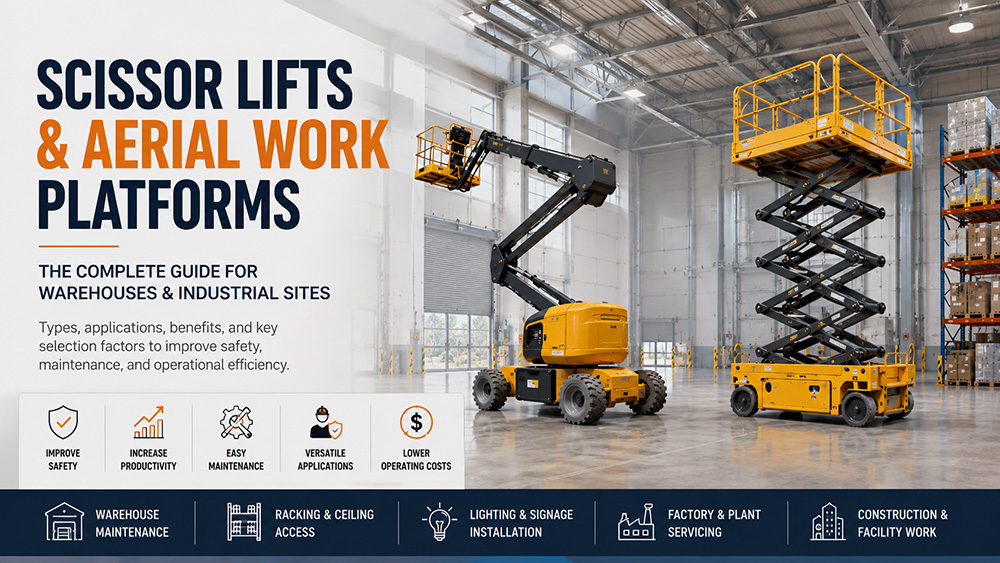
A warehouse can look well organised from the floor, but the real problems often appear above eye level. A damaged light fitting above the racking, a CCTV camera that needs adjustment, a sprinkler line that requires inspection, or a signboard that has come loose near the dispatch area can quickly disrupt the working day. Operators may wait, forklifts may be diverted from pallet movement, and maintenance teams may struggle to reach the job safely.
In many warehouses and industrial sites, working-at-height tasks are treated as occasional maintenance jobs. In reality, they are part of daily operations. Facilities with high racking, production lines, cold rooms, loading bays, mezzanine floors, conveyor systems, and overhead services need safe and reliable access equipment. This is where scissor lifts and aerial work platforms become important for productivity, safety, and operational control.
A scissor lift or aerial work platform is not simply a machine for reaching height. It affects how quickly maintenance work is completed, how safely operators work, how much disruption happens on the floor, and how often forklifts or other equipment are misused for tasks they were not designed to perform.
Warehouse managers usually notice the problem when a small maintenance task starts affecting a larger operation. A technician needs to work above an aisle, so the aisle is blocked. A forklift is used to lift materials or support access work, so pallet movement slows down. A repair near a loading bay delays dispatch. In cold storage or food distribution areas, delays can also affect product handling and temperature-controlled workflow.
The issue is not only height. It is the lack of the right access method for the working environment. Ladders may be unsuitable for long-duration tasks. Forklifts should not be used as access equipment unless approved attachments and safety procedures are in place. Fixed scaffolding may take too long to set up for short jobs. Manual access methods can increase fatigue, risk, and downtime.
Scissor lifts and aerial work platforms help reduce these problems by giving maintenance and operations teams a stable working platform. They allow safer access to elevated areas while keeping the task more controlled and predictable.
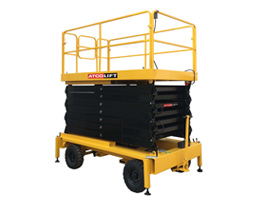
Scissor lifts are commonly used when the work area is directly above the machine. The platform moves vertically, making them suitable for indoor warehouse maintenance, racking inspection, lighting work, ceiling service, signage installation, and facility management tasks. Electric scissor lifts are often preferred indoors because they operate with lower noise and no direct exhaust emissions inside the building.
Self-propelled scissor lifts allow operators to move the machine from one work point to another without repeatedly lowering the platform and repositioning manually. This can save time in large warehouses, manufacturing plants, and distribution centres where multiple inspection or maintenance points are spread across the facility.
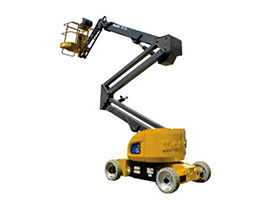
Boom lifts are different because they provide outreach as well as height. An articulating boom lift can reach over obstacles, machinery, conveyors, or structural barriers. A telescopic boom lift is more suitable when horizontal reach and higher access are needed in open industrial areas, construction support zones, or external maintenance work.
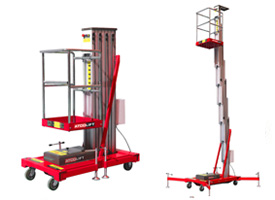
Vertical mast lifts and personnel lifts may suit lighter indoor tasks where compact movement and smaller working areas are important. These can be useful in retail distribution centres, workshops, service areas, and facilities where aisle width and floor space are limited.
- Indoor maintenance above aisles and work zones
- Racking, lighting, signage, and ceiling access
- Tasks where vertical access is enough
- Warehouse and factory floor applications
- Reaching over machinery or obstacles
- Outdoor industrial maintenance
- Higher access with horizontal outreach
- Construction, utilities, and facility work
One of the most common mistakes is selecting a scissor lift or aerial work platform based only on working height. Height is important, but it is not the only factor that affects performance. A machine may reach the required height but still be unsuitable because of floor condition, platform capacity, turning space, aisle width, power source, or the need for outreach.
For example, an electric scissor lift may be suitable for smooth indoor warehouse floors, but it may not be the right choice for an outdoor yard with uneven ground. A boom lift may solve an outreach problem, but it may be too large for narrow internal movement. A compact vertical mast lift may fit tight spaces, but it may not carry enough tools or materials for the task.
In GCC warehouses and industrial zones, the operating environment also matters. High temperatures, busy dispatch schedules, dust exposure, cold storage areas, and long working shifts can influence battery performance, maintenance planning, and equipment uptime. The right machine should match the actual working conditions, not only the catalogue specification.
The hidden cost of poor access equipment selection is often higher than the purchase price difference between machines. If the equipment is too large, it may block aisles and slow pallet movement. If it is too small, teams may need repeated repositioning, longer working time, or unsafe workarounds. If battery runtime is not suitable for the shift pattern, planned maintenance work may stop halfway.
Unsafe access methods also create serious risk. A short job can become dangerous when operators use ladders on busy floors, work close to moving forklifts, or carry tools without a stable platform. Scissor lifts and aerial work platforms are designed to improve safety, but they still require trained operators, daily inspection, correct ground assessment, and respect for load limits.
Maintenance teams should check hydraulic systems, batteries, tyres, controls, emergency lowering functions, guardrails, safety sensors, and platform condition. A machine that is not inspected properly can become a source of downtime instead of solving one. For fleet supervisors, preventive maintenance is part of equipment productivity, not a separate technical task.
- Working height: Confirm the actual height required, including operator reach and task position.
- Platform capacity: Include operators, tools, parts, and materials.
- Indoor or outdoor use: Match tyres, power source, and ground suitability.
- Aisle width and turning area: Check whether the machine can move without blocking key routes.
- Vertical access or outreach: Use scissor lifts for direct vertical work and boom lifts when obstacles must be reached over.
- Shift pattern: Consider battery runtime, charging time, and peak operational hours.
- Maintenance support: Review inspection routines, spare parts, and service planning.
In warehouses, scissor lifts support racking inspection, lighting replacement, camera installation, fire safety system access, and general facility maintenance. In factories, they help maintenance teams reach production lines, pipework, overhead structures, and machine areas more safely. In logistics hubs, they can reduce disruption during scheduled inspection work around dispatch zones, loading docks, and conveyor systems.
Cold stores and food distribution facilities need extra planning because access tasks may affect temperature-controlled zones. Equipment choice should consider movement space, battery performance, hygiene expectations, and how long doors or work areas remain open. In manufacturing and construction-related industrial sites, boom lifts may be needed where outreach and uneven ground access are more important than compact indoor movement.
ATCOLIFT is often associated with warehouse and material handling equipment, but the real value in this category is not the brand name alone. The value comes from matching the working height, platform size, power source, safety requirement, and site condition to the actual operation. A technically suitable machine reduces avoidable delays and supports safer work at height.
Questions Managers Should Ask Before ChoosingBefore choosing between scissor lifts and aerial work platforms, the first question should not be “Which machine reaches the highest?” A better question is: “Which machine allows the task to be completed safely, with the least disruption to warehouse flow?”
If the work is directly above the machine on a smooth warehouse floor, an electric scissor lift may be the most practical option. If the work is behind machinery, above conveyors, or across an obstacle, a boom lift may be more suitable. If the facility has narrow movement routes, smaller access equipment may be better than a larger machine that blocks operations.
The right decision also depends on how often the equipment will be used. A site with frequent maintenance at height may need dedicated access equipment, while a facility with occasional tasks may evaluate rental, shared fleet planning, or multi-use machine options. Procurement teams should consider lifecycle cost, operator training, maintenance needs, and downtime risk rather than only initial price.


GET A QUOTE
Tell us about your business requirement, one of our technical expert will be in touch with you soon..!
NEW PRODUCTS ALERTS