The Inner Workings of Liquid Filling Machines Explained

Navigating the complexities of liquid filling machines can be a daunting task, given the vast array of options available to manufacturers. This exploration seeks to clarify the functionality and benefits of different liquid filling machines, empowering you to select the ideal technology that aligns with your production goals, ultimately elevating productivity and efficiency.
Liquids, with their diverse characteristics, demand specific filling techniques. The precision required to bottle wine contrasts sharply with the method for packaging toothpaste. Similarly, the delicate vessels designed for cosmetics and pharmaceuticals necessitate distinct technologies from those used for industrial-sized chemical containers.
Liquid Filling Machine Varieties
A pivotal consideration in selecting a filling machine is the required level of automation, which varies significantly based on production scale and operational complexity.
Levels of Automation
Configuration Options: Inline vs. Rotary
Choosing between inline (linear) and rotary configurations is another critical decision. Inline machines provide a cost-effective, adaptable solution for sequentially filling containers on a conveyor belt. They stand out for their flexibility and ease of upgrade. In contrast, rotary machines, designed for high-speed operations, integrate additional functionalities like bottle cleaning and capping but come at a higher cost and are typically customized for specific products and containers.
Operational Principles of Liquid Filling Machines
While liquid filling machines may vary in design, they share a fundamental operational principle. Containers are transported through the machine on a conveyor belt, filled, and then advanced to the next stage. The specific filling mechanism is chosen based on the liquid's properties, the container's design, and accuracy requirements.
Filling Technologies Explained
The diversity of liquids—from thin, watery substances to thick, particulate-filled pastes—dictates the filling technology employed.
Seamless Integration with Production Ecosystems
Beyond filling, liquid filling machines are integral to a broader ecosystem of production line equipment. This includes conveyors for smooth transitions, pre-processing systems like washers and sterilizers, and post-filling equipment for capping, labeling, and packaging, ensuring a cohesive and efficient production flow.
Real-World Applications
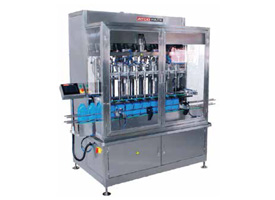
The ATCOPACK liquid filling machines exemplifies the advancements in this technology, offering a fully automatic operation adaptable to a broad range of liquids with simple configuration adjustments. It features a sophisticated rotary valve fill system, enabling precise volume adjustments and incorporating safety features to ensure consistent and reliable filling.
In essence, the right liquid filling machine can transform your production line, boosting efficiency, and product quality. By carefully considering your specific needs and the unique properties of the liquids you work with, you can identify a machine that not only fits seamlessly into your production process but also enhances overall operational effectiveness.
Liquids, with their diverse characteristics, demand specific filling techniques. The precision required to bottle wine contrasts sharply with the method for packaging toothpaste. Similarly, the delicate vessels designed for cosmetics and pharmaceuticals necessitate distinct technologies from those used for industrial-sized chemical containers.
Liquid Filling Machine Varieties
A pivotal consideration in selecting a filling machine is the required level of automation, which varies significantly based on production scale and operational complexity.
Levels of Automation
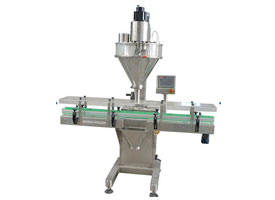
- Automatic Machines: Operate autonomously, efficiently managing the filling process and seamlessly integrating into subsequent production phases. These systems offer flexibility in adjusting for speed, volume, and container specifications.
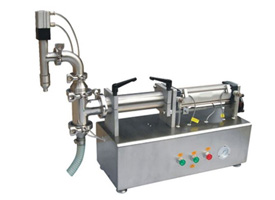
- Semi-Automatic Machines: These machines blend manual and automated processes, necessitating human interaction for tasks such as loading and unloading containers. Manual Machines: Ideal for smaller operations, these devices are manually controlled and do not require electrical power, making them excellent for bench-top applications.
Configuration Options: Inline vs. Rotary
Choosing between inline (linear) and rotary configurations is another critical decision. Inline machines provide a cost-effective, adaptable solution for sequentially filling containers on a conveyor belt. They stand out for their flexibility and ease of upgrade. In contrast, rotary machines, designed for high-speed operations, integrate additional functionalities like bottle cleaning and capping but come at a higher cost and are typically customized for specific products and containers.
Operational Principles of Liquid Filling Machines
While liquid filling machines may vary in design, they share a fundamental operational principle. Containers are transported through the machine on a conveyor belt, filled, and then advanced to the next stage. The specific filling mechanism is chosen based on the liquid's properties, the container's design, and accuracy requirements.
Filling Technologies Explained
The diversity of liquids—from thin, watery substances to thick, particulate-filled pastes—dictates the filling technology employed.
- Gravity/Siphon Fillers: Leverage the natural force of gravity for filling, suited for liquids with consistent viscosity and without particulates.
- Overflow Fillers: Ideal for achieving a uniform fill level in transparent containers, this method allows for the return of excess liquid to the supply tank, reducing waste.
- Piston Fillers: Offer precision for thick liquids, using a volumetric approach for accurate dispensing, adaptable across a wide viscosity range.
- Bottom Up/Isobaric Fillers: These fillers specialize in handling foamy liquids and carbonated beverages by minimizing disruption to the product's composition.
- Pump Fillers: Efficiently manage thick liquids with a pump mechanism, favoring speed over precision, suitable for large-volume containers where slight variances are acceptable.
- Check Weight Fillers: Employ weight measurement for high accuracy, particularly beneficial for large containers where precise volume control is paramount.
Seamless Integration with Production Ecosystems
Beyond filling, liquid filling machines are integral to a broader ecosystem of production line equipment. This includes conveyors for smooth transitions, pre-processing systems like washers and sterilizers, and post-filling equipment for capping, labeling, and packaging, ensuring a cohesive and efficient production flow.
Real-World Applications
The ATCOPACK liquid filling machines exemplifies the advancements in this technology, offering a fully automatic operation adaptable to a broad range of liquids with simple configuration adjustments. It features a sophisticated rotary valve fill system, enabling precise volume adjustments and incorporating safety features to ensure consistent and reliable filling.
In essence, the right liquid filling machine can transform your production line, boosting efficiency, and product quality. By carefully considering your specific needs and the unique properties of the liquids you work with, you can identify a machine that not only fits seamlessly into your production process but also enhances overall operational effectiveness.


GET A QUOTE
Tell us about your business requirement, one of our technical expert will be in touch with you soon..!
PROCEED
NEW PRODUCTS ALERTS