SUNMIX Easy Line vs Evo Line Spiral Mixers: Which Is Right for Your Bakery?
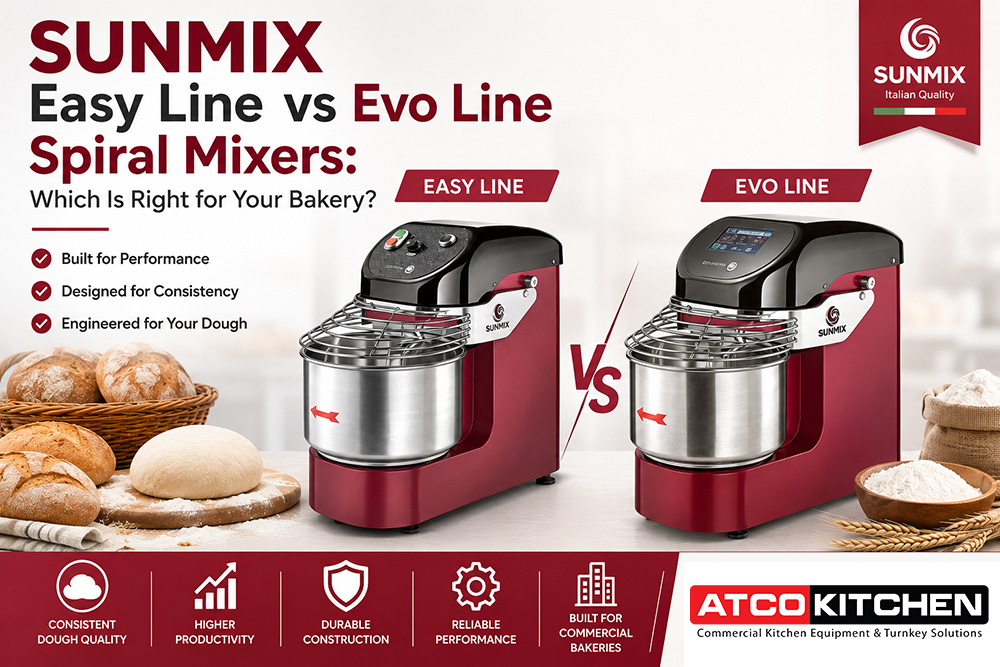
In a busy bakery, the mixer is often the first machine that decides how the rest of the day will go. If the dough is late, everything after that becomes late. Dividing waits. Proofing becomes rushed. Ovens stand ready but the dough is not ready. Staff start adjusting by eye, shortening rest time, or pushing batches faster than they should.
This is why the question SUNMIX Easy Line vs Evo Line spiral mixers: which is right for your bakery? is not only a product comparison. It is a workflow decision. The right mixer should match the dough type, batch size, number of shifts, available space, and the way the bakery actually works during peak hours.
A small bakery making controlled batches has different needs from a hotel bakery preparing breakfast items, a restaurant making pizza dough, or a central kitchen mixing dough for several outlets. Both Easy Line and Evo Line can have a place in professional bakery operations, but the right choice depends on production pressure, not just machine size.
Why the Spiral Mixer Choice Matters
A spiral mixer is used to develop dough with better control. The bowl and spiral tool work together so the dough is mixed, stretched, and developed without unnecessary handling. For bread, pizza, buns, and many bakery products, this affects dough strength, temperature, texture, and repeatability.
In daily operation, small differences become important. A few minutes lost in every batch can disturb the full production schedule. A mixer that struggles with heavier dough can lead to inconsistent batches. A machine that is difficult to clean or service can create hygiene and maintenance problems later.
The better mixer is not always the bigger or more advanced one. The better mixer is the one that fits the bakery’s real workload. This is where the Easy Line and Evo Line should be compared practically.
Quick Comparison: Easy Line vs Evo Line
| Decision Point | SUNMIX Easy Line | SUNMIX Evo Line |
|---|---|---|
| Best fit | Small to medium bakery production | Busy bakeries and higher production operations |
| Daily use | Regular batches with controlled workload | Frequent batches and longer production schedules |
| Typical users | Restaurant bakeries, artisan bakeries, hotel pastry sections | Retail bakeries, central kitchens, catering bakeries, multi-outlet production |
| Buying reason | Simple, practical mixing for steady production | More suitable when volume, consistency, and growth matter |
| Operational focus | Ease of use and day-to-day reliability | Stronger production support and better fit for demanding workflows |
When Easy Line Is the Smarter Choice
Easy Line makes sense when the bakery has a steady and predictable production routine. For example, a restaurant that prepares pizza dough once or twice a day, a hotel pastry section making selected bread items, or a small bakery producing regular batches may not need a more advanced mixer.
In these kitchens, the main need is usually simple operation, dependable mixing, and easy staff handling. The mixer should not complicate the workflow. It should support the baker, fit into the available space, and help the team maintain consistent dough without adding unnecessary cost.
Easy Line is also practical when staff changes are common. In many commercial kitchens, not every operator has the same bakery experience. A machine that is easier to understand and use can reduce training pressure and daily mistakes.
This does not mean Easy Line is a basic choice. It means it can be the correct choice when the bakery does not need heavier production capability every day.
When Evo Line Becomes More Suitable
Evo Line becomes more relevant when the mixer is expected to work harder and more often. This could be a retail bakery with continuous morning production, a catering kitchen preparing for events, or a central kitchen making dough for several branches.
In this type of operation, the mixer is not just one item in the bakery area. It becomes a production control point. If it slows down, the delay moves to dividing, moulding, proofing, baking, cooling, packing, and dispatch.
Evo Line is better suited when the bakery needs stronger support for repeated batches, wider dough variety, and more controlled production planning. It may also be the better choice when the business expects growth and does not want to replace equipment too soon.
For bakeries in UAE, Saudi Arabia, Oman, and other GCC markets, this matters because many kitchens work under heavy service pressure. Hotel breakfast, banquet orders, food delivery, and catering dispatch all need reliable timing. Dough delays are not small problems when the next department is waiting.
Common Mistakes When Choosing a spiral mixer
- Choosing only by bowl size: Bowl size is important, but it does not tell the full story. Dough type, hydration, mixing time, and daily usage matter just as much.
- Ignoring peak production: A mixer may handle normal days well but struggle during weekends, hotel breakfast rush, or seasonal orders.
- Buying too small: This can increase overtime, batch waiting time, staff stress, and uneven dough quality.
- Buying too large: A larger mixer can take more space and investment without improving the actual workflow if the bakery does not need that capacity.
- Forgetting cleaning access: If cleaning is difficult, staff may rush the process during busy shifts. This can affect hygiene and long-term maintenance.
The Hidden Cost of the Wrong Mixer
The lowest purchase price is not always the lowest cost. A mixer that does not suit the workload can create problems that show up later in labour hours, wasted dough, service delays, and maintenance interruptions.
If dough quality changes from one batch to another, the bakery team may spend extra time correcting water levels, flour balance, mixing time, or proofing conditions. These small corrections reduce speed and make the final product less predictable.
Downtime is another serious cost. If one mixer supports most of the production, even a short breakdown can disturb the full bakery schedule. Before choosing between Easy Line and Evo Line, the team should think about cleaning routine, operator training, service access, and how the bakery will continue production if the mixer is unavailable.
Simple Buying Checklist
- How many dough batches are prepared each day?
- What is the heaviest dough the bakery mixes regularly?
- Is the mixer used for bread, pizza, buns, pastry, or mixed products?
- Does production happen in one shift or across longer working hours?
- Will production increase in the next one or two years?
- Is there enough space around the mixer for safe loading, unloading, and cleaning?
- Can staff operate the machine confidently during busy hours?
- Is maintenance access simple enough to avoid long stoppages?
Which One Should Your Bakery Choose?
Choose Easy Line if your bakery has regular production, controlled batch sizes, limited space, and a need for straightforward daily mixing. It is suitable when the mixer is important, but not under heavy pressure for long hours every day.
Choose Evo Line if your bakery depends on repeated mixing, higher volume, wider dough variety, or future expansion. It is the stronger fit when the mixer must support the whole production flow, not just prepare occasional batches.
The decision should start from the bakery’s working day. Look at the busiest shift, the heaviest dough, the most common delays, and the growth plan. Once those points are clear, the choice between SUNMIX Easy Line and Evo Line becomes much easier and more practical.
Practical Questions Bakery Owners Often Ask
Is Easy Line enough for a small bakery?
Yes, if the bakery works with regular batch sizes and does not need heavy continuous production throughout the day.
When should a bakery consider Evo Line?
Evo Line is worth considering when the mixer is used frequently, production volume is growing, or dough consistency must be maintained across longer shifts.
Should the decision be based only on capacity?
No. Capacity is only one part of the decision. Dough type, usage frequency, staff skill, cleaning access, and future production plans are also important.
Can the wrong mixer affect product quality?
Yes. Poor mixer selection can affect dough temperature, gluten development, batch timing, and final product consistency.
Final Selection Thought
The right spiral mixer is not the one with the highest specification on paper. It is the one that matches the bakery’s real production volume, dough style, staff routine, cleaning process, and future plan.
Before choosing between Easy Line and Evo Line, ask one simple question: during the busiest production shift, will this mixer help the bakery stay calm, consistent, and on schedule?


GET A QUOTE
Tell us about your business requirement, one of our technical expert will be in touch with you soon..!
NEW PRODUCTS ALERTS