How Optical Sorters Improve Grain, Rice, Date and Nut Processing
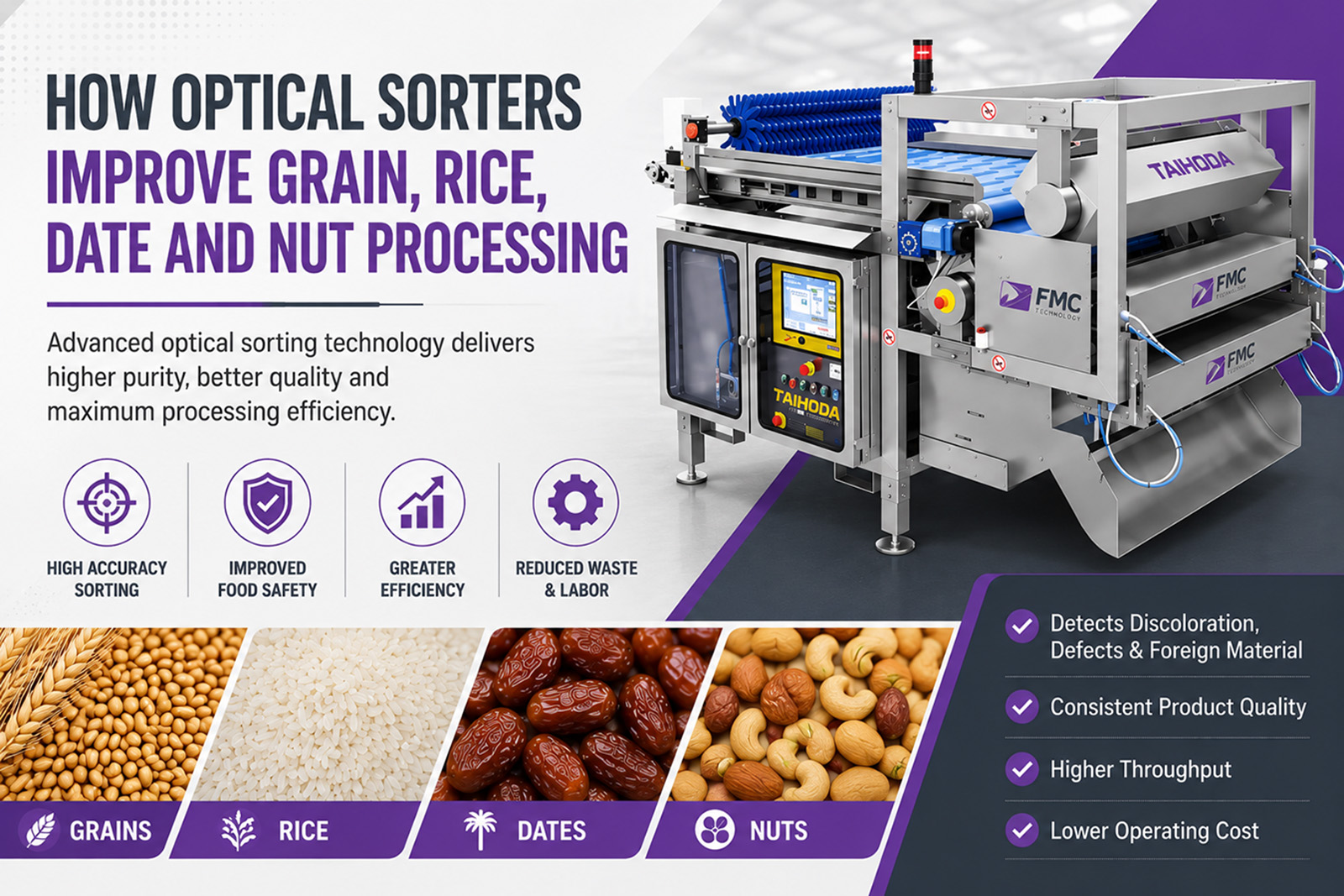
A grain, rice, date, or nut processing facility may handle several tonnes of raw material during one production shift. Screens, graders, destoners, and washing systems remove many unwanted materials, but they cannot always identify visual defects such as discoloration, insect damage, mould, immature products, broken kernels, or foreign materials with a similar size and shape.
This is where many processing lines develop a quality bottleneck. Manual inspection can work at a small scale, but accuracy often changes between operators and may decline during long shifts. When production increases, processors may add more inspection staff while still facing inconsistent rejection decisions, avoidable product loss, and the risk of defective material reaching the packaging stage.
Optical sorters improve this part of the process by inspecting individual products at high speed and separating acceptable material from defects automatically. The technology can improve consistency and throughput, but its results depend on correct equipment selection, stable feeding, suitable sensor technology, accurate settings, clean inspection surfaces, and planned maintenance.
What Is an Optical Sorter?
An optical sorter is an automated inspection machine used to detect and remove defective products or foreign materials according to visible and measurable characteristics. Unlike basic grading equipment, which normally separates products by size or weight, an optical sorter can evaluate colour, shape, brightness, surface condition, texture, and other product features.
The machine is usually installed after primary cleaning and grading but before final inspection, weighing, or packaging. Its exact position depends on the product, the processing method, the contamination risk, and the quality standard required for the finished pack.
Products commonly processed with optical sorting include:
- Rice and broken rice
- Wheat, corn, barley, and other grains
- Dates and dried fruits
- Almonds, pistachios, walnuts, cashews, and peanuts
- Pulses, seeds, coffee beans, and spices
How Optical Sorting Technology Works
The process starts with controlled product feeding. Vibratory feeders, belts, or chutes spread the material into a stable and even flow. This stage is important because overlapping products can hide defects and reduce the accuracy of camera inspection.
1. Feeding: Raw material enters the machine at a controlled rate.
2. Distribution: The product is spread into an even layer so individual pieces can be inspected.
3. Imaging: High-resolution cameras capture the product from one or more angles.
4. Analysis: Software compares each item with the approved quality settings.
5. Rejection: Precisely timed air jets remove identified defects.
6. Collection: Accepted and rejected materials move into separate outlets.
Depending on the application, the sorter may use colour cameras, near-infrared sensors, or other specialised detection technologies. These systems can identify differences that are difficult to detect through colour alone, but no sensor can detect every possible risk. The chosen technology must match the actual defects found in the raw material.
When the software identifies a defect, it sends a signal to a high-speed ejection unit. A short burst of compressed air removes the rejected item while acceptable products continue to the next processing stage. This sequence takes place continuously and can inspect large volumes without stopping the line.
What Defects Can Optical Sorters Detect?
Detection performance depends on product condition, sensor type, lighting, software configuration, and how clearly a defect differs from an acceptable item. A machine should therefore be tested with real production samples rather than selected only from catalogue specifications.
- Discoloured or stained rice and grains
- Broken, shrivelled, immature, or damaged kernels
- Insect-damaged products
- Visible mould-related defects
- Damaged, dry, or discoloured dates
- Shell fragments and defective nuts
- Detectable stones, sticks, glass, plastic, or other foreign material
Important: An optical sorter is one part of a wider food safety system. Destoning, metal detection, X-ray inspection, hygienic handling, and laboratory testing may still be required according to the product and identified risk.
How Optical Sorters Improve Processing Operations
The main operational benefit is consistency. Manual inspection depends on concentration, operator experience, lighting, shift length, and individual judgement. An optical sorter applies the same programmed acceptance standard throughout production, helping reduce variation between batches.
Sorting speed can also improve because inspection continues without the same level of dependence on manual sorting tables. This is especially useful during seasonal peaks, large export orders, or high-volume packaging schedules where delays at inspection can slow the entire line.
Better rejection accuracy can protect usable yield. A poorly adjusted machine may reject too much acceptable product, while settings that are too weak may allow defects to pass. Correct calibration helps processors balance final quality with product recovery.
More uniform material can also improve downstream operations. Cleaner products reduce rework, support smoother weighing and packaging, create a more consistent pack appearance, and lower the risk of customer complaints or rejected deliveries.
More consistent product appearance and grading
Faster inspection during high-volume production
Reduced dependency on repetitive manual sorting
Better control over rejected material
Less rework before weighing and packaging
A Common Equipment Selection Mistake
One common mistake is choosing an optical sorter mainly by its stated capacity. Throughput is important, but it should not be considered separately from defect complexity, product presentation, inspection accuracy, and the required quality of the accepted output.
A machine may process a high volume under ideal test conditions but perform differently when the raw material contains mixed sizes, heavy contamination, high moisture, uneven colour, or overlapping pieces. Capacity claims should therefore be reviewed together with product trials and clearly defined acceptance and rejection criteria.
Another overlooked cost is supporting infrastructure. Optical sorters may depend on stable compressed air, clean electrical power, dust control, correct feeding, and suitable ambient conditions. Weak utilities can reduce sorting accuracy or increase maintenance costs even when the sorter itself is correctly specified.
Excessive rejection of acceptable product
Missed defects when the line is overloaded
Higher-than-expected compressed-air consumption
Difficult cleaning access around cameras and chutes
Extended downtime when service or spare parts are unavailable
Hygiene, Cleaning, and Maintenance Requirements
Optical systems depend on clear visibility. Dust, oil, product residue, or condensation on camera windows and lighting surfaces can affect detection accuracy. Cleaning access should therefore be checked before purchase, especially for dusty grain lines and sticky date processing applications.
Routine checks may include cleaning inspection windows, examining chutes, emptying reject bins, verifying air pressure, and confirming that product flow remains even. Preventive maintenance should also cover air valves, nozzles, vibration systems, lighting units, sensors, electrical components, and software calibration.
Maintenance planning is not only a technical concern. If trained technicians, spare parts, or remote diagnostic support are not available, a minor fault can stop the sorting stage and affect the full production and packaging schedule.
What to Check Before Selecting an Optical Sorter
Product: Type, size range, shape, moisture, and surface condition
Defects: Typical defects and foreign materials that must be removed
Capacity: Normal and peak production volumes
Accuracy: Acceptable reject rate and required final quality
Testing: Results from trials using real raw material samples
Utilities: Electrical load, compressed air, ventilation, and dust control
Access: Space for installation, cleaning, inspection, and maintenance
Support: Operator training, spare parts, service response, and future expansion
Relevance for Food Processors in the GCC
Food processors in the UAE, Saudi Arabia, Oman, and the wider GCC handle a broad range of imported and locally processed rice, grains, dates, nuts, pulses, and dried products. Quality expectations continue to rise across retail supply, hospitality distribution, food manufacturing, and export markets.
Regional conditions can create additional pressure. Dust, high ambient temperatures, seasonal production peaks, labour availability, and strict dispatch schedules all affect equipment performance. A suitable optical sorting system should therefore be evaluated not only for detection capability, but also for reliability, cleaning access, utility consumption, operator simplicity, and technical support.
The Final Processing Decision
Optical sorters can significantly improve grain, rice, date, and nut processing when they are matched to the actual product and integrated correctly into the production line. The strongest results come from combining stable feeding, suitable sensors, accurate rejection settings, routine cleaning, trained operators, and planned maintenance.
Before comparing machines only by speed or purchase price, processing teams should ask a more practical question: can the sorter consistently identify the defects that matter most, protect usable product yield, and continue operating reliably under the facility's real production conditions?


GET A QUOTE
Tell us about your business requirement, one of our technical expert will be in touch with you soon..!
NEW PRODUCTS ALERTS