Innovative Technologies Powering Today’s Conveyor Systems
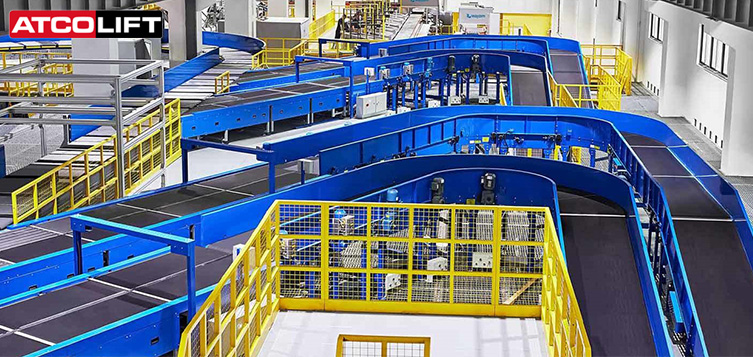
In the age of the Fourth Industrial Revolution, also known as Industry 4.0, it's no surprise that conveyor systems have evolved far beyond their rudimentary predecessors. These systems are no longer just about moving goods from Point A to Point B; they're now intertwined with cutting-edge technologies that enable smart operations, predictive analysis, and optimal efficiency. Let’s delve into the innovations that are driving the future of conveyor systems.
1. Internet of Things (IoT) Integration
IoT has transformed conveyor operations. Sensors embedded throughout the conveyor system can now capture data in real-time. This data, when analyzed, provides insights into operational efficiency, load management, and system health. With IoT, conveyors can 'communicate' their status, enabling proactive maintenance and minimizing downtime.
2. Artificial Intelligence (AI) and Machine Learning (ML)
AI and ML algorithms take the data from IoT devices and turn it into actionable insights. For instance, through pattern recognition, these algorithms can predict when a part is about to fail or when maintenance is required. Furthermore, they optimize operational efficiency by learning from historical data and adjusting the system's performance in real-time.
RPA involves the use of robots or 'cobots' (collaborative robots) integrated with conveyor systems. These robots can handle tasks like sorting, packaging, and loading. In environments where precision and speed are crucial, like e-commerce fulfillment centers, RPA boosts efficiency and reduces manual intervention.
4. Augmented Reality (AR) and Virtual Reality (VR)
AR and VR technologies are increasingly being used for training and maintenance purposes. Technicians can use AR glasses to visualize the internal workings of a conveyor system, get guided instructions for repair, or simulate different operational scenarios. This reduces errors, enhances training efficiency, and ensures faster troubleshooting.
5. Green Technologies
With an increasing emphasis on sustainability, many conveyor systems are now equipped with energy-efficient motors, regenerative drives, and solar panels. These innovations not only reduce the carbon footprint of operations but also lead to cost savings in the long run.
6. 3D Printing
3D printing, or additive manufacturing, allows for the rapid prototyping and production of conveyor parts. This means that instead of waiting for a specific part to be delivered, companies can print the necessary components on-site, minimizing downtime and ensuring the conveyor system is up and running quickly.
7. Wireless Technology
The introduction of wireless technologies into conveyor systems means that operators can monitor and control operations remotely. Whether it's adjusting the speed of a belt, rerouting goods, or shutting down a section for maintenance, these tasks can be done without physically being present at the site.
Today's conveyor systems, powered by a plethora of innovative technologies, are a testament to the strides we have made in the realm of industrial automation. As these technologies continue to mature and integrate, the conveyor systems of the future promise even greater efficiency, sustainability, and adaptability. The age-old concept of simply 'moving things around' has been elevated to a symphony of interconnected technologies, driving industries forward into a new era of productivity.
1. Internet of Things (IoT) Integration
IoT has transformed conveyor operations. Sensors embedded throughout the conveyor system can now capture data in real-time. This data, when analyzed, provides insights into operational efficiency, load management, and system health. With IoT, conveyors can 'communicate' their status, enabling proactive maintenance and minimizing downtime.
2. Artificial Intelligence (AI) and Machine Learning (ML)
AI and ML algorithms take the data from IoT devices and turn it into actionable insights. For instance, through pattern recognition, these algorithms can predict when a part is about to fail or when maintenance is required. Furthermore, they optimize operational efficiency by learning from historical data and adjusting the system's performance in real-time.
ATCO Warehouse Automation Systems:
Dimension Weight Scanning (DWS) Systems
Sorting Solutions
Conveyor Automation
Intelligent Warehousing
Multi-Directional Shuttle Automation System
Software Solutions
3. Robotic Process Automation (RPA)Dimension Weight Scanning (DWS) Systems
Sorting Solutions
Conveyor Automation
Intelligent Warehousing
Multi-Directional Shuttle Automation System
Software Solutions
RPA involves the use of robots or 'cobots' (collaborative robots) integrated with conveyor systems. These robots can handle tasks like sorting, packaging, and loading. In environments where precision and speed are crucial, like e-commerce fulfillment centers, RPA boosts efficiency and reduces manual intervention.
4. Augmented Reality (AR) and Virtual Reality (VR)
AR and VR technologies are increasingly being used for training and maintenance purposes. Technicians can use AR glasses to visualize the internal workings of a conveyor system, get guided instructions for repair, or simulate different operational scenarios. This reduces errors, enhances training efficiency, and ensures faster troubleshooting.
5. Green Technologies
With an increasing emphasis on sustainability, many conveyor systems are now equipped with energy-efficient motors, regenerative drives, and solar panels. These innovations not only reduce the carbon footprint of operations but also lead to cost savings in the long run.
6. 3D Printing
3D printing, or additive manufacturing, allows for the rapid prototyping and production of conveyor parts. This means that instead of waiting for a specific part to be delivered, companies can print the necessary components on-site, minimizing downtime and ensuring the conveyor system is up and running quickly.
7. Wireless Technology
The introduction of wireless technologies into conveyor systems means that operators can monitor and control operations remotely. Whether it's adjusting the speed of a belt, rerouting goods, or shutting down a section for maintenance, these tasks can be done without physically being present at the site.
Today's conveyor systems, powered by a plethora of innovative technologies, are a testament to the strides we have made in the realm of industrial automation. As these technologies continue to mature and integrate, the conveyor systems of the future promise even greater efficiency, sustainability, and adaptability. The age-old concept of simply 'moving things around' has been elevated to a symphony of interconnected technologies, driving industries forward into a new era of productivity.


GET A QUOTE
Tell us about your business requirement, one of our technical expert will be in touch with you soon..!
PROCEED
NEW PRODUCTS ALERTS