Conveyor Automation in Warehouses: Types, Uses, and Key Advantages
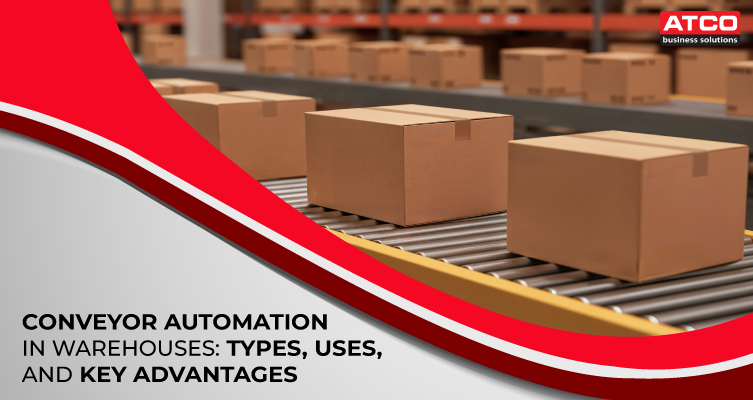
Material movement inside a warehouse is constant. Boxes arrive, get stored, picked, packed, and then moved again for dispatch. It sounds routine, but in reality, this movement consumes time, effort, and a significant portion of operational cost.
When this flow depends mostly on manual handling, small delays begin to show. Items wait between stages, workers walk longer distances, and coordination between zones becomes uneven. Conveyor automation is introduced to bring balance into this movement. It helps goods travel in a steady, predictable way without relying fully on manual effort.
Where Movement Starts Slowing Down
In many warehouses, the real issue is not storage or picking—it is the movement in between. Goods often pause before the next step, especially during busy hours. Teams try to move faster, but without a structured flow, it only adds pressure. Over time, this leads to congestion in certain areas and delays across the entire operation.
These challenges are common in growing facilities where volume increases but movement systems remain unchanged.
What Conveyor Automation Brings to Daily Operations
Conveyor systems create a defined path for goods to move. Instead of being carried or pushed manually, items travel on belts, rollers, or chains from one point to another. This reduces unnecessary handling and creates a continuous flow. Each process connects more smoothly, and goods move at a controlled pace without repeated stops.
Types of Conveyor Systems Used in Warehouses
No single conveyor type fits every operation. The choice depends on product type, load capacity, and layout design.
Belt Conveyors
Used widely for cartons and lightweight items. They offer smooth movement and are suitable for longer distances within the warehouse.
Roller Conveyors
Common for heavier loads and pallet movement. These can be gravity-based or powered depending on operational needs.
Chain Conveyors
Designed for rugged applications where pallets or large goods need to be moved reliably.
Overhead Conveyors
Useful in warehouses where floor space is limited. Goods are transported above working areas.
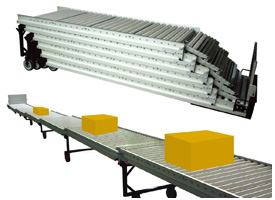
Flexible Conveyors
These can be adjusted or repositioned easily, making them suitable for changing workflows.
Where Conveyor Systems Add Value
Conveyors are used across multiple stages of warehouse operations. Their role changes depending on the workflow.
They also support packaging lines, distribution centers, and production-linked warehouses where movement needs to remain continuous.
Advantages That Show Up in Daily Work
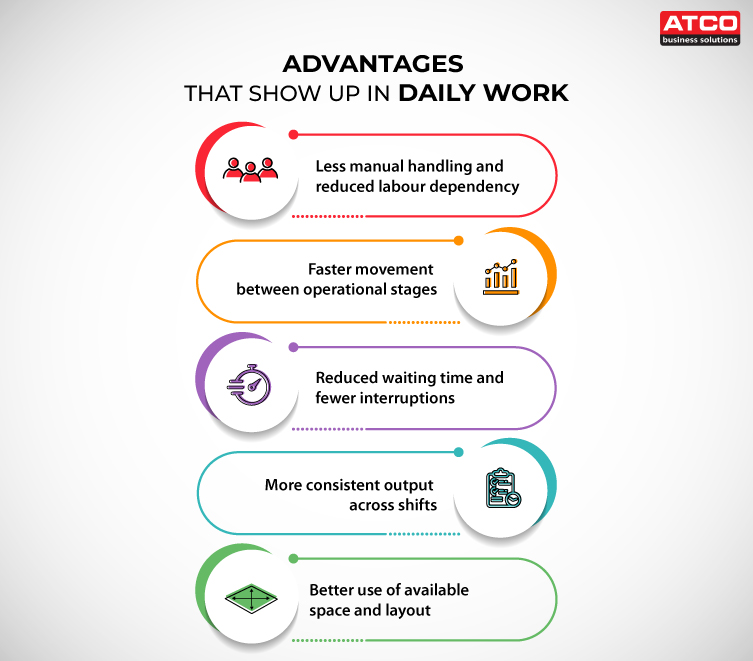 The impact of Conveyor automation is not always dramatic at first, but it becomes clear as operations stabilize. Movement becomes smoother, delays reduce, and teams feel less pressure during peak hours.
These improvements support long-term efficiency without drastically changing existing workflows.
Reducing Physical Strain and Improving Safety
Manual transport often involves lifting, carrying, and repeated movement. Over time, this affects worker health and increases the chance of injuries. Conveyor systems reduce this physical load. Workers are no longer required to move items across long distances continuously. Instead, they focus on monitoring and handling specific tasks that need attention. This creates a safer and more manageable work environment, especially in operations running for extended hours.
Working Together with Other Automation Systems
Conveyors rarely work alone. They are often part of a larger automation setup that includes sortation, storage, and measurement systems. When connected properly, conveyors help maintain a steady flow between these systems. This reduces gaps between processes and improves coordination across the entire warehouse.
Points to Evaluate Before Installation
A conveyor system should match actual operational needs. Choosing the right setup requires understanding how goods move within the facility.
In high-temperature environments, system durability and continuous performance become important considerations.
Maintaining Flexibility While Improving Flow
Warehouse operations do not remain the same. Product lines change, volumes increase, and layouts evolve. Conveyor systems should allow adjustments without major disruption. A flexible design ensures that the system remains useful as operations grow. It also helps avoid unnecessary rework in the future.
Building a More Stable Movement System
Material movement happens throughout the day. When it is not structured, it creates delays, adds cost, and puts pressure on teams. Conveyor automation brings order to this movement. It supports a smoother flow, reduces dependency on manual handling, and helps operations run more consistently. ATCOLIFT has worked with warehouse teams to implement conveyor solutions that fit real working conditions, focusing on practical improvements that support daily operations without adding complexity.
Where Movement Starts Slowing Down
In many warehouses, the real issue is not storage or picking—it is the movement in between. Goods often pause before the next step, especially during busy hours. Teams try to move faster, but without a structured flow, it only adds pressure. Over time, this leads to congestion in certain areas and delays across the entire operation.
- Waiting time between process stages increases
- Extra labour is required for simple transport tasks
- High-traffic zones become difficult to manage
These challenges are common in growing facilities where volume increases but movement systems remain unchanged.
What Conveyor Automation Brings to Daily Operations
Conveyor systems create a defined path for goods to move. Instead of being carried or pushed manually, items travel on belts, rollers, or chains from one point to another. This reduces unnecessary handling and creates a continuous flow. Each process connects more smoothly, and goods move at a controlled pace without repeated stops.
Types of Conveyor Systems Used in Warehouses
No single conveyor type fits every operation. The choice depends on product type, load capacity, and layout design.
Belt Conveyors
Used widely for cartons and lightweight items. They offer smooth movement and are suitable for longer distances within the warehouse.
- Handles varied product sizes
- Supports steady and continuous flow
Roller Conveyors
Common for heavier loads and pallet movement. These can be gravity-based or powered depending on operational needs.
- Suitable for bulk and heavy materials
- Flexible for different layouts
Chain Conveyors
Designed for rugged applications where pallets or large goods need to be moved reliably.
- Strong and durable for heavy-duty use
- Suitable for industrial environments
Overhead Conveyors
Useful in warehouses where floor space is limited. Goods are transported above working areas.
- Frees up floor space
- Reduces congestion in operational zones
Flexible Conveyors
These can be adjusted or repositioned easily, making them suitable for changing workflows.
- Easy to move and reconfigure
- Works well in dynamic environments
Where Conveyor Systems Add Value
Conveyors are used across multiple stages of warehouse operations. Their role changes depending on the workflow.
- Receiving areas for directing incoming goods
- Storage zones for internal movement
- Picking lines for order preparation
- Dispatch sections for shipment handling
They also support packaging lines, distribution centers, and production-linked warehouses where movement needs to remain continuous.
Advantages That Show Up in Daily Work
- Less manual handling and reduced labour dependency
- Faster movement between operational stages
- Reduced waiting time and fewer interruptions
- More consistent output across shifts
- Better use of available space and layout
These improvements support long-term efficiency without drastically changing existing workflows.
Reducing Physical Strain and Improving Safety
Manual transport often involves lifting, carrying, and repeated movement. Over time, this affects worker health and increases the chance of injuries. Conveyor systems reduce this physical load. Workers are no longer required to move items across long distances continuously. Instead, they focus on monitoring and handling specific tasks that need attention. This creates a safer and more manageable work environment, especially in operations running for extended hours.
Working Together with Other Automation Systems
Conveyors rarely work alone. They are often part of a larger automation setup that includes sortation, storage, and measurement systems. When connected properly, conveyors help maintain a steady flow between these systems. This reduces gaps between processes and improves coordination across the entire warehouse.
Points to Evaluate Before Installation
A conveyor system should match actual operational needs. Choosing the right setup requires understanding how goods move within the facility.
- Daily material flow and peak load conditions
- Product type, size, and weight variation
- Available space and layout limitations
- Integration with existing processes
- Environmental factors such as heat and dust
In high-temperature environments, system durability and continuous performance become important considerations.
Maintaining Flexibility While Improving Flow
Warehouse operations do not remain the same. Product lines change, volumes increase, and layouts evolve. Conveyor systems should allow adjustments without major disruption. A flexible design ensures that the system remains useful as operations grow. It also helps avoid unnecessary rework in the future.
Building a More Stable Movement System
Material movement happens throughout the day. When it is not structured, it creates delays, adds cost, and puts pressure on teams. Conveyor automation brings order to this movement. It supports a smoother flow, reduces dependency on manual handling, and helps operations run more consistently. ATCOLIFT has worked with warehouse teams to implement conveyor solutions that fit real working conditions, focusing on practical improvements that support daily operations without adding complexity.


GET A QUOTE
Tell us about your business requirement, one of our technical expert will be in touch with you soon..!
PROCEED
NEW PRODUCTS ALERTS