Sortation Systems Explained Improving Speed and Accuracy in Order Fulfillment
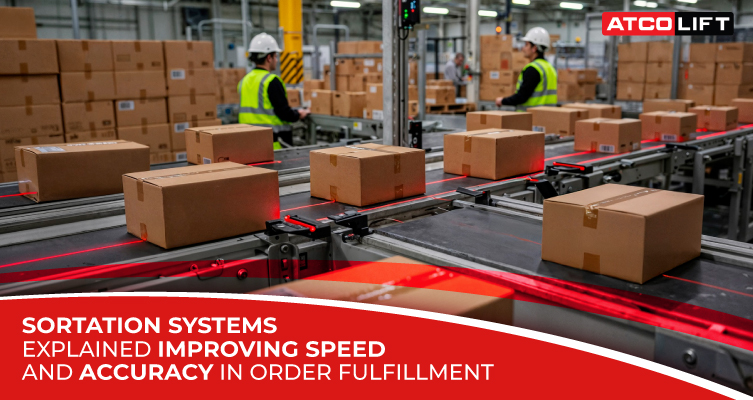
Order fulfillment rarely slows down anymore. The pace keeps increasing, expectations keep tightening, and teams are expected to handle more with the same or fewer resources. In many warehouses, sorting is where pressure quietly builds. It is not always visible at first, but delays, small errors, and repeated handling start to stack up.
Manual sorting depends heavily on people reading labels, making quick decisions, and moving items across zones. On a busy day, that rhythm breaks. Fatigue sets in, similar-looking cartons get mixed, and small mistakes begin to affect dispatch timelines. Over time, this creates stress not just for operations, but for the people handling the work.
Sortation systems are brought in to ease that pressure. They do not replace people entirely, but they take over the repetitive, fast-paced decisions that are difficult to maintain manually throughout the day.
Where Sorting Starts to Slow Things Down
Sorting sits between picking and shipping. When it runs smoothly, everything flows. When it slows down, the entire operation feels it. As order volumes increase and product variety grows, manual sorting struggles to keep up. Workers need to check labels, confirm destinations, and move items quickly. During peak hours, this becomes physically demanding and mentally tiring.
What looks like a small delay at sorting often turns into late dispatch, missed delivery windows, and added operational stress.
 How Sortation Systems Change the Workflow
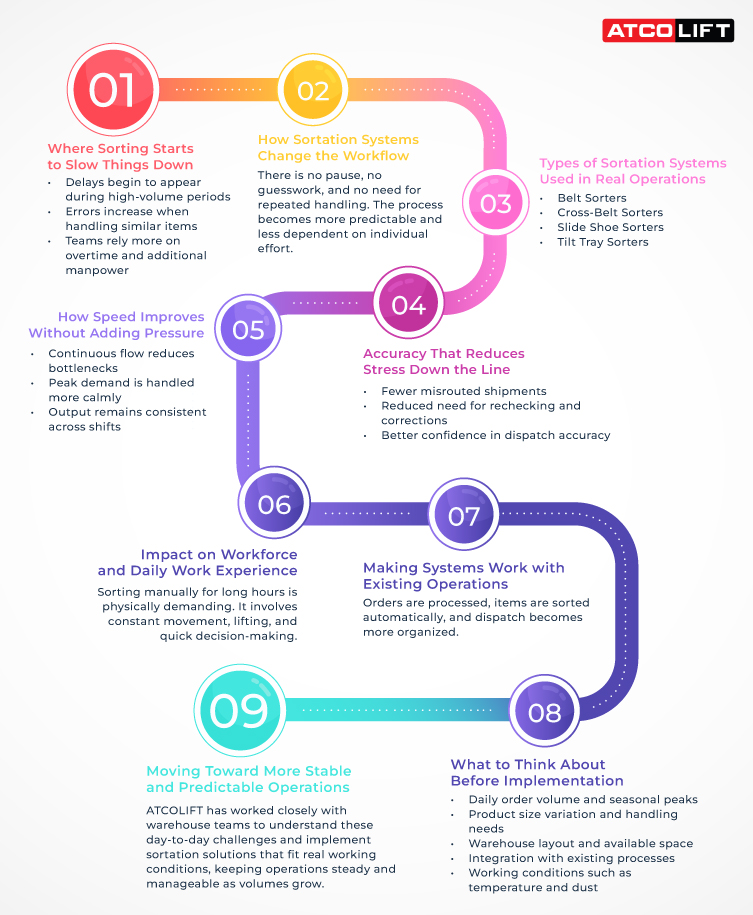
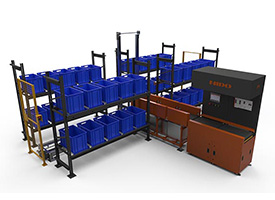
Sortation systems bring a different kind of rhythm into the warehouse. Instead of depending on constant manual decisions, items move through a structured path where identification and routing happen automatically. As packages pass through the system, scanners read labels and direct each item to its correct destination. There is no pause, no guesswork, and no need for repeated handling. The process becomes more predictable and less dependent on individual effort.
Types of Sortation Systems Used in Real Operations
Each warehouse has its own challenges. The right system depends on product type, volume, and layout. A few commonly used options are:
Belt Sorters
Suitable for handling a mix of carton sizes. They provide smooth movement and are often used in facilities where product variation is high.
Cross-Belt Sorters
Used in high-speed environments where accuracy cannot be compromised. Items are transferred quickly to their assigned lanes.
Slide Shoe Sorters
Best suited for uniform packages moving to multiple destinations along a conveyor line.
Tilt Tray Sorters
Common in parcel and e-commerce environments where lightweight items need to be sorted quickly.
How Speed Improves Without Adding Pressure
One of the biggest changes with Sortation systemsis how smoothly things move. There is no waiting for decisions or manual routing. Items continue moving, and the system keeps working at a steady pace. This reduces the stop-start nature of manual sorting. Teams no longer need to rush to clear backlogs or catch up after delays. Instead, operations become more balanced and predictable.
Accuracy That Reduces Stress Down the Line
Sorting mistakes do more than delay shipments. They create additional work. Returns, corrections, and customer complaints all add pressure to operations. With automated sortation, each item is routed based on system logic. This reduces dependency on human judgement for repetitive decisions. As a result, accuracy improves, and teams spend less time fixing errors.
Impact on Workforce and Daily Work Experience
Sorting manually for long hours is physically demanding. It involves constant movement, lifting, and quick decision-making. Over time, this leads to fatigue and increases the risk of injury. Sortation systems reduce this load. Workers are no longer required to perform repetitive sorting tasks throughout the day. Instead, they focus on monitoring operations, handling exceptions, and ensuring quality. This shift not only improves safety but also makes daily work more manageable and less exhausting.
Making Systems Work with Existing Operations
Sortation does not operate in isolation. It needs to connect with picking, storage, and dispatch systems. When integrated properly, it becomes part of a smooth, end-to-end workflow. Orders are processed, items are sorted automatically, and dispatch becomes more organized. Real-time visibility also helps teams identify delays early and take corrective action before issues grow.
What to Think About Before Implementation
Adopting Sortation systems is not just about adding equipment. It is about solving real operational challenges. A careful evaluation helps avoid unnecessary complexity.
Systems should support operations, not complicate them. A phased approach often works better than a full-scale change at once.
Moving Toward More Stable and Predictable Operations
Sorting is no longer just a step in the process. It influences how smoothly the entire warehouse runs. When sorting improves, everything downstream becomes easier to manage. Sortation systems bring structure where manual effort struggles to keep up. They help maintain speed without adding pressure and improve accuracy without constant supervision. ATCOLIFT has worked closely with warehouse teams to understand these day-to-day challenges and implement sortation solutions that fit real working conditions, keeping operations steady and manageable as volumes grow.
Where Sorting Starts to Slow Things Down
Sorting sits between picking and shipping. When it runs smoothly, everything flows. When it slows down, the entire operation feels it. As order volumes increase and product variety grows, manual sorting struggles to keep up. Workers need to check labels, confirm destinations, and move items quickly. During peak hours, this becomes physically demanding and mentally tiring.
- Delays begin to appear during high-volume periods
- Errors increase when handling similar items
- Teams rely more on overtime and additional manpower
What looks like a small delay at sorting often turns into late dispatch, missed delivery windows, and added operational stress.
Sortation systems bring a different kind of rhythm into the warehouse. Instead of depending on constant manual decisions, items move through a structured path where identification and routing happen automatically. As packages pass through the system, scanners read labels and direct each item to its correct destination. There is no pause, no guesswork, and no need for repeated handling. The process becomes more predictable and less dependent on individual effort.
Types of Sortation Systems Used in Real Operations
Each warehouse has its own challenges. The right system depends on product type, volume, and layout. A few commonly used options are:
Belt Sorters
Suitable for handling a mix of carton sizes. They provide smooth movement and are often used in facilities where product variation is high.
- Handles different package sizes without disruption
- Maintains steady flow across operations
Cross-Belt Sorters
Used in high-speed environments where accuracy cannot be compromised. Items are transferred quickly to their assigned lanes.
- Works well for large distribution centers
- Maintains accuracy even at higher speeds
Slide Shoe Sorters
Best suited for uniform packages moving to multiple destinations along a conveyor line.
- Efficient for consistent product types
- Supports continuous sorting without interruption
Tilt Tray Sorters
Common in parcel and e-commerce environments where lightweight items need to be sorted quickly.
- Ideal for smaller packages
- Suitable for fast-moving operations
How Speed Improves Without Adding Pressure
One of the biggest changes with Sortation systemsis how smoothly things move. There is no waiting for decisions or manual routing. Items continue moving, and the system keeps working at a steady pace. This reduces the stop-start nature of manual sorting. Teams no longer need to rush to clear backlogs or catch up after delays. Instead, operations become more balanced and predictable.
- Continuous flow reduces bottlenecks
- Peak demand is handled more calmly
- Output remains consistent across shifts
Accuracy That Reduces Stress Down the Line
Sorting mistakes do more than delay shipments. They create additional work. Returns, corrections, and customer complaints all add pressure to operations. With automated sortation, each item is routed based on system logic. This reduces dependency on human judgement for repetitive decisions. As a result, accuracy improves, and teams spend less time fixing errors.
- Fewer misrouted shipments
- Reduced need for rechecking and corrections
- Better confidence in dispatch accuracy
Impact on Workforce and Daily Work Experience
Sorting manually for long hours is physically demanding. It involves constant movement, lifting, and quick decision-making. Over time, this leads to fatigue and increases the risk of injury. Sortation systems reduce this load. Workers are no longer required to perform repetitive sorting tasks throughout the day. Instead, they focus on monitoring operations, handling exceptions, and ensuring quality. This shift not only improves safety but also makes daily work more manageable and less exhausting.
Making Systems Work with Existing Operations
Sortation does not operate in isolation. It needs to connect with picking, storage, and dispatch systems. When integrated properly, it becomes part of a smooth, end-to-end workflow. Orders are processed, items are sorted automatically, and dispatch becomes more organized. Real-time visibility also helps teams identify delays early and take corrective action before issues grow.
What to Think About Before Implementation
Adopting Sortation systems is not just about adding equipment. It is about solving real operational challenges. A careful evaluation helps avoid unnecessary complexity.
- Daily order volume and seasonal peaks
- Product size variation and handling needs
- Warehouse layout and available space
- Integration with existing processes
- Working conditions such as temperature and dust
Systems should support operations, not complicate them. A phased approach often works better than a full-scale change at once.
Moving Toward More Stable and Predictable Operations
Sorting is no longer just a step in the process. It influences how smoothly the entire warehouse runs. When sorting improves, everything downstream becomes easier to manage. Sortation systems bring structure where manual effort struggles to keep up. They help maintain speed without adding pressure and improve accuracy without constant supervision. ATCOLIFT has worked closely with warehouse teams to understand these day-to-day challenges and implement sortation solutions that fit real working conditions, keeping operations steady and manageable as volumes grow.


GET A QUOTE
Tell us about your business requirement, one of our technical expert will be in touch with you soon..!
PROCEED
NEW PRODUCTS ALERTS