Fortress Pipelines Prove SOY Sensitive For Shoda Sauces
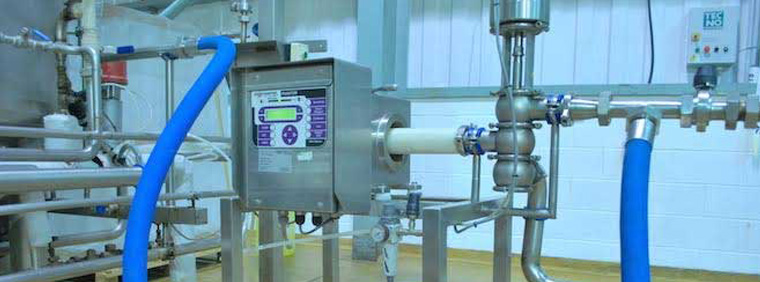
Fortress Technology has just installed its fifth Phantom pipeline metal detector at Shoda Sauces in Abertillery, Wales. The in-line inspection system is the most sensitive method available for screening piped sauces of varying viscosities, and since purchasing its first Fortress equipment in 2004; the Asian sauce producer hasn’t received a single customer report of metallic contamination from products leaving its factory.
“If we look back over the last eleven years, since we started working with Fortress, we can honestly say we have had zero incidents with metal. Fortress metal detectors are like the ‘Fort Knox’ of the inspection world - nothing gets past them; they are completely failsafe,” said Gareth Law, Engineering Manager, at Shoda Sauces.
Japanese-owned Shoda Sauces manufactures oriental sauces, from soy, oyster and hoisin, to blackbean, yellowbean and chilli sauces. The majority of these are supplied to food and ready meals manufacturers across the UK and Europe, ultimately ending up in products on sale in multiple retailers. A smaller proportion is produced for the food service channel.
Regardless of who the end customer is, Shoda’s commitment to food safety is the same - and absolute. A BRC accredited company, Shoda treats metal detection as a critical control point in its HACCP plan.
“No matter where you fit in the food supply chain, you have to supply safe food, and metal detectors are crucial in providing that assurance. We cannot afford to be without them,” said Gareth.
The last decade has seen the company experiencing controlled growth, which has accelerated in the last eighteen months. This growth in demand, combined with the unreliability of existing equipment, prompted Shoda to invest in a new Fortress pipeline metal detector this January.
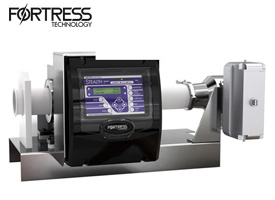
The Phantom pipeline system detects metal contamination in pumped liquids and pastes conveyed through a non-metallic pipe. Like the previously purchased Fortress detectors, this latest purchase was for the company’s ‘vat room’, for screening liquids as they are piped into 1000ltr IBCs (Intermediate Bulk Containers), pallecons, 12.5ltr and 2.5ltr jerry cans and 5kg buckets.
There are two overriding advantages to using pipelines for this application. Firstly, because pipelines are in-process detectors, they do not occupy any additional floor space or incur any labour costs. Secondly, inspecting in-line achieves far greater sensitivity than passing packaged product through a conveyorised detector head as the aperture is far smaller - the smaller the aperture, the better the sensitivity. The pipelines at Shoda were specified with 110mm apertures.
In this application, the salt content of some of the sauces could potentially have compromised sensitivity highlights Kevin Shackell, head of UK sales at Fortress: “Soy sauces generate what we call product signal, which can trigger a false reject. By essentially filtering out the external ‘noise’, our FM software boosts sensitivity by up to 40% when inspecting conductive products,” he said.
Screening 1 litre every 25 seconds Typically, Shoda’s ‘vat room’ processes either one batch of 3.5 tonnes of sauce per day, or alternatively several smaller batches of 550kg.
With up to three product changeovers per day, it is important than any equipment Shoda purchases is easy to clean and able to switch quickly between different products. With its IP69K rating, 304 stainless steel construction, extra rugged BSH casing and Auto Cal set up system, the Phantom fits the brief perfectly.
“We clean down at the start and end of production and between every batch. The Phantom pipeline helps to minimise cleaning time as it can be left in-line during wash down. It can store up to 99 different products in its memory and programming new recipes is very easy,” said Gareth.
Line speeds are dependent on viscosity, but typical throughput is around one litre every 25 seconds.
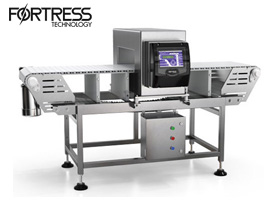
Besides its bulk sauce business, Shoda Foods has a sauce sachet operation. The detectors it uses on these lines are nearing the end of the lives, and, based on its experiences with Fortress to-date, Shoda is looking to upgrade them to robust conveyor-style Fortress systems. Further development is planned to include a new bottling facility with the view to expand in this market. The ability to upgrade Fortress inspection equipment so it complies with the latest wholesale and retailer Codes of Practice and maintains Shoda’s eleven-year unblemished metal contaminant record fills the team with confidence.
“We know their equipment and we know the company. For us, it is all about building relationships with suppliers so they get to know our needs. Fortress understands that if a metal detector isn’t working, we can’t pack product, which is why it engineers equipment that is built to last and, in our experience, totally reliable,” concludes Gareth.
“If we look back over the last eleven years, since we started working with Fortress, we can honestly say we have had zero incidents with metal. Fortress metal detectors are like the ‘Fort Knox’ of the inspection world - nothing gets past them; they are completely failsafe,” said Gareth Law, Engineering Manager, at Shoda Sauces.
Japanese-owned Shoda Sauces manufactures oriental sauces, from soy, oyster and hoisin, to blackbean, yellowbean and chilli sauces. The majority of these are supplied to food and ready meals manufacturers across the UK and Europe, ultimately ending up in products on sale in multiple retailers. A smaller proportion is produced for the food service channel.
Regardless of who the end customer is, Shoda’s commitment to food safety is the same - and absolute. A BRC accredited company, Shoda treats metal detection as a critical control point in its HACCP plan.
“No matter where you fit in the food supply chain, you have to supply safe food, and metal detectors are crucial in providing that assurance. We cannot afford to be without them,” said Gareth.
The last decade has seen the company experiencing controlled growth, which has accelerated in the last eighteen months. This growth in demand, combined with the unreliability of existing equipment, prompted Shoda to invest in a new Fortress pipeline metal detector this January.
The Phantom pipeline system detects metal contamination in pumped liquids and pastes conveyed through a non-metallic pipe. Like the previously purchased Fortress detectors, this latest purchase was for the company’s ‘vat room’, for screening liquids as they are piped into 1000ltr IBCs (Intermediate Bulk Containers), pallecons, 12.5ltr and 2.5ltr jerry cans and 5kg buckets.
There are two overriding advantages to using pipelines for this application. Firstly, because pipelines are in-process detectors, they do not occupy any additional floor space or incur any labour costs. Secondly, inspecting in-line achieves far greater sensitivity than passing packaged product through a conveyorised detector head as the aperture is far smaller - the smaller the aperture, the better the sensitivity. The pipelines at Shoda were specified with 110mm apertures.
In this application, the salt content of some of the sauces could potentially have compromised sensitivity highlights Kevin Shackell, head of UK sales at Fortress: “Soy sauces generate what we call product signal, which can trigger a false reject. By essentially filtering out the external ‘noise’, our FM software boosts sensitivity by up to 40% when inspecting conductive products,” he said.
Screening 1 litre every 25 seconds Typically, Shoda’s ‘vat room’ processes either one batch of 3.5 tonnes of sauce per day, or alternatively several smaller batches of 550kg.
With up to three product changeovers per day, it is important than any equipment Shoda purchases is easy to clean and able to switch quickly between different products. With its IP69K rating, 304 stainless steel construction, extra rugged BSH casing and Auto Cal set up system, the Phantom fits the brief perfectly.
“We clean down at the start and end of production and between every batch. The Phantom pipeline helps to minimise cleaning time as it can be left in-line during wash down. It can store up to 99 different products in its memory and programming new recipes is very easy,” said Gareth.
Line speeds are dependent on viscosity, but typical throughput is around one litre every 25 seconds.
Besides its bulk sauce business, Shoda Foods has a sauce sachet operation. The detectors it uses on these lines are nearing the end of the lives, and, based on its experiences with Fortress to-date, Shoda is looking to upgrade them to robust conveyor-style Fortress systems. Further development is planned to include a new bottling facility with the view to expand in this market. The ability to upgrade Fortress inspection equipment so it complies with the latest wholesale and retailer Codes of Practice and maintains Shoda’s eleven-year unblemished metal contaminant record fills the team with confidence.
“We know their equipment and we know the company. For us, it is all about building relationships with suppliers so they get to know our needs. Fortress understands that if a metal detector isn’t working, we can’t pack product, which is why it engineers equipment that is built to last and, in our experience, totally reliable,” concludes Gareth.


GET A QUOTE
Tell us about your business requirement, one of our technical expert will be in touch with you soon..!
PROCEED
NEW PRODUCTS ALERTS