Autonomous Mobile Robots (AMRs): Transforming Warehouse Operations
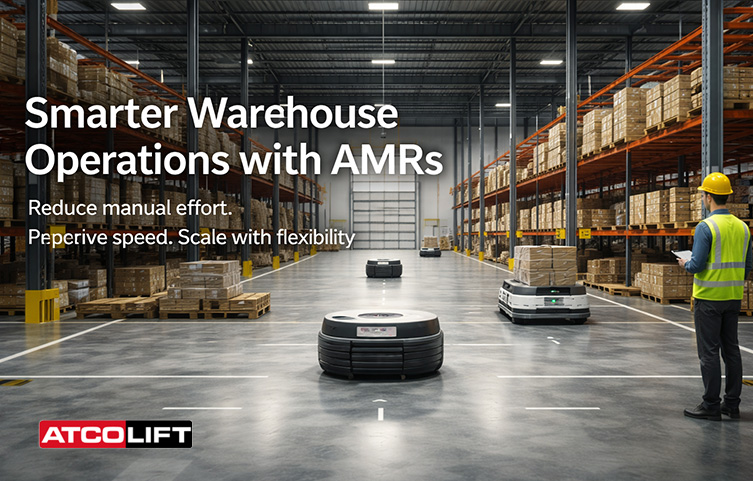
Warehouse operations are changing — not slowly, but steadily and visibly.
What once depended on manual handling, forklifts, and fixed systems is now moving toward smarter, more responsive setups. Businesses today are not just looking for speed. They need control, flexibility, and consistency across every movement inside the warehouse.
This shift is where Autonomous Mobile Robots (AMRs) are making a real difference.
AMRs are not just about automation. They bring a new way of working — where material flow becomes smoother, decisions happen faster, and operations adjust without constant manual effort. For warehouses handling growing demand, tight delivery timelines, or workforce challenges, AMRs are becoming part of everyday operations rather than future planning.
What Are Autonomous Mobile Robots?
Autonomous Mobile Robots are intelligent machines designed to move materials across warehouse spaces without fixed paths or direct human control. Unlike traditional systems, they do not depend on rails, floor markings, or predefined routes. Instead, AMRs use sensors, cameras, and mapping software to understand their surroundings and navigate independently. If a route is blocked, they do not wait. If the layout changes, they do not stop working. They simply adjust. This ability to think, adapt, and move in real time makes AMRs highly suitable for modern warehouses where layouts, workflows, and demands are constantly evolving.
Why Warehouses Are Moving Toward AMRs
Warehouse pressure is increasing from every side. More orders. Faster delivery expectations. Limited labor availability. Rising operational costs. In many facilities, workers spend a large portion of their time walking — moving items from one point to another. This movement is necessary, but it does not directly add value. AMRs reduce that gap. They take over repetitive transport tasks and allow workers to focus on picking, packing, checking, and managing operations. This improves productivity without simply adding more workforce. Another important factor is adaptability. Warehouses rarely stay the same. Product lines change, storage areas shift, and demand fluctuates. Fixed systems often struggle in such environments. AMRs bring flexibility. You can scale operations up or down without major structural changes.
Where AMRs Fit in Daily Warehouse Work
AMRs are not limited to one function. Their strength lies in how easily they fit into multiple workflows.
How AMRs Improve Real Efficiency
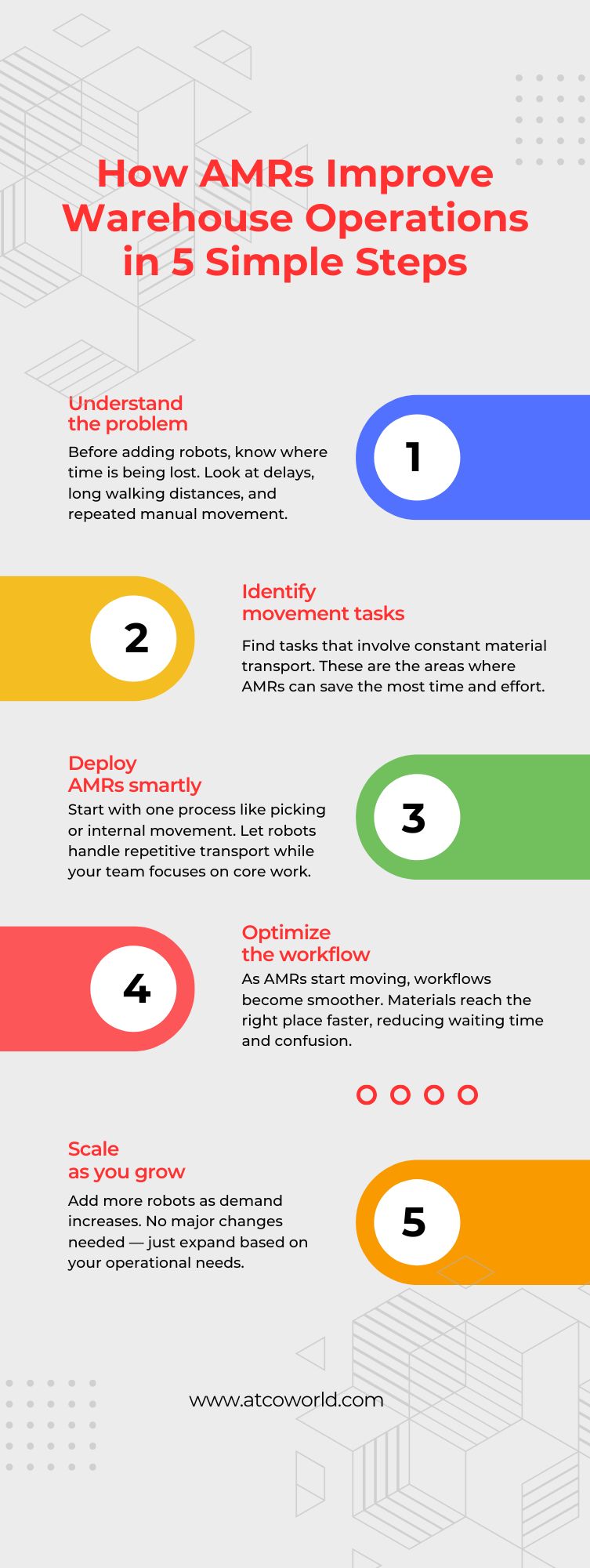
Efficiency is not only about speed. It is about how smoothly operations run from start to finish. In many warehouses, delays happen not because of lack of effort, but because materials are not available at the right place at the right time. Workers wait. Processes slow down. AMRs help close that gap. They move continuously, follow system instructions, and adjust routes based on real conditions. This ensures that materials reach where they are needed without unnecessary delay. One of the biggest improvements comes from reduced walking time. Workers no longer need to move long distances repeatedly. Instead, they stay focused on value-driven tasks. Over time, this leads to:
Flexibility Compared to Traditional Systems
Traditional automation systems such as conveyors can be powerful, but they are fixed by design. Once installed, changes can be difficult and costly. AMRs work differently. They operate using digital mapping. If a warehouse layout changes, the system can be updated without rebuilding infrastructure. This allows businesses to adapt without disruption. This flexibility is especially useful for:
Safer and Smarter Work Environments
Safety is a major concern in any warehouse. AMRs are designed to operate in environments where people and machines work together. They detect obstacles, slow down when needed, and change direction to avoid collisions. This creates a more controlled movement flow compared to manual handling equipment. At the same time, AMRs reduce physical strain on workers. Tasks like carrying loads across long distances or repeating the same movement throughout the day are minimized. The result is not just improved efficiency, but a better working environment.
Cost, Scalability, and Practical Value
AMRs require investment, but their value builds over time. Instead of depending on one large system upgrade, businesses can start small. A few robots can be introduced in a specific workflow, tested, and then expanded based on results. This phased approach reduces risk and allows better control over spending. The return comes from multiple areas:
What to Plan Before Implementation
AMRs work best when applied with clarity. It is important to identify where movement delays happen and which processes consume the most time. Understanding workflow gaps helps in placing AMRs where they add the most value. Other factors to consider include floor conditions, aisle width, traffic flow, and system integration. Teams also need time to adjust. Proper training ensures that workers feel comfortable working alongside robots and understand how to interact with them effectively.
The Road Ahead for AMRs
AMRs are continuing to evolve. With improvements in artificial intelligence and data integration, future systems will not just move goods. They will analyze patterns, predict needs, and coordinate tasks more intelligently. Warehouses are moving toward connected environments where AMRs work alongside conveyors, sorting systems, and software platforms. The focus is simple — better control, faster response, and smoother operations.
Autonomous Mobile Robots are not just improving warehouse efficiency — they are changing how warehouses operate at a fundamental level. They reduce unnecessary movement. They improve flexibility. They support workers instead of replacing them. For businesses looking to modernize operations without committing to rigid systems, AMRs offer a practical and scalable solution. The shift is already happening across industries. The real advantage now lies in how early and how effectively warehouses adapt to it.
What Are Autonomous Mobile Robots?
Autonomous Mobile Robots are intelligent machines designed to move materials across warehouse spaces without fixed paths or direct human control. Unlike traditional systems, they do not depend on rails, floor markings, or predefined routes. Instead, AMRs use sensors, cameras, and mapping software to understand their surroundings and navigate independently. If a route is blocked, they do not wait. If the layout changes, they do not stop working. They simply adjust. This ability to think, adapt, and move in real time makes AMRs highly suitable for modern warehouses where layouts, workflows, and demands are constantly evolving.
Why Warehouses Are Moving Toward AMRs
Warehouse pressure is increasing from every side. More orders. Faster delivery expectations. Limited labor availability. Rising operational costs. In many facilities, workers spend a large portion of their time walking — moving items from one point to another. This movement is necessary, but it does not directly add value. AMRs reduce that gap. They take over repetitive transport tasks and allow workers to focus on picking, packing, checking, and managing operations. This improves productivity without simply adding more workforce. Another important factor is adaptability. Warehouses rarely stay the same. Product lines change, storage areas shift, and demand fluctuates. Fixed systems often struggle in such environments. AMRs bring flexibility. You can scale operations up or down without major structural changes.
Where AMRs Fit in Daily Warehouse Work
AMRs are not limited to one function. Their strength lies in how easily they fit into multiple workflows.
- Moving goods between storage, picking, and packing zones
- Supporting order picking by carrying items alongside workers
- Handling replenishment from reserve storage to active locations
- Assisting in sorting, staging, and dispatch preparation
- Delivering materials to production lines in industrial setups
- Managing internal transfers of returns, bins, or empty pallets
How AMRs Improve Real Efficiency
Efficiency is not only about speed. It is about how smoothly operations run from start to finish. In many warehouses, delays happen not because of lack of effort, but because materials are not available at the right place at the right time. Workers wait. Processes slow down. AMRs help close that gap. They move continuously, follow system instructions, and adjust routes based on real conditions. This ensures that materials reach where they are needed without unnecessary delay. One of the biggest improvements comes from reduced walking time. Workers no longer need to move long distances repeatedly. Instead, they stay focused on value-driven tasks. Over time, this leads to:
- Faster order processing
- Better workflow balance
- Reduced idle time
- Improved operational consistency
Flexibility Compared to Traditional Systems
Traditional automation systems such as conveyors can be powerful, but they are fixed by design. Once installed, changes can be difficult and costly. AMRs work differently. They operate using digital mapping. If a warehouse layout changes, the system can be updated without rebuilding infrastructure. This allows businesses to adapt without disruption. This flexibility is especially useful for:
- Seasonal demand fluctuations
- Expanding warehouse layouts
- Introducing new product categories
- Reorganizing storage zones
Safer and Smarter Work Environments
Safety is a major concern in any warehouse. AMRs are designed to operate in environments where people and machines work together. They detect obstacles, slow down when needed, and change direction to avoid collisions. This creates a more controlled movement flow compared to manual handling equipment. At the same time, AMRs reduce physical strain on workers. Tasks like carrying loads across long distances or repeating the same movement throughout the day are minimized. The result is not just improved efficiency, but a better working environment.
Cost, Scalability, and Practical Value
AMRs require investment, but their value builds over time. Instead of depending on one large system upgrade, businesses can start small. A few robots can be introduced in a specific workflow, tested, and then expanded based on results. This phased approach reduces risk and allows better control over spending. The return comes from multiple areas:
- Reduced labor dependency
- Lower operational delays
- Better space utilization
- Improved output without increasing manpower
What to Plan Before Implementation
AMRs work best when applied with clarity. It is important to identify where movement delays happen and which processes consume the most time. Understanding workflow gaps helps in placing AMRs where they add the most value. Other factors to consider include floor conditions, aisle width, traffic flow, and system integration. Teams also need time to adjust. Proper training ensures that workers feel comfortable working alongside robots and understand how to interact with them effectively.
The Road Ahead for AMRs
AMRs are continuing to evolve. With improvements in artificial intelligence and data integration, future systems will not just move goods. They will analyze patterns, predict needs, and coordinate tasks more intelligently. Warehouses are moving toward connected environments where AMRs work alongside conveyors, sorting systems, and software platforms. The focus is simple — better control, faster response, and smoother operations.
Autonomous Mobile Robots are not just improving warehouse efficiency — they are changing how warehouses operate at a fundamental level. They reduce unnecessary movement. They improve flexibility. They support workers instead of replacing them. For businesses looking to modernize operations without committing to rigid systems, AMRs offer a practical and scalable solution. The shift is already happening across industries. The real advantage now lies in how early and how effectively warehouses adapt to it.


GET A QUOTE
Tell us about your business requirement, one of our technical expert will be in touch with you soon..!
PROCEED
NEW PRODUCTS ALERTS