Top Warehouse Automation Solutions Every Modern Facility Needs in 2026
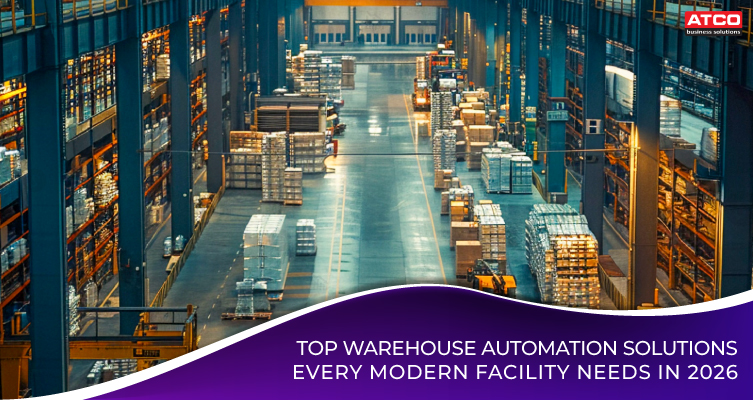
Warehouse environments are changing faster than most teams expected. Labour shortages are becoming common, operating costs continue to climb, and delivery timelines are shrinking. Many facilities still depend heavily on manual handling, which often leads to delays, errors, and worker fatigue.
Automation is gradually shifting from an optional upgrade to a necessary operational layer. It helps stabilize workflows, reduce dependency on manual effort, and maintain consistent output even during peak demand periods.
Why Warehouses Are Moving Toward Automation
Daily operations now involve higher order volumes, mixed product handling, and tighter dispatch schedules. In many locations, harsh working conditions and long shifts impact workforce productivity and increase the risk of injuries. Automation supports these challenges by improving process control and reducing repetitive manual tasks. It brings structure to movement, improves accuracy, and allows teams to focus on supervision instead of constant physical effort.
1. Dimensioning and Weighing Systems for Reliable Data
Incorrect shipment data often leads to billing issues and transport inefficiencies. Manual measurement methods are slow and prone to variation, especially when volumes increase. Dimensioning and weighing systems capture accurate size and weight data instantly. This improves billing transparency and supports better planning for storage and transportation.
2. Conveyor Systems for Smooth Internal Movement
Moving goods manually between zones consumes time and requires additional manpower. During busy periods, this often results in congestion and delays. Conveyor systems create a continuous flow of materials across different sections of the warehouse. They reduce idle time and help maintain a steady pace of operations.
3. Sortation Systems for Accurate Order Handling
With increasing SKU variety and order complexity, manual sorting becomes slower and less reliable. Errors during sorting can lead to incorrect deliveries and customer dissatisfaction. Sortation systemsautomatically direct items based on defined rules. This ensures faster processing and improves accuracy across order fulfillment stages.
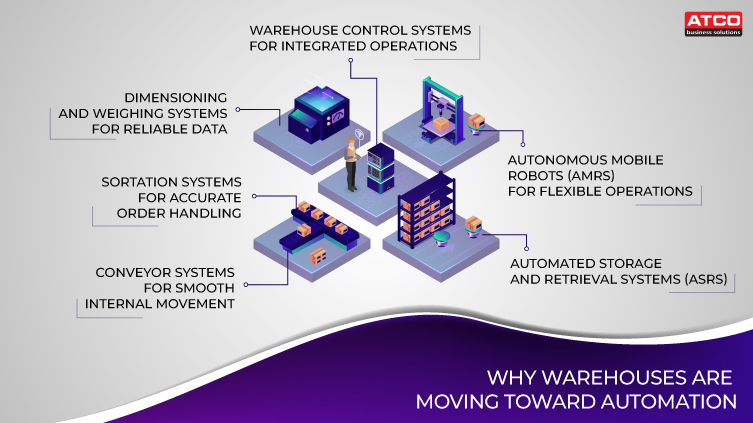 4. Automated Storage and Retrieval Systems(ASRS)
Storage space is becoming more expensive, and expansion is not always practical. Traditional storage methods often fail to utilize vertical space effectively. ASRS solutions use automated mechanisms to store and retrieve goods from vertical structures. This increases storage density and improves inventory control.
5. Autonomous Mobile Robots(AMRs) for Flexible Operations
Warehouse layouts often change due to seasonal demand or product variation. Fixed systems alone may not handle such changes efficiently. Autonomous mobile robots move goods across different areas without fixed tracks. They adapt easily to layout changes and work alongside human operators.
6. Warehouse Control Systems for Integrated Operations
Automation systems perform better when connected through a centralized platform. Disconnected processes often lead to delays and data inconsistencies. Warehouse control systems integrate multiple technologies into a unified workflow. This ensures better coordination and real-time visibility across operations.
Improving Safety and Workforce Efficiency
Automation helps reduce physical strain on workers by handling repetitive and heavy tasks. This lowers the risk of injuries and creates a safer working environment. Employees can focus on monitoring systems, managing exceptions, and ensuring quality, rather than performing continuous manual handling tasks. This shift improves overall efficiency without removing the human role from operations.
Planning a Practical Automation Strategy
Not every facility requires a full-scale transformation at once. A phased approach allows businesses to address specific challenges step by step. Initial improvements can start with areas such as measurement systems or internal movement. Over time, facilities can expand into advanced solutions like ASRS and robotic systems based on operational needs. The focus should remain on solving real problems rather than adopting technology for its own sake.
Moving Toward More Stable Warehouse Operations
Warehouses are expected to handle higher volumes with better accuracy and shorter turnaround times. Automation supports these expectations by improving consistency and reducing operational pressure. The shift is not about replacing people but about building systems that support them. With the right balance, facilities can achieve better performance while maintaining control over costs and safety. ATCOLIFT continues to work with operations teams to align automation solutions with practical warehouse requirements, ensuring smoother workflows without unnecessary complexity.
Why Warehouses Are Moving Toward Automation
Daily operations now involve higher order volumes, mixed product handling, and tighter dispatch schedules. In many locations, harsh working conditions and long shifts impact workforce productivity and increase the risk of injuries. Automation supports these challenges by improving process control and reducing repetitive manual tasks. It brings structure to movement, improves accuracy, and allows teams to focus on supervision instead of constant physical effort.
1. Dimensioning and Weighing Systems for Reliable Data
Incorrect shipment data often leads to billing issues and transport inefficiencies. Manual measurement methods are slow and prone to variation, especially when volumes increase. Dimensioning and weighing systems capture accurate size and weight data instantly. This improves billing transparency and supports better planning for storage and transportation.
- Reduces errors in shipment measurement
- Supports accurate freight billing
- Speeds up receiving and dispatch processes
2. Conveyor Systems for Smooth Internal Movement
Moving goods manually between zones consumes time and requires additional manpower. During busy periods, this often results in congestion and delays. Conveyor systems create a continuous flow of materials across different sections of the warehouse. They reduce idle time and help maintain a steady pace of operations.
- Improves movement efficiency across zones
- Handles higher volumes with less effort
- Reduces physical workload on staff
3. Sortation Systems for Accurate Order Handling
With increasing SKU variety and order complexity, manual sorting becomes slower and less reliable. Errors during sorting can lead to incorrect deliveries and customer dissatisfaction. Sortation systemsautomatically direct items based on defined rules. This ensures faster processing and improves accuracy across order fulfillment stages.
- Minimizes sorting errors
- Enhances order processing speed
- Supports large-scale operations
Storage space is becoming more expensive, and expansion is not always practical. Traditional storage methods often fail to utilize vertical space effectively. ASRS solutions use automated mechanisms to store and retrieve goods from vertical structures. This increases storage density and improves inventory control.
- Maximizes available storage space
- Improves inventory accuracy
- Reduces manual picking time
5. Autonomous Mobile Robots(AMRs) for Flexible Operations
Warehouse layouts often change due to seasonal demand or product variation. Fixed systems alone may not handle such changes efficiently. Autonomous mobile robots move goods across different areas without fixed tracks. They adapt easily to layout changes and work alongside human operators.
- Provides flexibility in changing layouts
- Reduces dependency on manual transport
- Supports scalable expansion
6. Warehouse Control Systems for Integrated Operations
Automation systems perform better when connected through a centralized platform. Disconnected processes often lead to delays and data inconsistencies. Warehouse control systems integrate multiple technologies into a unified workflow. This ensures better coordination and real-time visibility across operations.
- Improves coordination between systems
- Provides real-time operational insights
- Supports better decision-making
Improving Safety and Workforce Efficiency
Automation helps reduce physical strain on workers by handling repetitive and heavy tasks. This lowers the risk of injuries and creates a safer working environment. Employees can focus on monitoring systems, managing exceptions, and ensuring quality, rather than performing continuous manual handling tasks. This shift improves overall efficiency without removing the human role from operations.
Planning a Practical Automation Strategy
Not every facility requires a full-scale transformation at once. A phased approach allows businesses to address specific challenges step by step. Initial improvements can start with areas such as measurement systems or internal movement. Over time, facilities can expand into advanced solutions like ASRS and robotic systems based on operational needs. The focus should remain on solving real problems rather than adopting technology for its own sake.
Moving Toward More Stable Warehouse Operations
Warehouses are expected to handle higher volumes with better accuracy and shorter turnaround times. Automation supports these expectations by improving consistency and reducing operational pressure. The shift is not about replacing people but about building systems that support them. With the right balance, facilities can achieve better performance while maintaining control over costs and safety. ATCOLIFT continues to work with operations teams to align automation solutions with practical warehouse requirements, ensuring smoother workflows without unnecessary complexity.




GET A QUOTE
Tell us about your business requirement, one of our technical expert will be in touch with you soon..!
PROCEED
NEW PRODUCTS ALERTS