Loading Bay Equipment for Logistics Parks: Dock Levellers, High-Speed Doors & Dock Shelters
When a truck reaches the loading bay in a logistics park, the warehouse team expects the movement to be quick. Pallets are staged near dispatch, forklifts are ready, and the vehicle schedule is usually tight. But even with good planning inside the warehouse, loading can slow down at the dock.
The trailer floor may not match the warehouse level. The door may stay open longer than required. Dust, hot air or humidity may enter the building. In cold storage or food distribution, temperature loss can become a serious concern. In high-volume logistics hubs, even a few slow loading cycles can affect the full dispatch plan.
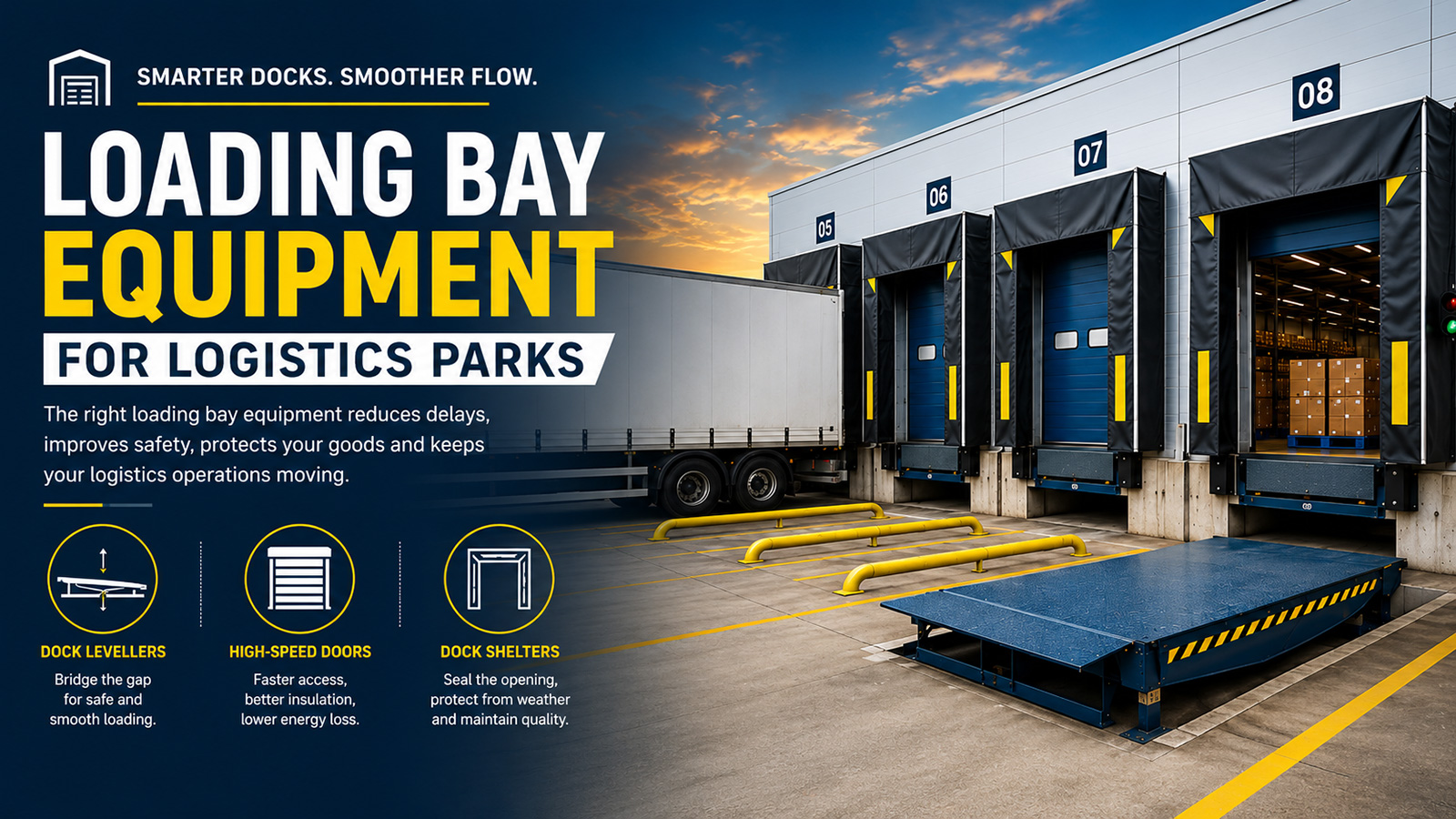
This is why loading bay equipment for logistics parks should be planned as part of the warehouse workflow, not as a final building accessory. Dock levellers, high-speed doors and dock shelters work together to support safer forklift movement, faster truck turnaround, better sealing and more predictable loading operations.
The loading bay connects two different working conditions. Inside the warehouse, movement is controlled through aisles, racking, staging zones, forklifts, pallet trucks and dispatch teams. Outside the warehouse, trucks arrive with different body heights, vehicle conditions and driver habits.
This mismatch is where many problems begin. A container truck may sit higher than the dock. A smaller local delivery vehicle may sit lower. A refrigerated vehicle may need better sealing. A busy dispatch bay may need faster door movement because forklifts are crossing the opening throughout the shift.
If the dock is not prepared for these variations, operators start adjusting the process manually. They slow down forklift movement, reposition trucks, wait for doors, use temporary methods or leave openings exposed. These workarounds create delays, safety risks and avoidable operating costs.
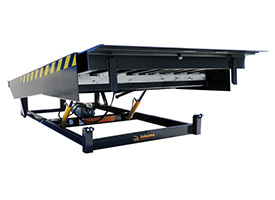
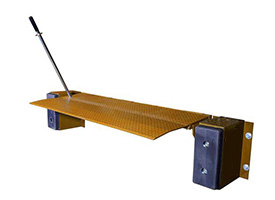
A dock leveller bridges the height difference between the warehouse floor and the truck bed. This helps forklifts and pallet trucks move loads in and out with better stability. In logistics parks, this matters because the same bay may handle containers, trailers, supplier vehicles, local delivery trucks and refrigerated vehicles.
One common selection mistake is choosing a dock leveller only by capacity. Capacity is important, but it is not enough. The leveller length, dock height, vehicle height range, pit design, lip type, platform strength and daily usage pattern also affect performance.
If the leveller is too short, the slope can become uncomfortable or unsafe for forklift travel. If it does not suit the vehicle mix, gaps and alignment issues may still occur. A good dock leveller should support the real loading pattern during peak working hours, not only meet a basic specification on paper.
High-speed doors control the opening between the warehouse and the loading area. In low-traffic areas, a normal industrial door may be acceptable. In a busy logistics park, repeated forklift movement, heat, dust, humidity and delivery pressure make door speed and reliability much more important.
A slow door does not only waste seconds. It can allow hot air into cooled areas, increase dust movement, interrupt forklift flow and make operators wait near the opening. In GCC conditions, where warehouses often deal with high outdoor temperatures, this can also increase cooling load and reduce working comfort near the dock.
Before selecting a high-speed door , warehouse teams should check traffic frequency, opening size, wind exposure, safety sensors, curtain material, repair access and the distance between forklift paths and the doorway. The right door should support movement without becoming another bottleneck.
Dock shelters seal the gap between the parked truck and the warehouse building. This helps reduce heat entry, dust, rain exposure and temperature loss during loading. For food distribution, cold storage, FMCG, pharma and sensitive goods, this can directly affect product condition and energy use.
Poor sealing is often ignored because loading can still continue. The forklift can move, the truck can be loaded and the shipment can leave. But the hidden cost appears through energy loss, product exposure, damaged packaging, uncomfortable working conditions and higher pressure on cooling systems.
Dock shelter selection should consider vehicle size variation, reversing accuracy, bay design, loading frequency and the type of goods handled. If different vehicle sizes use the same dock, the shelter must be suitable for that range rather than selected only by standard opening dimensions.
- Selecting a dock leveller by load capacity only, without checking truck height variation and forklift travel slope.
- Choosing a high-speed door by opening size only, without considering traffic frequency and repair access.
- Using one dock shelter type for different vehicle sizes without checking sealing performance.
- Planning the dock without enough staging space, which causes pallets and forklifts to block the dispatch area.
- Ignoring maintenance access until the first breakdown causes vehicle waiting time.
These mistakes usually become visible during peak operations. One slow dock can create a queue of vehicles. One damaged door can force forklifts to use a longer route. One poorly sealed bay can increase temperature loss across the entire shift.
- Vehicle mix: Check container trucks, trailers, refrigerated vehicles, local delivery trucks and supplier vehicles.
- Handling method: Review whether forklifts, pallet trucks, reach trucks, conveyors or manual handling are used at the bay.
- Traffic frequency: Identify how many loading and unloading cycles happen during normal and peak shifts.
- Product sensitivity: Consider chilled goods, food items, pharma products, fragile packaging and dust-sensitive materials.
- Safety and maintenance: Check gradients, visibility, pedestrian movement, sensors, inspection points and emergency access.
This type of review helps procurement teams compare equipment more clearly. The lowest purchase cost may not be the lowest operating cost if the equipment causes repeated delays, unsafe movement, poor sealing or difficult maintenance.
The loading bay is a high-use area. Dock levellers need inspection of platforms, lips, hinges, hydraulic parts, safety supports and control systems. High-speed doors need checks on motors, sensors, curtains, side guides and emergency release systems. Dock shelters need inspection for fabric wear, frame damage and sealing gaps.
A dock breakdown is rarely only a maintenance problem. It can delay trucks, block staging areas, increase forklift travel and disturb dispatch planning. In logistics parks, downtime at the loading bay can affect transport schedules and warehouse productivity very quickly.
In UAE, Saudi Arabia, Oman and other GCC markets, high temperature, dust, heavy vehicle use and fast delivery expectations make uptime especially important. Equipment should match the building design, but it should also match the climate and working rhythm of the site.
The best starting point is to observe the busiest loading period in the facility. If trucks are waiting too long, review dock layout, leveller operation, door speed and staging flow. If temperature loss is the concern, review door exposure time and dock shelter sealing. If safety is the issue, check gradients, vehicle alignment, visibility, pedestrian movement and forklift travel paths.
Before choosing loading bay equipment, ask one clear question: is the main problem speed, safety, sealing, space or maintenance? The answer usually points to the right equipment decision more clearly than a specification sheet alone.


GET A QUOTE
Tell us about your business requirement, one of our technical expert will be in touch with you soon..!
NEW PRODUCTS ALERTS