Enhancing Warehouse Workflow Efficiency with Smart Racking Layouts
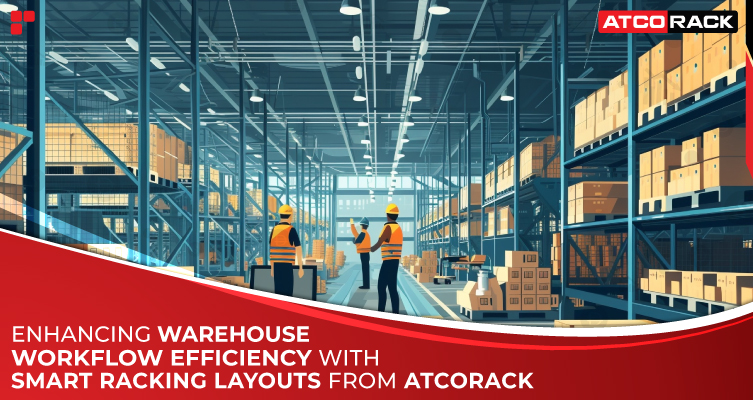
Warehouses across the UAE, Saudi Arabia, and Oman are evolving quickly. Distribution volumes are rising, import-export movement is expanding, and logistics hubs are processing more pallet traffic than ever before. In this environment, operational accuracy becomes critical. Even small mistakes in measurement, storage planning, or freight calculations can cascade into major workflow disruptions.
Why Accurate Data Matters in Modern GCC Warehouses
Supply chains across the Gulf operate within complex logistics networks. Goods move through ports, free zones, and inland distribution facilities before reaching final markets. These processes rely heavily on accurate dimensional data and well-organized storage layouts.
Common operational challenges include:
Understanding Dimensioning Systems in Warehouse Operations
Dimensioning systems automatically measure the length, width, height, and volume of packages. Instead of relying on manual measurement tools, sensors capture precise dimensional data as goods move through receiving stations or conveyor lines.
This technology helps warehouses maintain consistent data accuracy and faster processing.
Top Operational Benefits of Smart Racking Layouts
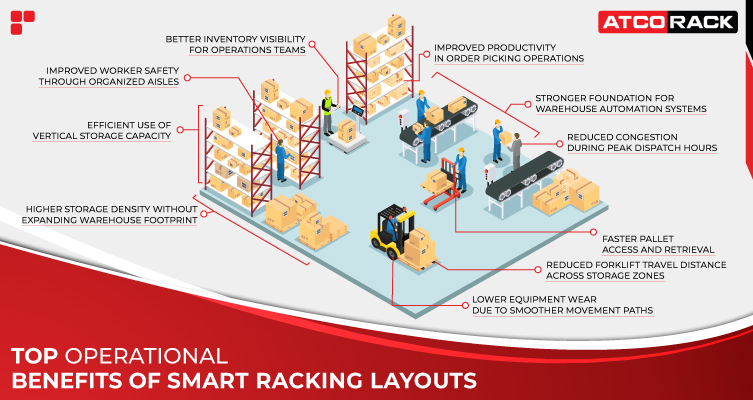 Well-designed storage structures significantly influence daily warehouse efficiency. When racks are positioned intelligently, goods move faster and handling becomes more predictable.
Common Mistakes Without Measurement Systems
Some warehouses continue relying on manual processes even as shipment volumes increase. Over time this approach creates operational friction.
GCC Conditions That Influence Warehouse Planning
Warehouses in the Gulf region operate under environmental and regulatory conditions that influence infrastructure decisions.
Preparing Warehouses for Future Automation
Automation in logistics is expanding across the GCC. Facilities planning automated storage systems or advanced warehouse software require accurate dimensional data and organized storage structures.
ATCORACK storage systems are often implemented with this long-term perspective, helping warehouses maintain structured pallet storage while preparing for technology upgrades.
Operational efficiency improves when infrastructure supports both present workflow needs and future automation strategies
Why Accurate Data Matters in Modern GCC Warehouses
Supply chains across the Gulf operate within complex logistics networks. Goods move through ports, free zones, and inland distribution facilities before reaching final markets. These processes rely heavily on accurate dimensional data and well-organized storage layouts.
Common operational challenges include:
- Inaccurate freight billing due to incorrect volumetric weight
- Warehouse space underutilized because pallet sizes were miscalculated
- Manual measurement errors affecting inventory accuracy
- Compliance gaps in international shipping documentation
- Operational delays when cargo must be re-measured
Understanding Dimensioning Systems in Warehouse Operations
Dimensioning systems automatically measure the length, width, height, and volume of packages. Instead of relying on manual measurement tools, sensors capture precise dimensional data as goods move through receiving stations or conveyor lines.
This technology helps warehouses maintain consistent data accuracy and faster processing.
- Automated measurement removes manual errors
- Instant data integration with warehouse systems
- Faster cargo processing during receiving operations
- Reliable volumetric data for freight billing
Top Operational Benefits of Smart Racking Layouts
- Reduced forklift travel distance across storage zones
- Faster pallet access and retrieval
- Higher storage density without expanding warehouse footprint
- Improved worker safety through organized aisles
- Better inventory visibility for operations teams
- Reduced congestion during peak dispatch hours
- Lower equipment wear due to smoother movement paths
- Improved productivity in order picking operations
- Efficient use of vertical storage capacity
- Stronger foundation for warehouse automation systems
Common Mistakes Without Measurement Systems
Some warehouses continue relying on manual processes even as shipment volumes increase. Over time this approach creates operational friction.
- Estimating pallet dimensions instead of measuring them
- Designing racking layouts before analyzing product sizes
- Inconsistent measurement practices across teams
- Incorrect dimensional data in warehouse systems
- Freight cost disputes caused by inaccurate measurements
GCC Conditions That Influence Warehouse Planning
Warehouses in the Gulf region operate under environmental and regulatory conditions that influence infrastructure decisions.
- High temperatures affecting equipment performance
- Cross-border trade creating high cargo turnover
- Labor availability influencing automation decisions
- Import-dependent supply chains increasing storage demand
Preparing Warehouses for Future Automation
Automation in logistics is expanding across the GCC. Facilities planning automated storage systems or advanced warehouse software require accurate dimensional data and organized storage structures.
ATCORACK storage systems are often implemented with this long-term perspective, helping warehouses maintain structured pallet storage while preparing for technology upgrades.
Operational efficiency improves when infrastructure supports both present workflow needs and future automation strategies


GET A QUOTE
Tell us about your business requirement, one of our technical expert will be in touch with you soon..!
PROCEED
NEW PRODUCTS ALERTS