Cold Storage Reach Trucks and Doors: What You Need to Know
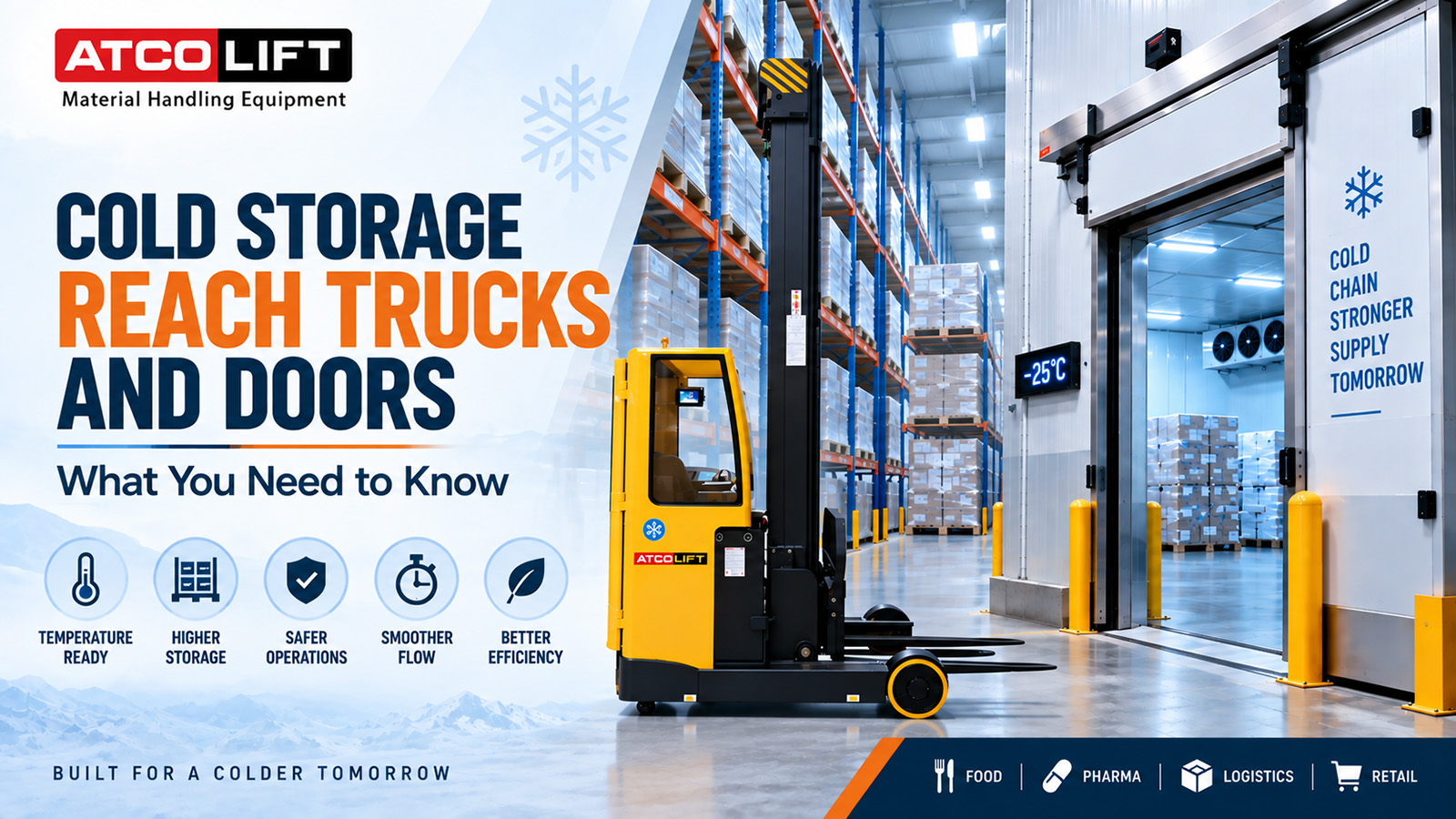
In a busy cold store, a pallet may be ready for dispatch while the reach truck is working at height and a cold storage door is opening repeatedly for incoming traffic. Each movement looks routine, but small delays at aisles, doorways, charging points, or temperature transition zones can quickly affect productivity, safety, energy use, and equipment uptime.
Cold storage operations therefore need more than standard warehouse equipment placed inside a refrigerated room. Reach trucks, doors, racking, batteries, floor conditions, traffic routes, and operating procedures must work together under demanding low-temperature conditions.
This guide explains what warehouse managers and operations teams should consider when planning cold storage reach trucks and doors, including equipment suitability, pallet flow, safety, maintenance, and the hidden costs that can appear when individual components are selected without considering the complete operation.
Reader Intent: Understand cold-storage equipment and make better equipment decisions.
Main Article Angle: Equipment selection.
Operational Problem: Maintaining efficient pallet movement and temperature control without creating safety risks, delays, unnecessary energy loss, or equipment downtime.
Why Cold Storage Changes Reach Truck Requirements
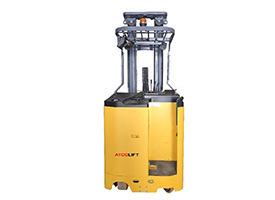
A reach truck is designed primarily for pallet handling in narrow warehouse aisles and high racking. Its compact operating footprint makes it useful where storage density is important. Cold storage, however, changes the conditions in which the truck has to perform.
Low temperatures can affect batteries, electronic components, lubrication, hydraulic performance, displays, switches, and other parts of a truck. Moving repeatedly between cold and warmer areas can also introduce condensation.
This is why a reach truck suitable for a conventional ambient warehouse should not automatically be assumed suitable for freezer or chilled operations. The actual operating temperature is one of the first specifications to check.
A chilled warehouse operating above freezing and a deep-freeze facility can place very different demands on the same machine. Shift duration matters as well. A truck that enters a cold room occasionally has a different duty cycle from one operating continuously inside a freezer throughout a shift.
Battery planning deserves particular attention. Low temperatures can affect usable battery performance, while frequent high-intensity pallet movements increase energy demand. If fleet requirements are calculated using only ambient-condition assumptions, charging or battery availability can become an unexpected source of downtime.
Operator comfort also affects productivity. Suitable controls, visibility, protective operating arrangements, and appropriate cold-environment procedures become increasingly important when drivers spend extended periods inside low-temperature areas.
Cold Storage Doors Affect More Than Temperature
Cold storage doors are sometimes treated mainly as part of the building envelope. Operationally, they are also part of the material flow system because almost every pallet moving between temperature zones interacts with a doorway.
If a door opens slowly, stays open unnecessarily, is poorly positioned, or does not suit the level of traffic, forklift movement can become a repeated stop-and-wait process. During high-volume periods, even short interruptions can accumulate at the same access point.
Door opening also allows an exchange of air between different temperature zones. Depending on operating conditions, this can contribute to temperature variation, moisture, and condensation around entrances.
The appropriate door arrangement therefore depends partly on traffic. A doorway used only occasionally does not face the same operational demands as an opening serving continuous reach truck or pallet truck movements.
High-speed doors, insulated doors, and other cold-storage door configurations should be considered against temperature separation, opening frequency, traffic volume, clearance, and safety requirements.
Plan reach trucks and Doors as One Workflow
One common planning problem is specifying individual pieces of equipment without examining the complete pallet journey.
Consider a pallet stored at height inside a freezer. The reach truck retrieves it, travels through an aisle, approaches a doorway, passes into another operating zone, and transfers the pallet towards staging or dispatch.
Each stage introduces constraints. The racking determines lift height and aisle requirements. The pallet and load determine capacity requirements. The floor affects stability and traction. The doorway affects clearance and traffic flow. Temperature affects the truck, battery, and operator. The next handling area determines whether the reach truck should continue the journey or transfer the load to another type of equipment.
This is why rated capacity alone is not enough when selecting a cold storage reach truck.
- Actual operating and minimum temperatures
- Required lift height and residual capacity at height
- Aisle width, turning space, and racking configuration
- Pallet dimensions, load weight, and load characteristics
- Battery type, charging strategy, and expected shift duration
- Floor condition, traction, and temperature transition areas
- Door width, height, opening speed, and vehicle clearance
- Frequency of movement between temperature zones
- Operator visibility, comfort, and pedestrian interaction
This becomes particularly important in high-throughput food and cold-chain distribution operations, where storage density and dispatch speed are both important.
A very narrow aisle may increase storage capacity, for example, but it can also reduce operating tolerance. Similarly, a larger door opening may simplify vehicle access but can increase the amount of open space between temperature zones while the door is operating.
The objective is not to maximize one specification. It is to balance storage density, movement speed, temperature control, safe operation, and maintainability.
Hidden Costs Often Appear After Installation
Purchase price is visible. Operational friction is much harder to see during procurement.
Suppose a reach truck is technically capable of entering a freezer but is poorly matched to continuous low-temperature operation. Repeated maintenance issues or reduced battery availability can leave the truck unavailable when inbound or outbound activity is highest.
The cost is not limited to the repair. Another truck may have to cover the workload. Pallets may wait longer. Operators can become less productive. Dispatch schedules may be affected, and the remaining fleet may accumulate additional operating hours.
Doors create similar hidden costs. A poorly matched or slow-operating door can create vehicle queues and remain open longer during movements. Damage caused by repeated vehicle contact can add maintenance requirements and further disrupt traffic.
Preventive maintenance should therefore consider the truck and doorway as parts of the same operating environment.
reach trucks need inspection and maintenance schedules appropriate to their duty cycle and operating temperature. Doors require attention to seals, sensors, opening mechanisms, and safety devices. Floors and transition areas should also be monitored for moisture, ice, damage, or other conditions that could affect vehicle stability.
For operations in the UAE, Saudi Arabia, Oman, and other Gulf markets, the temperature difference between refrigerated spaces and surrounding areas can be substantial. Facility design and operating procedures should therefore consider the conditions on both sides of a cold-store entrance rather than focusing only on the temperature inside the room.
What Should You Check Before Choosing?
The most useful starting point is not a product catalogue. It is the actual pallet movement inside the facility.
Follow several typical loads from storage to dispatch. Observe where operators slow down, wait, reverse, change direction, queue, or interact with doors and pedestrians. These observations often reveal requirements that are easy to miss when equipment is selected from specifications alone.
- How many pallet movements pass through the cold area during peak periods?
- Will the reach truck remain inside the cold store or repeatedly move between temperature zones?
- What is the highest required lift point and the actual load weight at that height?
- Does the aisle provide sufficient working clearance for the selected truck and load?
- Can the door accommodate the truck, pallet, mast, and normal approach path without creating a bottleneck?
- How frequently will the door open during the busiest operating period?
- Are pedestrians and vehicles properly managed around transition areas?
- Is charging, maintenance, and backup equipment planning realistic for the actual duty cycle?
Cold storage equipment is particularly relevant across food distribution, supermarkets, food processing, pharmaceuticals, and temperature-controlled logistics. Fast receiving and dispatch requirements can make small interruptions in pallet flow increasingly noticeable during peak periods.
Material handling specialists such as ATCOLIFT may support the reach truck and warehouse equipment side of these projects, but the specification should ultimately be based on the facility's actual temperature, racking configuration, load profile, aisle geometry, traffic pattern, and operating cycle rather than the equipment name alone.
A cold storage reach truck and a cold storage door may appear to perform completely separate jobs. In practice, they meet repeatedly at one of the most important points in the warehouse: where a load moves from one operating zone to another.

GET A QUOTE
Tell us about your business requirement, one of our technical expert will be in touch with you soon..!
NEW PRODUCTS ALERTS