Drive in/Drive Through Racking System
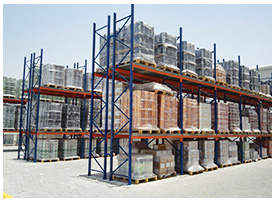
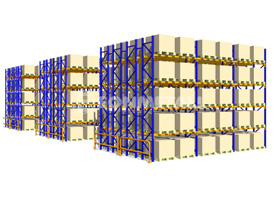
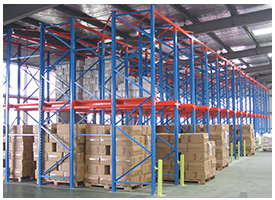
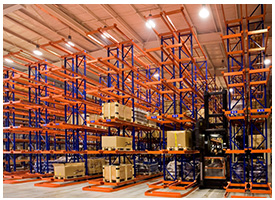
The Drive in/Drive Through Racking System is a space-efficient pallet storage solution used in Omani warehouses and distribution centers handling high-volume, uniform goods. It allows forklifts to drive directly into storage lanes, reducing aisle count and increasing usable storage volume. Typical systems support pallet loads between 800 kg and 2,200 kg and are configured for deep-lane storage, making them suitable for industrial and port-linked environments in Oman.


Key Features
- Deep-lane storage for uniform pallet loads
- Reduced aisle requirements for higher density
- Forklift-accessible rack lanes
- Drive-in and drive-through flow options
- Rail-supported pallet positioning
- Rack heights matched to warehouse structure
- Entry guides for controlled forklift movement
- Expandable layout for future storage needs
Drive in/Drive Through Racking System
Brochure | Quotation | Availability
Fill the form with valid details to receive the information.
Product Videos

Frequently Asked Questions
In Oman, drive-in racking is commonly used where pallet volumes are high and product variation is limited. Warehouses supporting Muscat and Sohar logistics routes use it to store consolidated shipments while maximizing available warehouse volume.
The system works best with uniform pallet sizes and consistent SKUs. Omani warehouses handling packaged food, export goods, or seasonal stock benefit from deep-lane storage where pallets move in predictable sequences.
Many Omani warehouses have moderate roof heights, so rack designs typically range from 6 to 10 meters. Engineers also consider floor flatness and slab strength to ensure safe pallet stacking and forklift movement within the rack structure.
Clear lane markings, entry guides, and defined travel paths help operators align forklifts accurately. In Oman, structured training and supervision are important to maintain consistent handling quality, especially in mixed-experience workforces.
In coastal or humid areas such as Salalah, corrosion monitoring is important. Regular checks for moisture buildup, anchor condition, and protective coating integrity help extend service life under Omani environmental conditions.


Customer Testimonials
GET A QUOTE
Tell us about your business requirement, one of our technical expert will be in touch with you soon..!
NEW PRODUCTS ALERTS