Standard Weights
Standard Weights Retail Scales are calibration tools used to verify and adjust weighing equipment in industrial and commercial operations. These weights are commonly used in warehouses, laboratories, and quality control departments across UAE and the wider GCC and MEA region. They support accurate scale performance by providing known reference values. Available in capacities ranging from 1 kg to 1000 kg and manufactured in cast iron construction, they ensure reliable calibration across different weighing ranges.
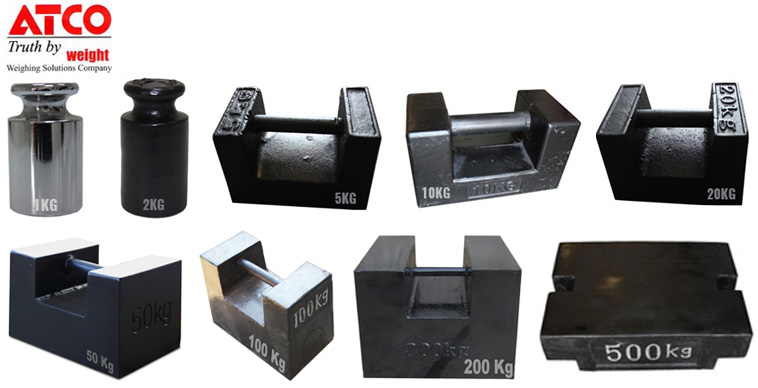
In calibration setups across Dubai and Abu Dhabi, these weights are used to verify platform scales, bench scales, and heavy-duty weighing systems. The available range includes cylindrical, hexagonal, parallelepiped, roller, and heavy block types, covering capacities from 1 kg up to 1000 kg. This wide range allows calibration across multiple equipment categories. The cast iron material ensures durability and stability during repeated use, while the structured design supports safe handling during testing procedures.
These weights integrate into routine maintenance workflows, enabling technicians to validate scale accuracy at scheduled intervals. Their consistent mass properties help maintain compliance with operational standards. The design supports manual handling or assisted lifting depending on weight category, making them suitable for industrial calibration environments.
Technical Specifications
| Type | Cylindrical | Hexagonal | Parallelepiped | Roller | Heavy |
| Capacity (kg) | 1 | 5 | 5 | 200 | 100 |
| 2 | 10 | 10 | 250 | 200 | |
| 5 | 20 | 20 | 500 | 500 | |
| 10 | 50 | 50 | 1000 | ||
| Material | Cast Iron | ||||
| Show Price | |||||
Key Features
- Available in multiple types including cylindrical, hexagonal, and block forms
- Capacity range from 1 kg to 1000 kg for varied calibration needs
- Cast iron construction for durability and stable mass properties
- Suitable for calibrating retail, industrial, and heavy-duty scales
- Designed for consistent and repeatable measurement verification
- Structured shapes for safe handling and positioning
- Supports routine maintenance and inspection workflows
- Compatible with platform, bench, and industrial weighing systems
- Available in different denominations for precise calibration steps
- Used in warehouse, laboratory, and production environments
OR
Standard Weights
Brochure | Quotation | Availability
Fill the form with valid details to receive the information.
Frequently Asked Questions
Standard weights provide fixed reference values used to verify the accuracy of weighing systems. In UAE warehouses and production units, calibration ensures that scales meet operational tolerances. In Dubai and Abu Dhabi facilities, regular use of these weights helps prevent measurement errors that could affect inventory control, billing, and compliance requirements.
Selection depends on the type of scale and load range being tested. Cylindrical weights are often used for precision setups, while block or heavy weights are used for platform scales. In UAE logistics environments, technicians typically match the weight type and capacity with the scale’s operating range for accurate calibration.
Calibration in UAE facilities may require weights from 1 kg for smaller bench scales up to 500 kg or 1000 kg for heavy-duty systems. The selected range depends on the maximum capacity of the scale being tested. Using appropriate denominations ensures accurate verification across the full working range.
Calibration frequency depends on usage intensity and regulatory requirements. In many UAE operations, monthly or quarterly checks are standard. High-use environments such as logistics hubs may require more frequent verification to maintain measurement reliability and prevent operational discrepancies.
For heavier weights, proper lifting equipment such as forklifts or hoists is recommended. Operators should avoid dropping or impacting weights, as this can affect accuracy. In industrial setups across the GCC, structured shapes help ensure stable placement and safer handling during calibration procedures.
Temperature, dust, and surface conditions can influence calibration results. In UAE environments, it is important to perform calibration on stable surfaces and avoid direct exposure to extreme heat. Clean and controlled conditions help maintain consistent readings and improve calibration reliability.


We Supply To
Customer Testimonials
GET A QUOTE
Tell us about your business requirement, one of our technical expert will be in touch with you soon..!
NEW PRODUCTS ALERTS