Forklift Attachments
A Forklift Attachment is a purpose-built handling interface fitted to a forklift to manage specific material movement tasks in industrial environments. In Saudi Arabia, these attachments are used across factories, logistics hubs, and distribution facilities to handle pallets, rolls, cartons, bales, and slip-sheet loads. They support operational efficiency by matching the forklift to the load profile. Typical attachment capacities vary between 1 to 5 tons, with performance governed by carriage class, load center, and hydraulic flow limits.
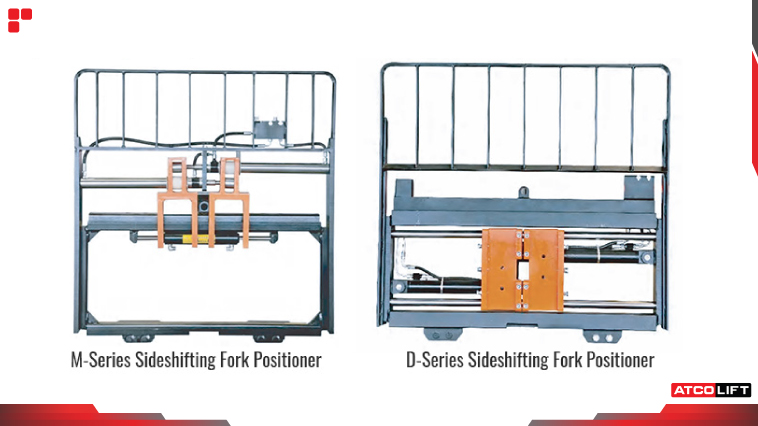
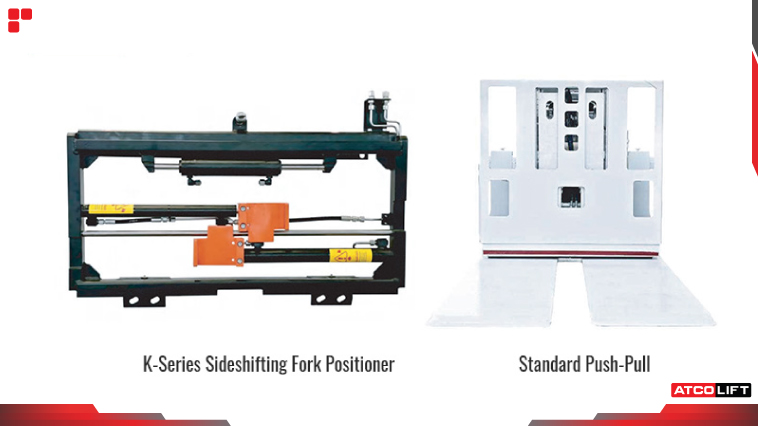
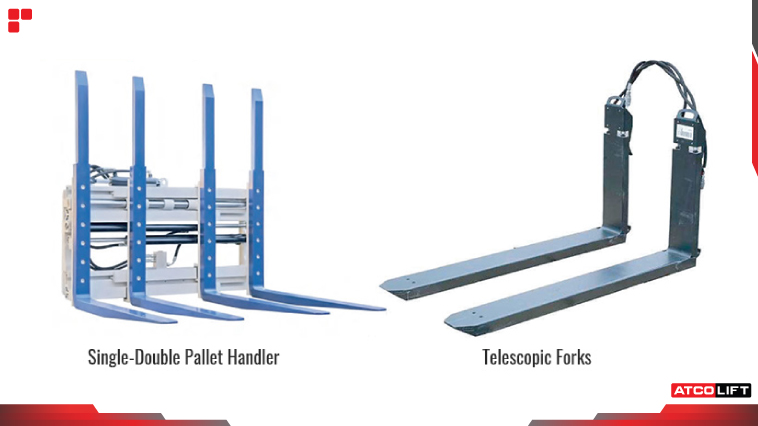
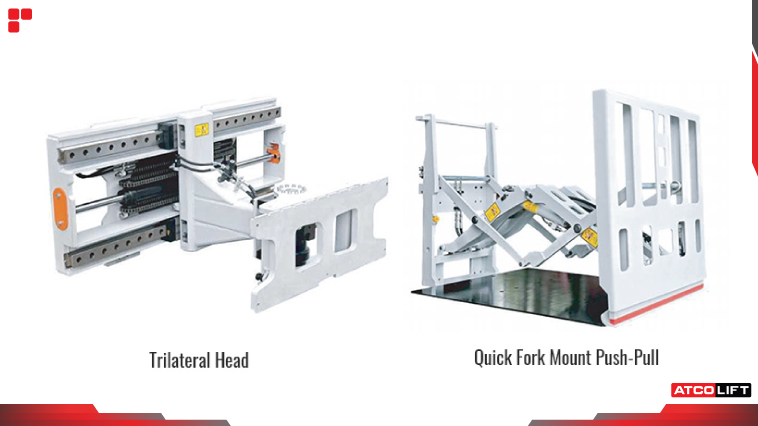


Facilities in Riyadh frequently use fork positioners and pallet handlers to reduce manual fork adjustment during racking and dispatch. In logistics hubs around Jeddah, push-pull attachments and carton clamps are applied for slip-sheeted cargo and boxed goods, supporting efficient container loading. Paper roll clamps and bale clamps are common in packaging, paper converting, and recycling sectors where controlled gripping force is required.
All attachments interface directly with forklift carriages and operate via hydraulic control. Typical specifications include reach extensions up to 2,000 mm for telescopic forks, adjustable clamping ranges matched to material density, and attachment self-weights that must be considered in residual capacity calculations. These tools are engineered for stable operation in high-duty industrial conditions across Saudi Arabia.
* Forklift Attachment Options
- M-Series Sideshifting Fork Positioner
- D-Series Sideshifting Fork Positioner
- K-Series Sideshifting Fork Positioner
- Single-Double Pallet Handler
- Telescopic Forks
- Trilateral Head
- Quick Fork Mount Push-Pull
- Standard Push-Pull
- Bale Clamp
- Carton Clamp
- H-Series Paper Roll Clamp
- Rotating Fork Clamps
Forklift Attachments
Brochure | Quotation | Availability
Fill the form with valid details to receive the information.
Product Videos
Frequently Asked Questions
Saudi factories often use fork positioners, single-double pallet handlers, and carton clamps to support repetitive production output. In high-volume plants around Riyadh and Jubail, these attachments help standardize material flow between production lines, staging areas, and outbound logistics zones.
Every forklift attachment reduces available lifting capacity due to added weight and increased load center distance. Operators in Saudi Arabia must refer to the updated capacity plate or load chart after installation to ensure safe operation, especially when handling heavy or offset loads.
Most forklift attachments are compatible with electric and internal combustion forklifts, provided hydraulic pressure and flow requirements are met. In KSA logistics hubs, electric forklifts are often paired with clamps indoors, while diesel units handle push-pull and pallet handlers in outdoor yards.
Clamping force must match material density to prevent load damage or slippage. Rotating attachments require controlled speed and stable ground conditions. In facilities around Jeddah, operator training is essential to maintain load balance during rotation and elevated handling.
Attachments reduce handling steps by allowing direct gripping, positioning, or slip-sheet movement without repalletizing. In Saudi distribution centers, this minimizes dwell time at docks and improves truck turnaround, particularly in operations managing mixed cargo profiles.

Customer Testimonials
GET A QUOTE
Tell us about your business requirement, one of our technical expert will be in touch with you soon..!
NEW PRODUCTS ALERTS