CIJ Auto Paging Machine
The CIJ Auto Paging Machine is an automated product separation unit used alongside Continuous InkJet printers to feed flat items into a coding station. It separates stacked products such as pouches, labels, or cartons and delivers them individually for printing operations. The system accommodates items from 40–320 mm in length and 60–280 mm in width with adjustable thickness between 0.5–5 mm. CIJ Auto Paging Machine installations are commonly used in packaging and processing operations across Oman where consistent CIJ coding accuracy is required.
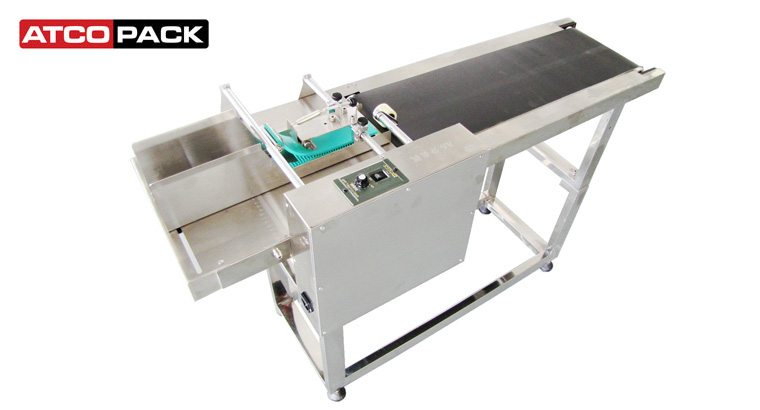
Products such as sachets, instruction cards, flat cartons, labels, and flexible packaging materials are loaded into the feeder tray. A friction-driven paging belt separates the items and moves them onto a conveyor surface where CIJ marking equipment applies codes during motion.
The machine supports product lengths between 40–320 mm and widths from 60–280 mm while accepting thickness variations between 0.5–5 mm. Depending on material characteristics, the paging system can operate between 60 and 600 pieces per minute.
Packaging plants and labeling operations in Muscat and Sohar typically use this type of system to maintain stable product flow for CIJ coding in food processing, pharmaceutical packaging, and consumer goods manufacturing environments.
Technical Specifications
| Power Supply | AC220V+/-10% |
| Power | 120W |
| Size of object to be separated | length: 40-320mm width: 60-280mm thickness: 0.5-5mm(adjustable) |
| Outside size | 1250X410X860mm |
Key Features
- Electronic stepless speed control for synchronization with coding equipment
- Automatic paging throughput ranging from 60 to 600 pieces per minute
- Adjustable feeding section designed for flat packaged materials
- Compatible with products from 40–320 mm length and 60–280 mm width
- Handles material thickness from 0.5 mm to 5 mm
- Friction belt mechanism enabling consistent product separation
- Optional product receiving unit for downstream handling
- External signal port for counting and automated shutdown control
- Compact equipment frame suitable for packaging line integration
CIJ Auto Paging Machine
Brochure | Quotation | Availability
Fill the form with valid details to receive the information.
Product Videos
Frequently Asked Questions
The machine separates stacked flat items and feeds them individually toward a Continuous InkJet printer. This controlled feeding ensures each item receives a clear code without overlapping. Packaging and labeling facilities in Oman often use paging equipment when printing batch information on flexible packaging or flat cartons.
Suitable materials include plastic pouches, paper labels, sachets, carton sleeves, and instruction leaflets. These items must remain relatively flat to pass smoothly through the separation belts. Facilities in Muscat and Sohar frequently use the system when preparing products for date coding before final packing.
Yes. Depending on product characteristics, the machine can separate and feed between roughly 60 and 600 items per minute. This allows it to operate with moderate production lines as well as faster packaging systems used in food processing, labeling operations, or distribution centers across Oman.
Operators usually adjust the feed tray guides, separation belts, and speed control to match product dimensions and material friction. Proper adjustment ensures items separate smoothly without double feeding. Once configured, the system can maintain stable product flow during continuous coding operations.
Continuous InkJet printers perform best when products move in a predictable path with stable spacing. The paging machine regulates this movement by separating items evenly before they reach the printing zone. This reduces print misalignment and improves code readability during packaging processes.
Operators typically inspect separation belts, clean the feed tray, verify conveyor alignment, and check fasteners and rollers. In industrial environments such as Salalah or Nizwa distribution facilities, routine maintenance helps maintain stable separation performance and prevents unexpected downtime during coding operations.



Customer Testimonials
GET A QUOTE
Tell us about your business requirement, one of our technical expert will be in touch with you soon..!
NEW PRODUCTS ALERTS